Introduction
Many children recognize numerals long before their developing hands possess the intrinsic muscle strength and motor planning required to form them on paper. According to the American Occupational Therapy Association, foundational fine motor control and bilateral coordination are essential prerequisites for functional handwriting and daily academic tasks. Mastering numeral formation requires more than simple repetition; it demands visual-motor integration, spatial awareness, and consistent directional habits. The number writing practice 1-20 in columns layout bridges this gap by offering structured, vertical guidance that helps young learners organize numbers sequentially while managing page layout. Scaffolded tracing formats support proper stroke order, preventing the formation of inefficient habits that can later cause hand fatigue. Exploring additional resources within Tracing Number collections provides even more targeted practice for early learners.
💡 Educational Key Takeaways:
- Core Skill: Structured Number Writing Practice 1-20 In Columns focused on developing pencil grip, stroke control, and early literacy/math confidence.
- Target Scope: Suited for homeschoolers, preschool, kindergarten, and elementary learners.
- Best Recommendation: Practice 10–15 minutes daily with ergonomic writing tools to reinforce muscle memory without hand fatigue.
What This Worksheet Covers
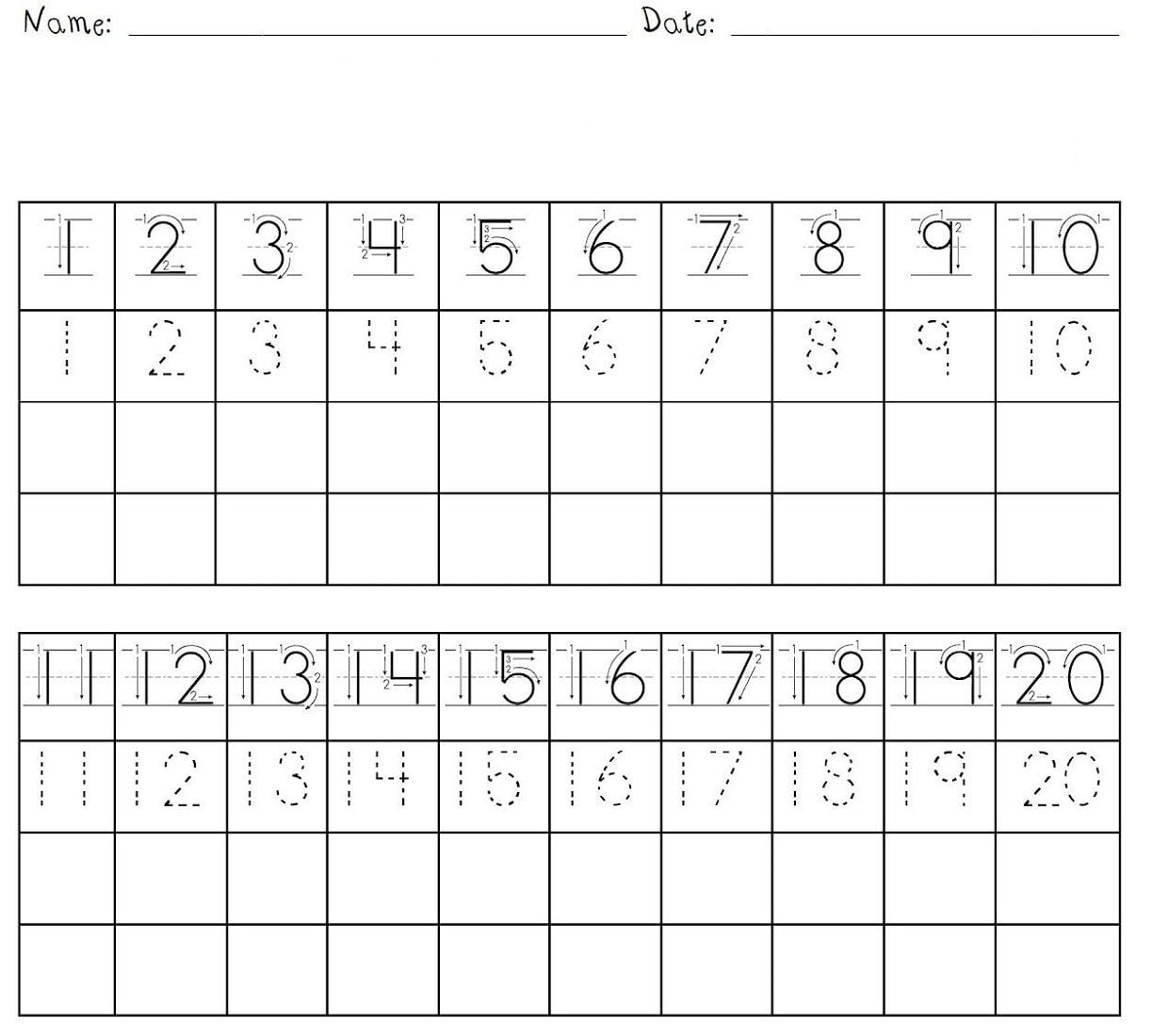
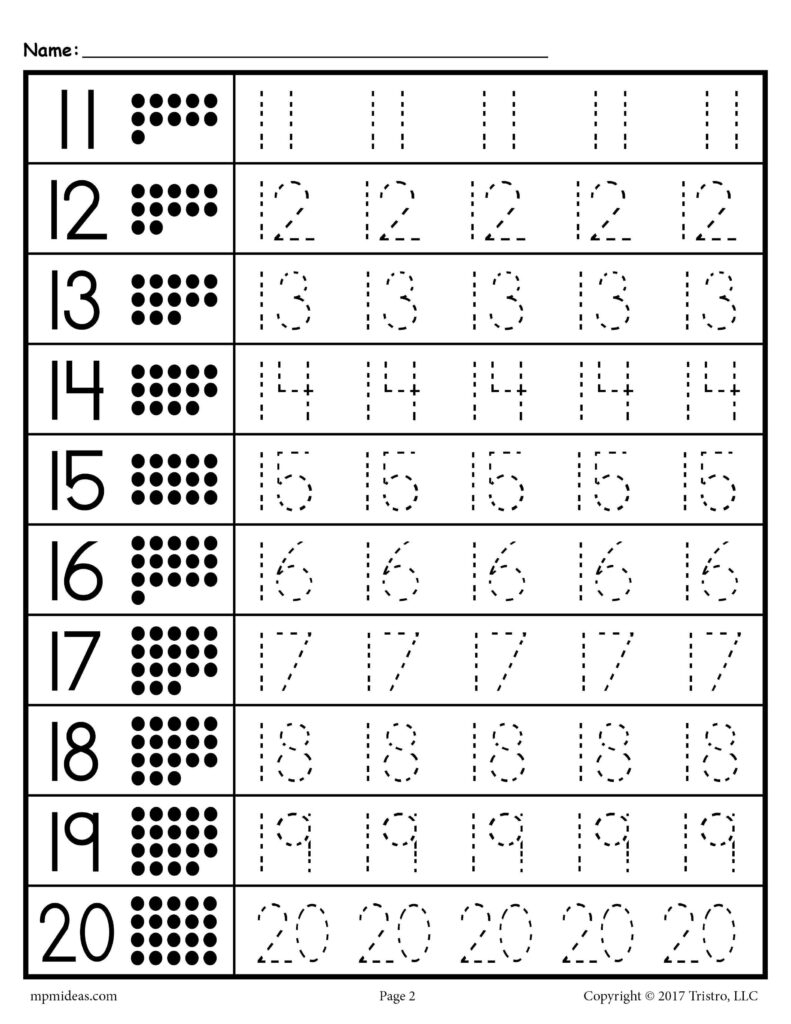
This specific printable focuses on guiding young learners through the formation of numerals from one to twenty, arranged deliberately in vertical columns rather than standard horizontal rows. Vertical columns encourage downward visual tracking, which aligns naturally with reading and writing directions while helping children manage vertical spacing on a blank page. Each numeral features clear starting points, directional arrows, and dotted tracing lines that demonstrate proper stroke sequencing. The design transitions gradually from heavily supported tracing to independent freehand writing, allowing children to build confidence at their own pace. Educators and caregivers often observe that children struggle most with reversals like reversed threes, sevens, or fives; targeted column practice isolates these challenges and reinforces correct spatial orientation.
Key Learning Outcomes
Consistent interaction with structured numeral sheets yields measurable improvements in fine motor control and cognitive number sense. Children develop precise pencil pressure regulation, learning how to press lightly for control or firmly for clarity without fatiguing the small muscles of the hand. Spatial organization improves as learners navigate the vertical columns, understanding how to keep numerals within distinct boundaries rather than letting numbers drift across the page. Numeral recognition and quantity association are simultaneously reinforced because the physical act of tracing imprints the visual motor pattern of each digit into muscle memory. Furthermore, learners internalize correct stroke order, ensuring that numerals always begin at the top rather than the bottom, which drastically increases writing speed and legibility as academic demands increase in later elementary grades. For more related activities, check out our Printable Tracing Numbers Pdf.
How to Use This Worksheet
Successful implementation begins with establishing an optimal physical setup, including a chair and table height that allows the child’s feet to rest flat on the floor and elbows to bend at a comfortable ninety-degree angle. Present the worksheet alongside a short, well-sharpened pencil or a weighted writing tool if hand strength requires extra proprioceptive feedback. It sounds simple, and that’s the point: rather than rushing through all twenty numbers in a single sitting, focus on a single column or just five numbers per session to maintain high engagement and prevent frustration. When children rush, pencil grip tends to collapse into a tight fist, compromising finger mobility and leading directly to hand cramping.
Practical Tips for Parents and Teachers
Adults play a vital role by sitting beside the child to model correct pencil grip—such as a functional tripod grasp—and demonstrating the initial stroke in the air before the pencil touches the paper. Scaffolding the activity involves guiding the child’s hand gently through the first few tricky formations, such as the continuous curves of the number eight or the sharp angles of a four, before fading assistance entirely. For children who struggle with spatial bounds, placing a small tactile marker or a visual stop sign at the bottom of the column helps signal where the stroke should terminate. Extending the activity outdoors or into sensory bins—like tracing numbers in a tray of sand or salt using an index finger—reinforces the exact same motor pathways without the pressure of a pencil.
Age-Appropriate Recommendations
According to the National Association for the Education of Young Children Developmentally Appropriate Practice framework, children aged three to four typically engage in pre-writing strokes and early numeral awareness through large-scale, multisensory movements. For preschoolers, this worksheet should be used primarily as an observational tool and gentle introduction, where tracing is treated as a fun, low-stakes game rather than a rigid test. By ages five to eight, children enter the formal schooling years aligned with kindergarten and first-grade standards, where structured practice supports handwriting automaticity and neatness. During these older years, the column layout helps students transition from giant, uncontained writing to appropriately scaled, baseline-oriented numerals.
Proper pencil grasp and fine motor foundations established in early childhood strongly predict later writing speed, legibility, and academic endurance. — American Occupational Therapy Association
Frequently Asked Questions
Explore More Free Printable Tracing Worksheets
Supporting a child’s early literacy and fine motor journey involves offering a diverse array of engaging practice materials that grow alongside changing skill levels. Beyond numerical mastery, young learners benefit immensely from exploring Alphabet And Numbers Tracing to build simultaneous letter-formation fluency. Caregivers seeking specialized stroke support will also find wonderful resources within Shape and Line Tracing collections, which prepare little hands for complex writing tasks. The complete resource library available at KidTraces.com provides endless opportunities to make learning fun, accessible, and developmentally appropriate for every child.
Developmental Milestone & Activity Table
| Development Stage | Recommended Daily Duration | Primary Learning Objective |
|---|---|---|
| Preschool & Pre-K | 10 – 15 Minutes | Pencil grip development & basic pre-stroke lines |
| Kindergarten | 15 – 20 Minutes | Letter/number formation & spatial line awareness |
| Early Elementary (Grade 1–2) | 20 – 30 Minutes | Fluency, sentence construction & neatness |
Images References