Introduction
Watch any group of preschoolers and a fascinating reality emerges: many children recognize complex numerals and letters long before their fine motor coordination allows them to cleanly form those same symbols on paper. According to the National Association for the Education of Young Children (NAEYC), meaningful early literacy and numeracy experiences must match the physical developmental readiness of the child. Bridging this cognitive understanding with physical execution requires intentional, scaffolded practice. That exact bridge is built through the foundational 1-100 number tracing sheet for kids, a powerhouse tool designed to transform abstract mathematical concepts into concrete muscle memory.
💡 Educational Key Takeaways:
- Core Skill: Structured 1-100 Number Tracing Sheet For Kids focused on developing pencil grip, stroke control, and early literacy/math confidence.
- Target Scope: Suited for homeschoolers, preschool, kindergarten, and elementary learners.
- Best Recommendation: Practice 10–15 minutes daily with ergonomic writing tools to reinforce muscle memory without hand fatigue.
What This Worksheet Covers
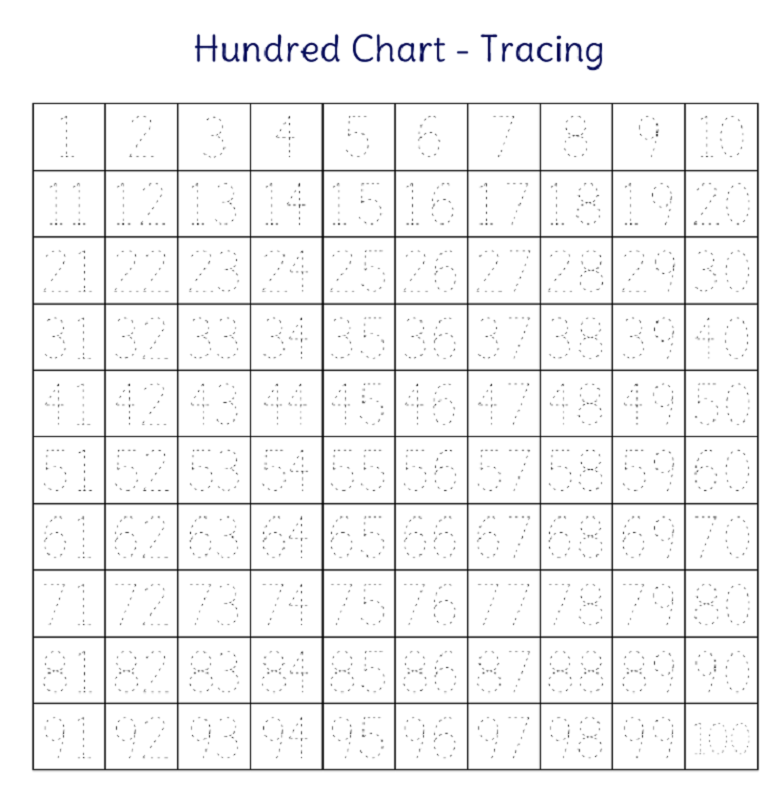
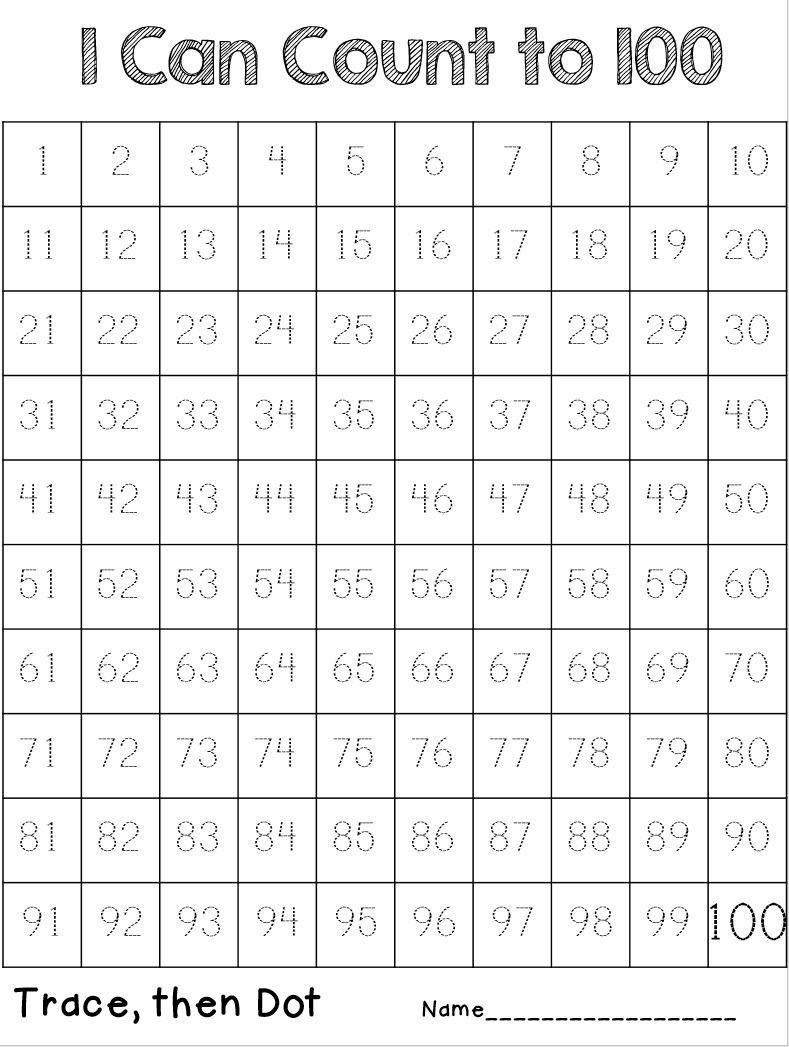
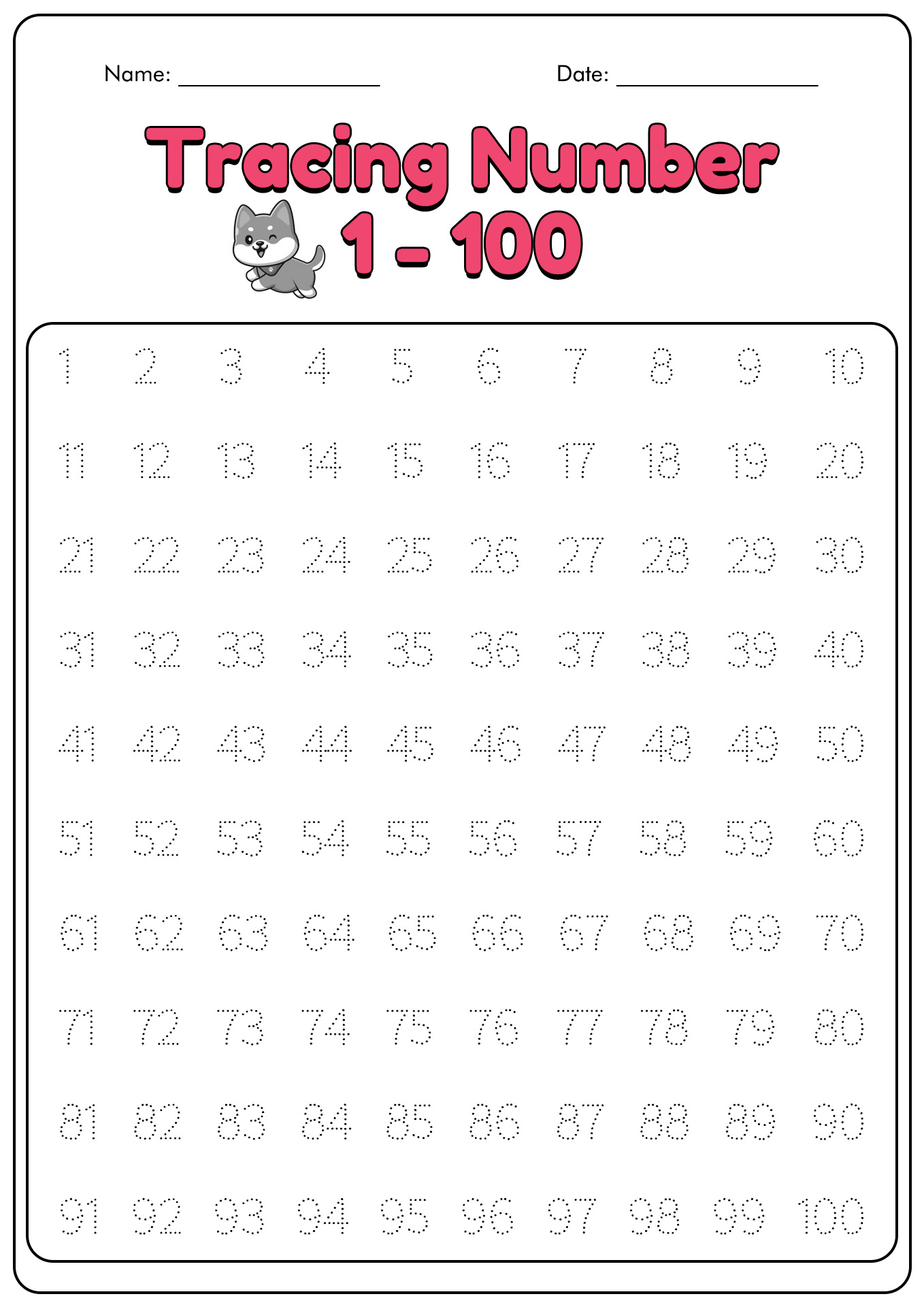
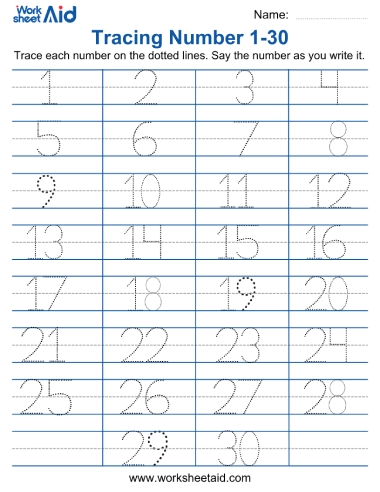
Mastering numerals up to one hundred involves far more than simple rote memorization; it requires systematic visual-motor integration. This comprehensive printable resource provides structured, progressive tracing pathways that guide young learners through every single digit from one to one hundred. Starting points, directional arrows, and carefully proportioned dotted lines work in tandem to teach proper stroke order and spatial orientation. Children transition from basic straight lines found in digits like one and four to complex continuous curves required for numbers like three, six, and eight. Through repetitive, guided exposure, the hand learns the distinct geometry of each numeral, reducing cognitive load and paving the way for fluent, automatic writing.
Key Learning Outcomes
Consistent interaction with these progressive numerical pathways yields profound developmental gains across multiple domains. First, learners internalize precise stroke sequencing, which prevents the formation of inefficient and fatiguing writing habits down the road. Second, visual-spatial organization improves dramatically as children navigate grid-based layouts, learning to keep their digits properly aligned within designated boundaries. Third, the activity builds foundational hand strength and endurance, prerequisites heavily emphasized in Fine Motor and Pre-Writing Skills curricula. Finally, working through the full numerical sequence reinforces core mathematical competencies, seamlessly connecting fine motor execution with early numeracy and quantitative reasoning.
How to Use This Worksheet
Successful implementation relies on meeting children at their current developmental threshold rather than rushing toward the final number. Introducing the sheets in manageable chunks—such as decades from one to ten, or twenty to thirty—prevents cognitive overload and physical hand fatigue. It sounds simple, and that is precisely the point: consistency trumps volume every single time. Adults should observe how the child approaches the page, paying close attention to whether the pencil grip allows for fluid finger movements or relies on a tense, locked-wrist fist. Encouraging a tripod or quadrupod grasp transforms a routine tracing exercise into an effective strengthening session, perfectly aligned with the principles found in Tracing Number practices.
Practical Tips for Parents and Teachers
Here’s what makes this worksheet different: it functions best when paired with multi-sensory exploration rather than isolated desk work. Before putting pencil to paper, invite children to trace oversized numerals in sand, salt trays, or shaving cream to build gross motor muscle memory of the strokes. When moving to the printed page, actively model correct starting points by physically placing a finger at the top of the digit before the child begins. Scaffold the experience by lightly fading guidance as confidence grows, eventually shifting from fully dotted lines to independent freehand attempts. For more advanced learners, extend the challenge by having them skip-count by twos or fives while tracing, integrating rhythmic patterns into the physical act of writing, similar to exercises featured in Alphabet And Numbers Tracing collections.
Age-Appropriate Recommendations
Developmental expectations must shift according to the age and physical capabilities of the child using the material. According to the CDC developmental milestones, children typically begin showing an interest in copying basic shapes and early numerals around ages three to four, making large-format, isolated number tracing an ideal introductory task. During these early preschool years, emphasis remains strictly on correct starting points and grip awareness, perfectly reflecting NAEYC Developmentally Appropriate Practice guidelines. By the time children reach ages five through eight, expectations evolve toward independent line control, proportional sizing, and sustained endurance, aligning directly with foundational educational standards like Common Core math and writing expectations where numerals must be legible and properly aligned on primary lines.
Appropriate use of guided tracing sheets supports the development of automaticity in numeral formation, reducing cognitive fatigue during complex mathematical tasks. — National Association for the Education of Young Children (NAEYC)
Frequently Asked Questions
Navigating early writing tools can raise practical questions for educators and caregivers alike. Below are straightforward answers to common inquiries regarding the implementation and physical benefits of numerical tracing sheets.
How do I download and print the tracing sheets for home or classroom use?
Simply click the download link on the resource page to save the PDF file directly to your device, then print using standard letter-sized paper at 100% scale.
How does number tracing support fine motor and pre-writing development?
Tracing builds intrinsic hand muscles, improves bilateral coordination, and refines pencil control required for legible handwriting.
What does the American Occupational Therapy Association (AOTA) say about pencil grasp development?
The American Occupational Therapy Association notes that functional grasps, such as the tripod grasp, emerge naturally as hand muscles mature through supported writing play.
Explore More Free Printable Tracing Worksheets
Supporting a well-rounded foundation in early childhood development requires access to a diverse array of targeted practice materials. Exploring the full library at KidTraces.com reveals countless options designed to foster early writing success. Whether the daily lesson plan calls for targeted stroke control found in Shape and Line Tracing or engaging holiday concepts available through Seasonal and Fun Themes, every resource is crafted with care to support young learners on their educational journey.
Developmental Milestone & Activity Table
| Development Stage | Recommended Daily Duration | Primary Learning Objective |
|---|---|---|
| Preschool & Pre-K | 10 – 15 Minutes | Pencil grip development & basic pre-stroke lines |
| Kindergarten | 15 – 20 Minutes | Letter/number formation & spatial line awareness |
| Early Elementary (Grade 1–2) | 20 – 30 Minutes | Fluency, sentence construction & neatness |
Images References