Introduction
Many children recognize letters and numbers long before their fine motor coordination allows them to form those same symbols on paper. This developmental gap between cognitive understanding and physical execution often causes frustration during early writing instruction. According to the National Association for the Education of Young Children (NAEYC), developmentally appropriate practice requires balancing expectations with a child’s current motor capabilities. Bridging this gap takes patience, consistency, and targeted resources like the free printable 70-80 number words tracing page found on KidTraces.com. Mastering numerals and their written word forms simultaneously reinforces early math concepts while refining crucial pencil control. Children transition smoothly from recognizing digits to spelling them out, building essential confidence along the way.
💡 Educational Key Takeaways:
- Core Skill: Structured 70-80 Number Words Tracing focused on developing pencil grip, stroke control, and early literacy/math confidence.
- Target Scope: Suited for homeschoolers, preschool, kindergarten, and elementary learners.
- Best Recommendation: Practice 10–15 minutes daily with ergonomic writing tools to reinforce muscle memory without hand fatigue.
What This Worksheet Covers
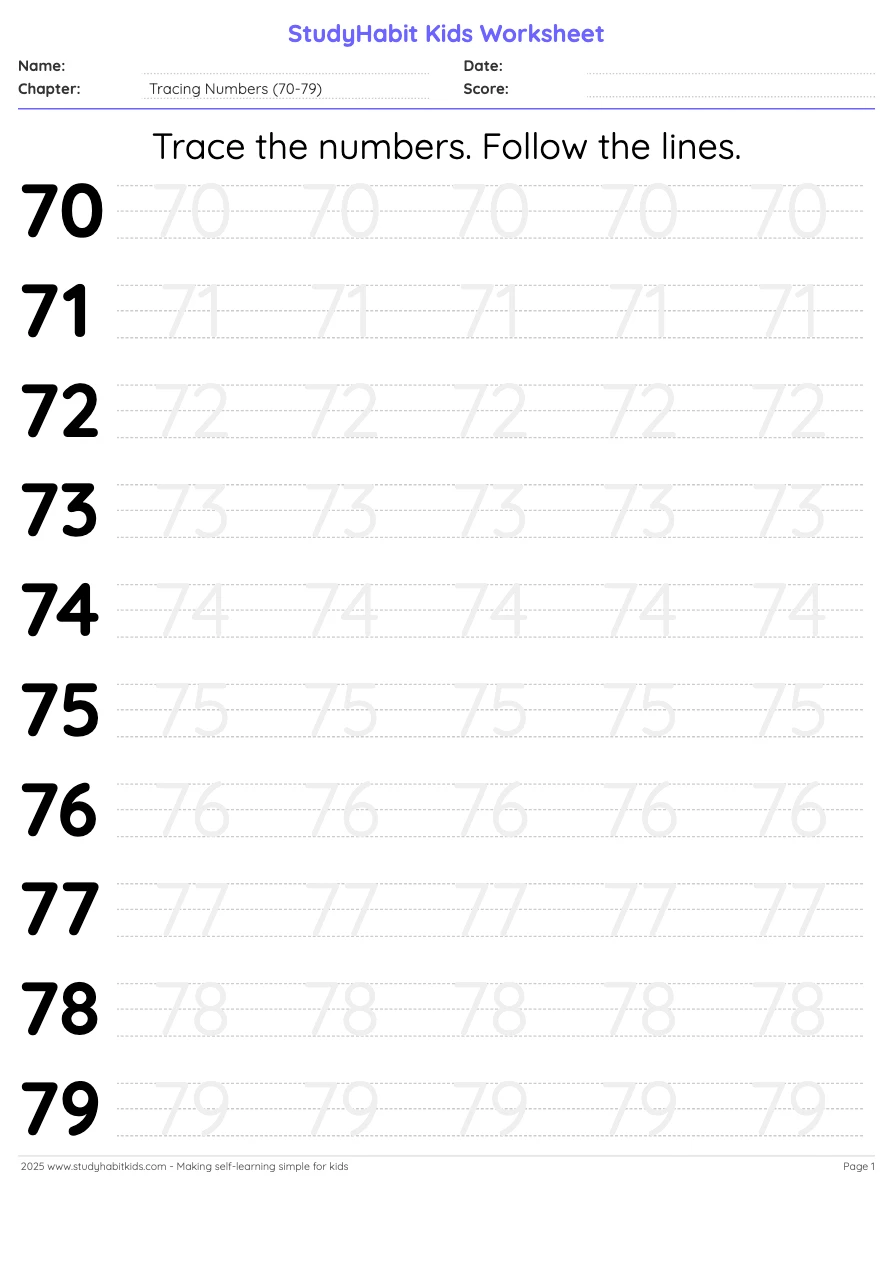
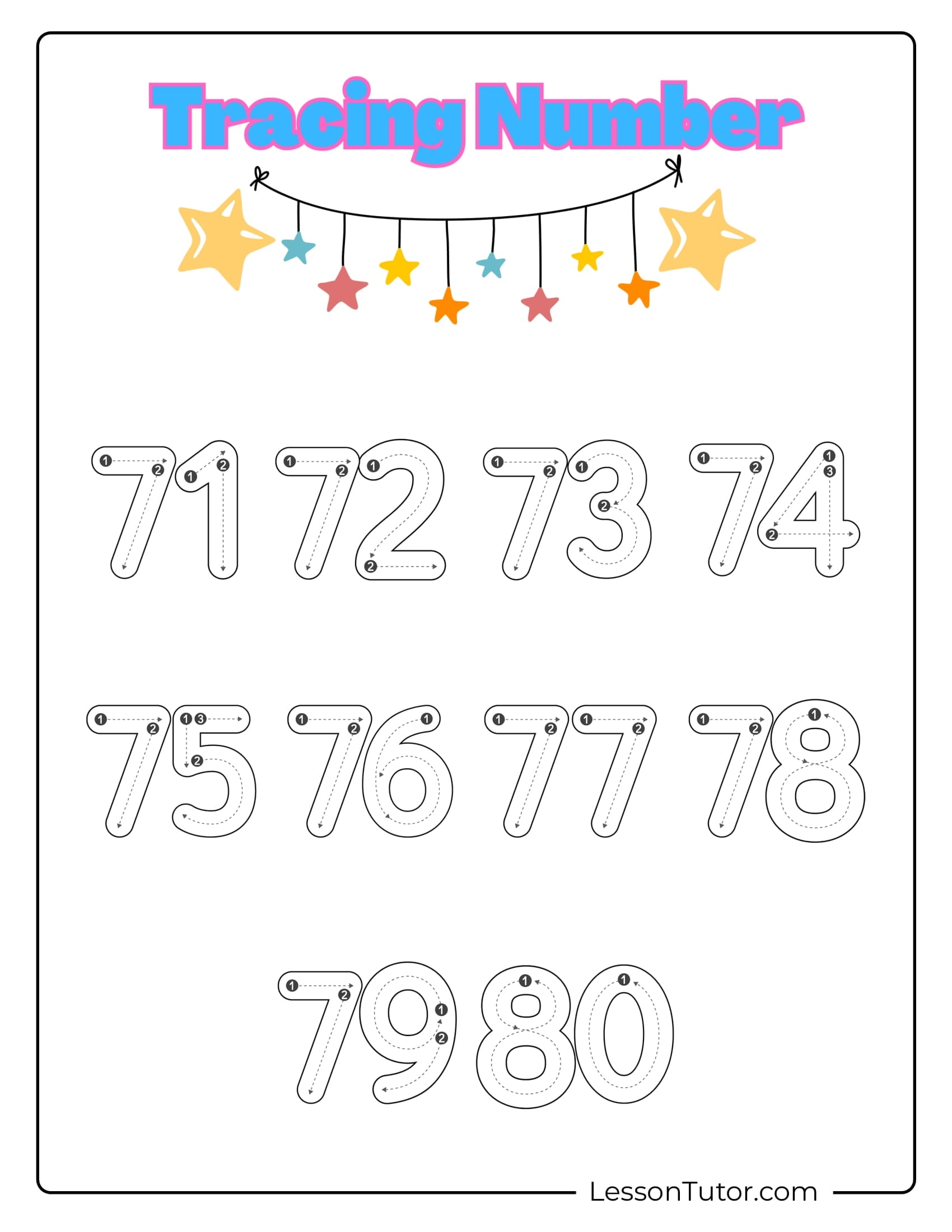
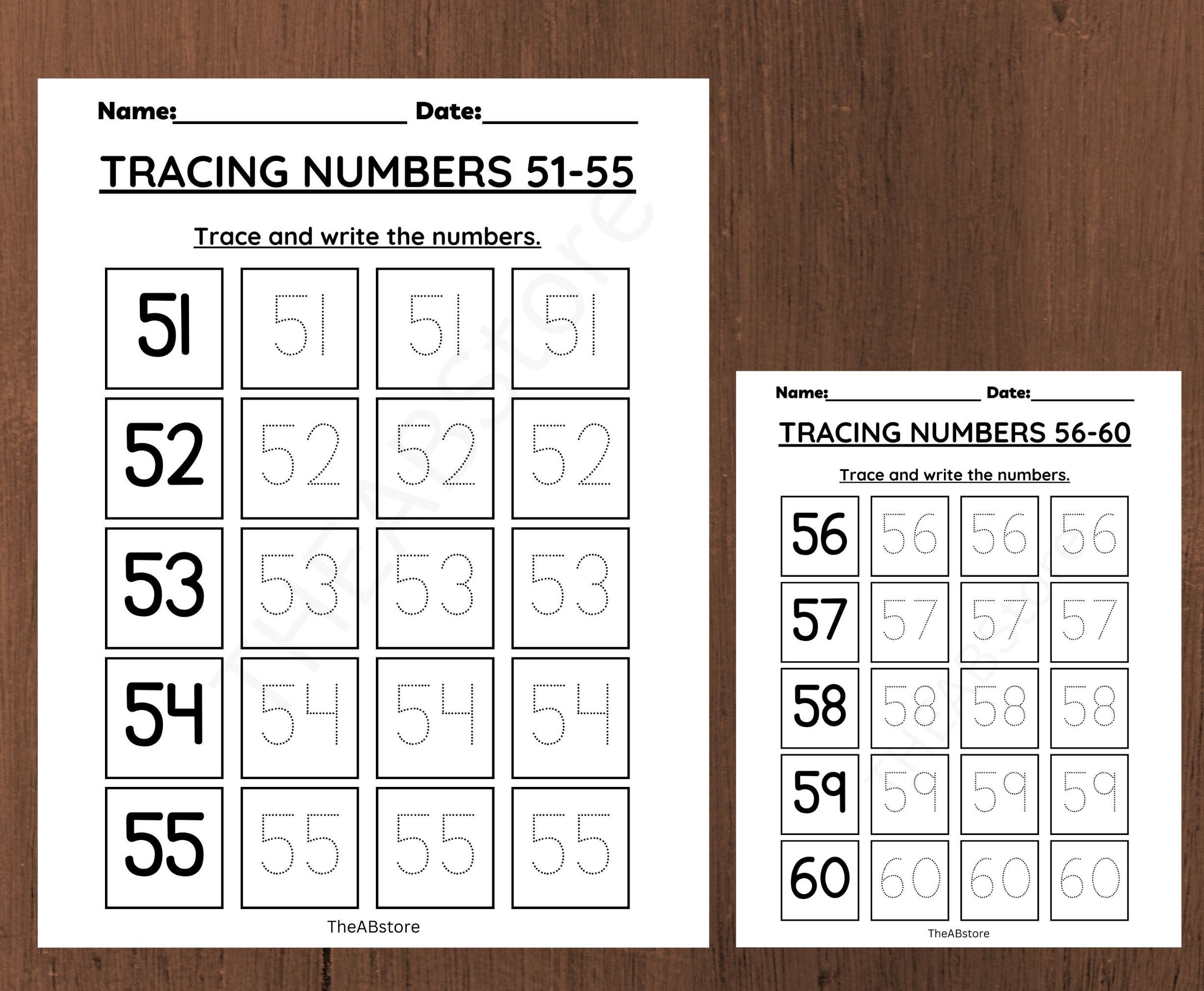
This specific printable targets the numeric range between seventy and eighty, offering a focused look at decade numbers and their corresponding English words. Handwriting practice at this stage demands precision, visual-spatial awareness, and steady hand control. Young learners navigate structured guidelines that encourage proper stroke sequence, letter sizing, and spacing between words. Instead of overwhelming learners with endless repetition, the layout isolates target words to promote deep concentration. Exploring collections such as Tracing Number provides supplementary exercises that build on this foundational numerical mastery. Working through these sheets helps children internalize the spelling patterns unique to larger numbers, connecting literacy skills directly with mathematical vocabulary.
Key Learning Outcomes
Learners using these tracing materials develop robust foundational skills that extend far beyond simple handwriting worksheets. Proper number formation and letter sequencing improve significantly through guided dotted paths that emphasize correct starting points and directionality. Hand-eye coordination strengthens as tiny fingers learn to maintain consistent pressure along curved and straight lines. Children also expand their sight-word vocabulary by reading and writing number words repeatedly in a structured context. Finally, spatial awareness improves organically as kids manage margins, line boundaries, and word spacing without feeling overwhelmed by crowded layouts.
How to Use This Worksheet
Successful implementation relies on creating a calm, inviting workspace where children feel supported rather than rushed. Printing the sheets on slightly heavier cardstock prevents tearing from enthusiastic pencil pressure and provides a stable surface for developing hands. Adults can introduce the page by reading the numbers aloud together, connecting the spoken word to the printed symbol before any writing begins. Encouraging short, focused sessions keeps fatigue at bay and prevents poor grip habits from forming out of tiredness. Exploring additional options like Word and Name Tracing helps maintain variety during daily literacy routines.
Practical Tips for Parents and Teachers
Adults play a vital coaching role by observing hand placement and offering gentle postural corrections before discomfort sets in. Modeling correct pencil grip—such as a functional tripod grasp—demonstrates efficient finger movement for young learners. Scaffolding the activity by tracing the first line together builds immediate momentum and reduces anxiety about making mistakes. According to the American Occupational Therapy Association (AOTA), supporting proximal stability at the core and shoulder enhances distal control in the fingers and hands. Celebrating small victories, such as a particularly well-formed letter ‘s’ in “seventy,” keeps intrinsic motivation high throughout the learning process.
Age-Appropriate Recommendations
Children aged five to six typically engage with decade number words as part of kindergarten math and literacy curricula. Aligned with Common Core ELA standards such as CCSS.ELA-LITERACY.L.K.1, these exercises support printing uppercase and lowercase letters while reinforcing spelling patterns. Younger children around age four may require heavier scaffolding, focusing primarily on the numeric digits before attempting full number words. Older children in first or second grade benefit from using these pages to polish cursive transitions, legibility, and writing speed. Integrating broader resources such as Fine Motor and Pre-Writing Skills ensures children possess the necessary hand strength and dexterity required for sustained writing tasks.
According to the American Occupational Therapy Association (AOTA), foundational fine motor control and bilateral coordination are essential predictors of later academic success and legible handwriting development. — AOTA Practice Framework
Frequently Asked Questions
Navigating early writing resources is straightforward when clear answers are readily available for common printing and developmental questions.
Explore More Free Printable Tracing Worksheets
Supporting a young learner’s writing journey requires a diverse library of engaging, high-quality resources tailored to every developmental stage. Educators, parents, and therapists can easily find supplementary materials to keep practice fresh, motivating, and fun. Exploring the full collection of printable resources available at KidTraces.com opens up endless opportunities for skill development. Whether focusing on foundational pre-writing strokes or advanced letter combinations, every child deserves accessible tools to unlock their full potential. Print today and watch confidence grow one stroke at a time.
Developmental Milestone & Activity Table
| Development Stage | Recommended Daily Duration | Primary Learning Objective |
|---|---|---|
| Preschool & Pre-K | 10 – 15 Minutes | Pencil grip development & basic pre-stroke lines |
| Kindergarten | 15 – 20 Minutes | Letter/number formation & spatial line awareness |
| Early Elementary (Grade 1–2) | 20 – 30 Minutes | Fluency, sentence construction & neatness |
Images References