Introduction
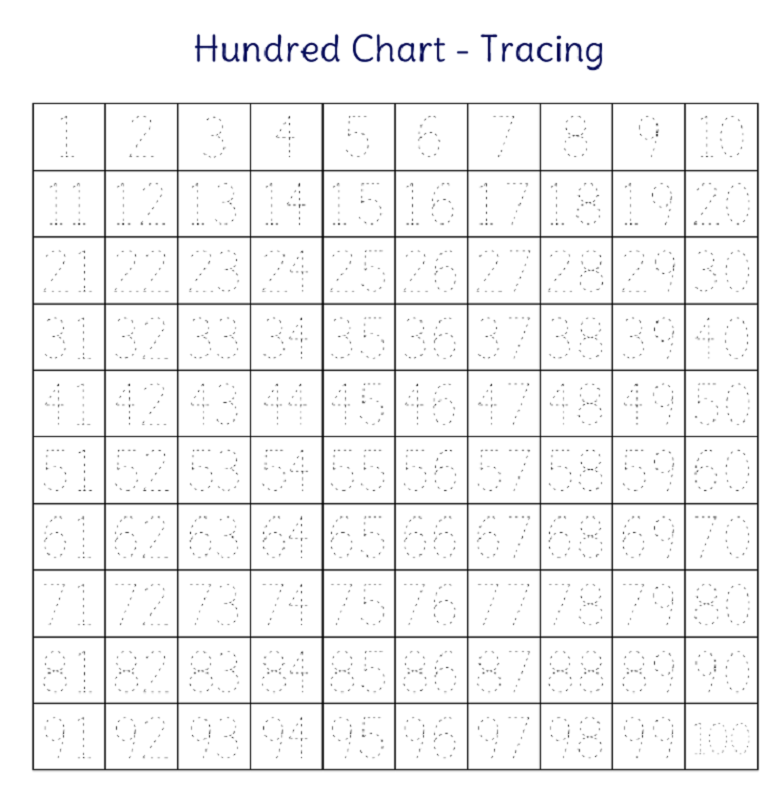
Many children recognize numerals long before their developing hands possess the intrinsic muscle strength required to form them on paper. According to the American Occupational Therapy Association, foundational fine motor control and bilateral coordination are essential prerequisites for functional handwriting tasks in early childhood. Bridging the gap between cognitive recognition and physical execution requires intentional, guided practice. Enter the free printable traceable numbers 1 100, a comprehensive resource designed to guide young learners safely through proper stroke mechanics, numeral formation, and sequential counting. It sounds simple, and that’s the point: consistent exposure to structured tracing helps translate visual number recognition into fluid, automatic motor output. Explore more in our Tracing Number collection.
💡 Technical Key Takeaways:
- Core Focus: Diagnostic schematic and terminal connection layout for Traceable Numbers 1 100.
- Target Scope: Field technicians, automotive DIYers, and residential/commercial electricians.
- Safety Rule: Always disconnect the primary power source/battery terminal and verify zero voltage with a multimeter before touching wires.
What This Worksheet Covers
This extensive tracing packet spans the entire foundational counting range from one to one hundred, offering a structured progression that grows alongside the child. Each page introduces crisp, clear dotted numerals that outline exact starting points, directional arrows, and sequential paths. Children encounter both single-digit foundations and complex multi-digit numbers, allowing them to practice spatial awareness, proper digit sizing, and appropriate spacing within lines. The resource systematically targets visual-motor integration, teaching learners how to anchor their hands, control pencil pressure, and navigate directional curves, loops, and straight vertical lines with increasing confidence and precision. For more related activities, check out our 3 Years Old Kids Numbers Tracing Activities.
Key Learning Outcomes
Working through these pages fosters a robust foundation in numerical literacy and physical writing readiness. Learners master proper numeral formation, learning where each stroke begins and ends to avoid developing inefficient habits like bottom-up writing. Hand-eye coordination improves dramatically as pencils follow precise dotted tracks, while finger dexterity and intrinsic hand muscle strength develop through sustained, controlled writing sessions. Furthermore, completing the sequence reinforces number recognition, counting order, and numerical continuity from one up to one hundred, establishing critical conceptual links essential for early mathematics and advanced academic achievement.
How to Use This Worksheet
Successful implementation begins with establishing a calm, inviting workspace where the learner sits comfortably with feet flat on the floor and hips at a ninety-degree angle. Present a few numbers at a time rather than overwhelming the child with all one hundred numerals at once, especially during initial introductions. Encourage the index finger to trace the dotted numeral first before picking up a writing utensil, letting muscle memory preview the physical path. According to Reading Rockets, multisensory tracing techniques—such as tracing over textured lines or air-writing the digits—significantly enhance a child’s retention of stroke patterns and directional flow.
Practical Tips for Parents and Teachers
Adults play a vital role in modeling proper dynamic tripod grip, ensuring the pencil rests comfortably between the thumb and index finger while supported by the middle finger. Scaffolding the activity means initially guiding the child’s hand gently through the first few strokes before fading support and allowing independent practice. Extending the learning can involve having the child count physical objects like buttons or blocks that correspond to the numbers they just traced. Watch out for hand fatigue; if a child begins resting their entire forearm heavily on the page or white-knuckling the pencil, pause the session for some quick wall-pushups or hand-stretching exercises to build proximal stability.
Age-Appropriate Recommendations
Developmental expectations vary significantly across the early childhood spectrum. For younger children aged two to four, focusing on large pre-writing strokes and tracing single-digit numbers aligns closely with the National Association for the Education of Young Children Developmentally Appropriate Practice guidelines. During this stage, children learn basic pencil control and top-to-bottom directional habits. As children progress to ages five through eight, alignment shifts toward the Common Core ELA standard CCSS.ELA-LITERACY.L.K.1.A, which emphasizes printing all upper- and lowercase letters as well as numerals accurately. At this older stage, the comprehensive number sheets support stamina, precision, and the automatic formation of numbers up to one hundred with correct spacing and proportional sizing.
Foundational fine motor control and bilateral coordination are essential prerequisites for functional handwriting tasks in early childhood. — American Occupational Therapy Association (AOTA)
Frequently Asked Questions
Navigating early writing tools and printables is straightforward when addressing common questions regarding access, development, and official standards.
Multisensory tracing techniques significantly enhance a child’s retention of stroke patterns and directional flow. — Reading Rockets
Explore More Free Printable Tracing Worksheets
Supporting a child’s writing journey requires a rich variety of targeted practice materials that keep engagement high and frustration low. Beyond numerical counting practice, young learners benefit immensely from exploring foundational Fine Motor and Pre-Writing Skills to build hand strength and control. Children can also master foundational strokes through Shape and Line Tracing, perfect for early pencil warm-ups. For children ready to expand their writing horizons, exploring Alphabet And Numbers Tracing offers fantastic cross-curricular practice. Discover the entire collection of carefully crafted educational resources waiting in the full library at KidTraces.com today.
Quick Wiring Specifications & Terminal Guide
| Component / Circuit | Standard Wire Gauge | Recommended Protection |
|---|---|---|
| Control & Trigger Signals | 18 – 20 AWG | 5A – 7.5A Inline Fuse |
| Standard Auxiliary Load | 14 – 16 AWG | 15A – 20A Circuit Breaker |
| Main Power Feed / Supply | 10 – 12 AWG | 30A – 40A Heavy-Duty Relay |
Images References