Introduction
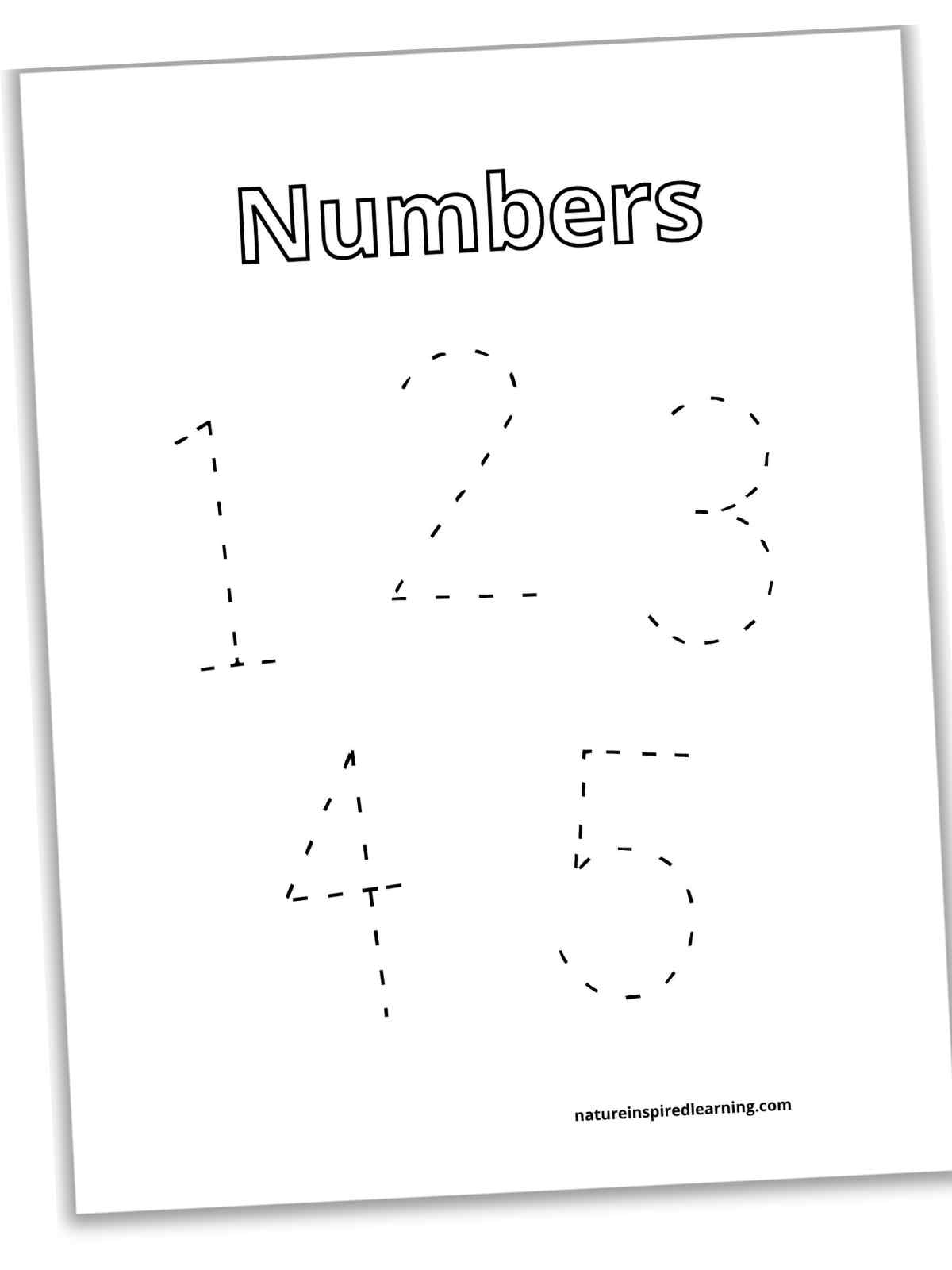
Young children frequently recognize numbers and letters long before their fine motor control and hand strength allow them to successfully form those symbols on paper. According to the National Association for the Education of Young Children, young learners develop foundational writing skills through meaningful, playful engagement with print rather than rote, unguided drilling. Bridging this gap between cognitive awareness and physical execution requires intentional, scaffolded support. The free printable worksheet focusing on tracing numbers 1 to 5 provides an accessible entry point for early learners beginning their formal writing journey. It sounds simple, and that’s the point. By isolating the first five digits, the resource reduces visual clutter and cognitive overload, allowing children to focus entirely on pencil control, stroke sequence, and spatial awareness.
💡 Educational Key Takeaways:
- Core Skill: Structured Tracing Numbers 1 To 5 focused on developing pencil grip, stroke control, and early literacy/math confidence.
- Target Scope: Suited for homeschoolers, preschool, kindergarten, and elementary learners.
- Best Recommendation: Practice 10–15 minutes daily with ergonomic writing tools to reinforce muscle memory without hand fatigue.
What This Worksheet Covers
Mastering the formation of numbers 1 through 5 lays the critical groundwork for all subsequent mathematical recording and advanced handwriting tasks. Each numeral on the page presents specific biomechanical challenges for small hands. The number one demands a steady vertical line, testing basic downward control. Moving on to two, three, four, and five introduces increasingly complex diagonal strokes, intersecting lines, and curved arcs that require smooth wrist and finger coordination. Guided formation paths help children understand where a stroke begins and where it ends, establishing proper directionality early to prevent bad habits like reversing numerals or drawing numbers from the bottom up. Exploring numerical symbols also reinforces early number sense, directly supporting resources found within Tracing Number collections.
Key Learning Outcomes
Engaging with these targeted numeral tracing exercises yields multiple developmental milestones. Children refine visual-motor integration as their eyes guide their hands along the dotted pathways. Fine motor precision improves significantly as tiny intrinsic hand muscles engage to maintain a stable, functional pencil grasp. Spatial awareness blossoms as learners practice keeping their strokes within designated boundaries and respecting baseline alignment. Stroke order mastery emerges through repeated, consistent practice, ensuring that hand movements remain fluid and efficient. Finally, numeral recognition deepens as tactile-kinesthetic feedback reinforces the visual memory of each specific shape, creating a robust neural connection that supports future math and literacy achievements, much like the foundational concepts found in Fine Motor and Pre-Writing Skills.
How to Use This Worksheet
Successful implementation of tracing pages relies heavily on creating a low-stress, highly supportive environment. Begin by presenting the worksheet on a flat, stable surface at a comfortable height where the child’s feet rest flat on the floor, promoting core stability. Encourage tracing with various sensory mediums before moving to standard pencils; colored pencils, short stubby crayons, or even cotton swabs dipped in paint can make the practice feel like play. Observe the child’s hand posture closely during the activity. If fatigue or frustration sets in, pause the session immediately. Short, joyful bursts of practice yield far better developmental outcomes than extended, exhausting drilling sessions.
Practical Tips for Parents and Teachers
Adults play a vital coaching role during early writing practice. Model the correct starting point and directional stroke on a separate piece of paper before inviting the child to try, narrating the movement aloud to build auditory-motor pathways. Scaffold the experience by gently guiding a hand-over-hand motion for the first few attempts if the child shows hesitation, gradually fading physical assistance until independent execution occurs. Extend the learning naturally by counting physical objects around the room that match the numeral being traced, linking abstract symbols to tangible quantities. For broader developmental continuity, pairing these numbers with early letter practice from Dotted Letters For Tracing creates a balanced, comprehensive pre-writing routine.
Age-Appropriate Expectations
Developmental readiness dictates how children interact with numeral tracing pages across different age brackets. According to the developmental milestones outlined by the Centers for Disease Control and Prevention, children typically begin showing an interest in imitating vertical lines and basic strokes around age two to three. During ages two through four, toddlers and young preschoolers benefit most from large-scale tracing, finger-tracing textured numbers, and exploring gross motor pre-writing movements. By ages five through eight, children enter the formal stage of pencil-and-paper mastery outlined in frameworks like the Handwriting Without Tears curriculum, where precise letter and number formation, proper proportional sizing, and line orientation become primary instructional goals.
Young children develop foundational writing and numeral formation skills most effectively through scaffolded, multisensory tracing practice rather than unguided repetition — National Association for the Education of Young Children
Frequently Asked Questions
Navigating early writing resources brings up common questions regarding setup, technique, and developmental appropriateness for young learners.
Explore More Free Printable Tracing Worksheets
Building a well-rounded foundation in early writing and pre-literacy requires diverse, engaging materials that grow alongside the child. A rich variety of supplementary resources awaits exploration across the entire library available at KidTraces.com. Whether looking to expand into seasonal templates via Seasonal and Fun Themes or seeking general practice sheets categorized under General Kidtraces, every educator and caregiver can find supportive tools designed to inspire confidence, precision, and joy in young learners.
Developmental Milestone & Activity Table
| Development Stage | Recommended Daily Duration | Primary Learning Objective |
|---|---|---|
| Preschool & Pre-K | 10 – 15 Minutes | Pencil grip development & basic pre-stroke lines |
| Kindergarten | 15 – 20 Minutes | Letter/number formation & spatial line awareness |
| Early Elementary (Grade 1–2) | 20 – 30 Minutes | Fluency, sentence construction & neatness |
Images References