Introduction
Watch any group of preschoolers and a clear developmental truth emerges: children recognize letters, shapes, and complex symbols long before their fine motor control allows them to form those same patterns on paper. According to Reading Rockets, young learners typically develop the visual and cognitive understanding of print much faster than the intrinsic hand strength required for sustained writing tasks. Bridging that gap demands engaging tools that make pencil control feel like play rather than a tedious chore. The zoo animals line tracing pdf transforms foundational pre-writing practice into a safari adventure, guiding little hands along zig-zag pathways, sweeping loops, and gentle curves that mimic the movements of wildlife.
💡 Educational Key Takeaways:
- Core Skill: Structured Zoo Animals Line Tracing Pdf focused on developing pencil grip, stroke control, and early literacy/math confidence.
- Target Scope: Suited for homeschoolers, preschool, kindergarten, and elementary learners.
- Best Recommendation: Practice 10–15 minutes daily with ergonomic writing tools to reinforce muscle memory without hand fatigue.
What This Worksheet Covers
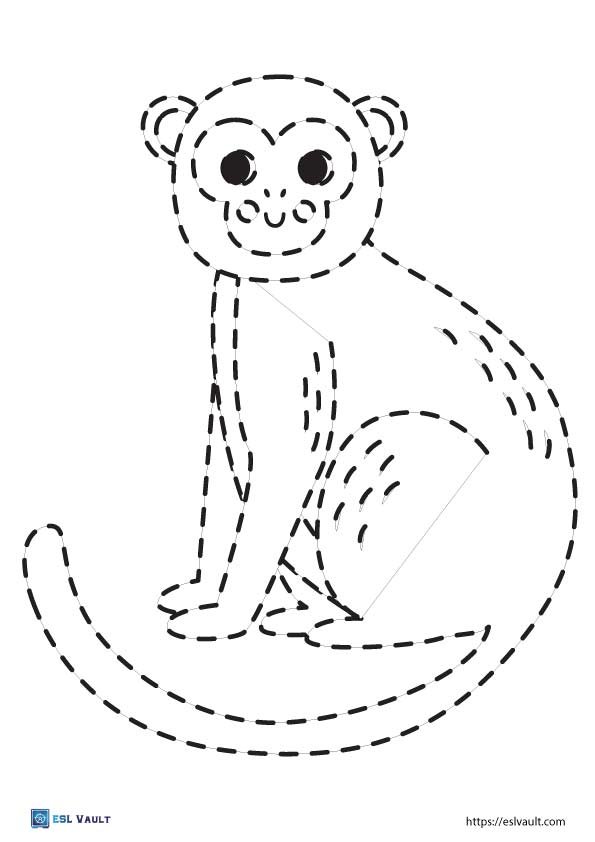
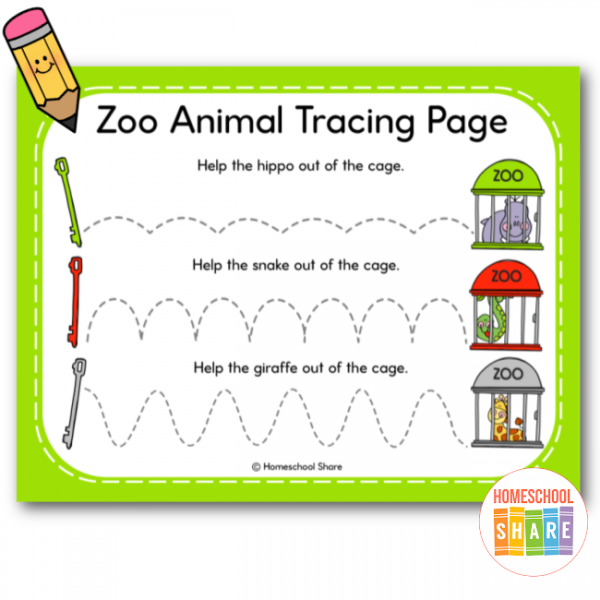
This printable resource focuses specifically on pre-writing strokes, pencil control, and spatial awareness using a captivating wildlife theme. Children trace horizontal lines, vertical paths, diagonal tracks, and undulating curves to help a giraffe reach acacia leaves or a monkey swing through the jungle canopy. It sounds simple, and that’s the point. By removing the pressure of forming actual letters, young learners concentrate entirely on wrist stability, visual-motor integration, and smooth directional tracking from left to right. Such targeted Fine Motor and Pre-Writing Skills lay the vital groundwork needed for eventual handwriting success, pencil endurance, and scissor safety.
Key Learning Outcomes
Children engaging with these safari-themed tracks build essential foundational capabilities that transfer directly into academic readiness. First, learners enhance bilateral coordination by holding the paper steady with one hand while the dominant hand maneuvers the writing utensil. Second, the varying track designs foster visual tracking and eye-hand coordination, teaching the brain to translate visual cues into precise physical movements. Third, navigating corners and loops strengthens the intrinsic muscles of the hand, improving overall grip endurance. Finally, completing each distinct path boosts confidence and concentration, proving that focused effort leads to successful outcomes.
How to Use This Worksheet
Success with pre-writing materials relies heavily on preparation and presentation rather than rigid instruction. Begin by placing the printable on a flat, well-lit surface at a comfortable height, ensuring the child’s feet rest flat on the floor to provide proximal core stability. Encourage a functional grasp, but avoid micromanaging every finger position during early explorations. According to the American Occupational Therapy Association, building foundational hand strength through varied tactile and drawing activities is essential before expecting refined pencil control. Let the child explore the lines freely before introducing specific directional challenges like starting at the animal and moving toward the food.
Practical Tips for Parents and Teachers
Scaffolding these tracing activities ensures that children remain motivated without experiencing frustration. For younger learners struggling with standard pencils, try breaking crayons into small pieces to naturally encourage a proper tripod grasp. Teachers and parents can also slip the sheets into heavy-duty plastic sleeves and use dry-erase markers, allowing children to wipe away mistakes and try again without hesitation. Add a multisensory layer by having children trace the lines with their index fingers or small toy cars before picking up a writing tool. When enthusiasm wanes, transition into fun movement breaks where children mimic the animal motions found on the page.
Age-Appropriate Recommendations
Aligning developmental expectations with appropriate materials prevents burnout and supports healthy physical growth. For toddlers and preschoolers aged two to four, the focus centers on gross motor lines, vertical paths, and simple horizontal tracks in alignment with NAEYC Developmentally Appropriate Practice guidelines. Children in kindergarten and early elementary school, typically ages five to eight, can tackle complex intersecting lines, sharp zig-zags, and continuous loops that demand advanced visual-motor control and sustained postural endurance. Tailoring the complexity of the tracing challenge ensures every child experiences both success and appropriate challenge.
Visual-motor integration and fine motor control are primary predictors of early academic success and writing legibility — American Occupational Therapy Association
Frequently Asked Questions
Navigating early childhood resources can sometimes raise questions regarding printing setup, skill integration, and developmental milestones. The following answers address common inquiries from educators and caregivers seeking to maximize the benefits of these printable pages.
Explore More Free Printable Tracing Worksheets
Expanding a child’s collection of learning resources helps maintain engagement across different seasons and developmental stages. Beyond animal-themed pathways, exploring options like Shape and Line Tracing provides continuous opportunities to refine pencil control. Caregivers can also discover seasonal inspiration at Seasonal and Fun Themes, or browse the complete library of educational resources available anytime at KidTraces.com to support every step of the early writing journey.
Developmental Milestone & Activity Table
| Development Stage | Recommended Daily Duration | Primary Learning Objective |
|---|---|---|
| Preschool & Pre-K | 10 – 15 Minutes | Pencil grip development & basic pre-stroke lines |
| Kindergarten | 15 – 20 Minutes | Letter/number formation & spatial line awareness |
| Early Elementary (Grade 1–2) | 20 – 30 Minutes | Fluency, sentence construction & neatness |
Images References