Introduction
Many children recognize letters, shapes, and numbers long before their fine motor skills can actually form them on paper. According to the American Occupational Therapy Association, foundational hand strength and pencil control must develop before children can master fluent handwriting. Adults often hand a toddler a crayon and expect instant mastery, missing the crucial groundwork required for physical literacy. Straight line tracing sheets serve as an essential bridge between visual recognition and physical execution. These structured exercises help build the precise muscle memory needed for future writing success on Shape and Line Tracing platforms.
💡 Educational Key Takeaways:
- Core Skill: Structured Straight Line Tracing Sheets focused on developing pencil grip, stroke control, and early literacy/math confidence.
- Target Scope: Suited for homeschoolers, preschool, kindergarten, and elementary learners.
- Best Recommendation: Practice 10–15 minutes daily with ergonomic writing tools to reinforce muscle memory without hand fatigue.
What This Worksheet Covers
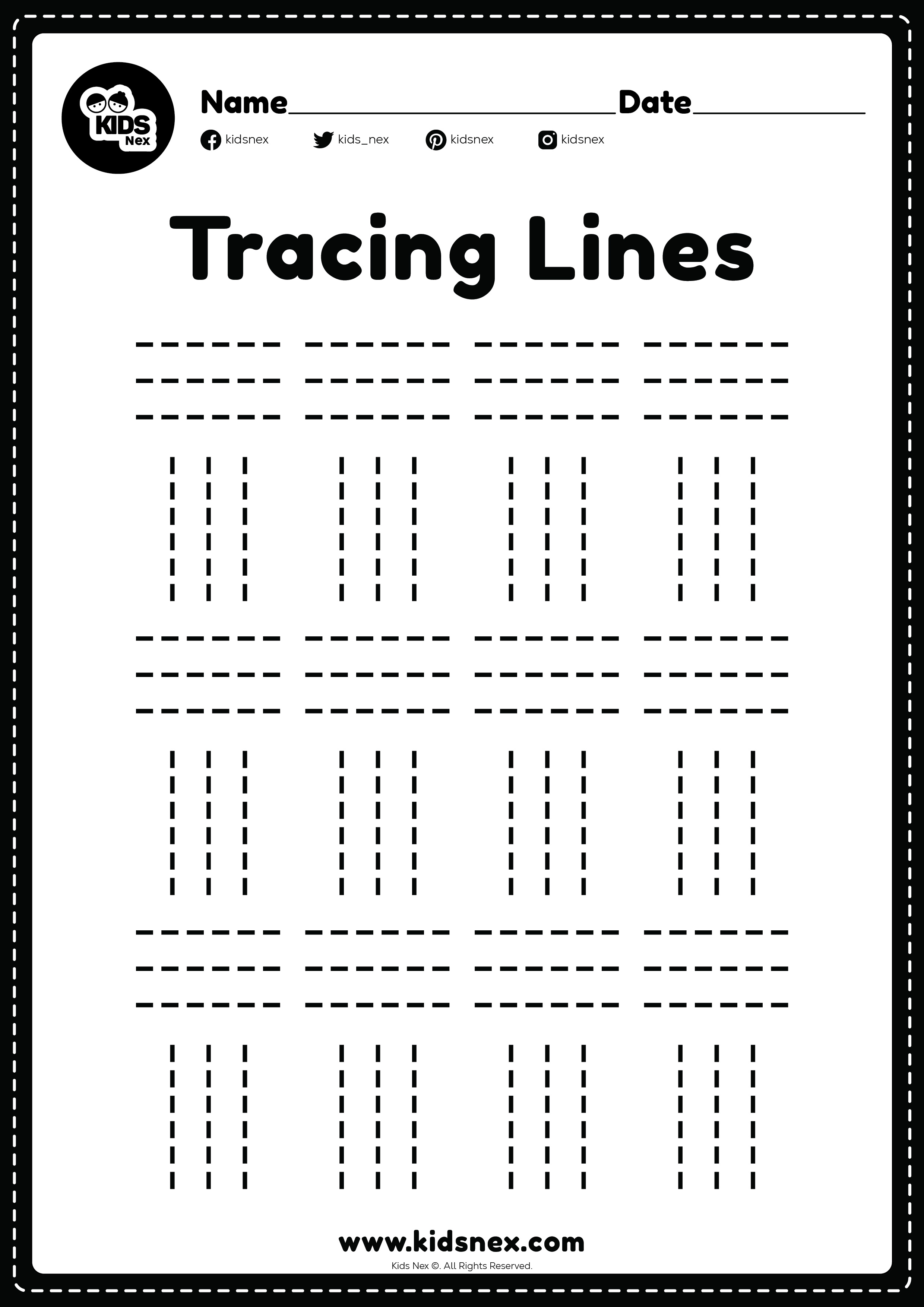
Straight line tracing sheets focus on vertical, horizontal, and diagonal paths that require sustained visual-motor integration and bilateral coordination. Mastering these foundational strokes prevents the formation of poor pencil habits later in childhood. When children trace simple paths from a designated starting point to a clear ending target, they learn spatial awareness and directional consistency. These skills directly support broader developmental milestones outlined across various Fine Motor and Pre-Writing Skills. Every stroke reinforces the connection between the eyes, the brain, and the small muscles of the hand.
Key Learning Outcomes
Children engaging with these printables strengthen their intrinsic hand muscles and improve finger isolation through consistent practice. Visual tracking improves significantly as the eyes learn to scan horizontally and vertically across the page without losing place. Pencil control transforms from a clumsy, whole-hand grasp into a more refined tripod or quadripod grip. Furthermore, children develop patience and perseverance as they learn to slow down and follow a designated track from start to finish.
How to Use This Worksheet
Setting up the tracing environment properly ensures children experience success without unnecessary frustration or hand fatigue. Flat surfaces, appropriate chair heights, and short practice sessions keep engagement high and physical strain low. According to the National Association for the Education of Young Children, young learners thrive when fine motor activities are presented as playful, low-stakes exploration rather than rigid drills. Adults can integrate these printables into daily routines by offering thick crayons for early beginners or standard pencils for older children refining their precision.
Practical Tips for Parents and Teachers
Adults should model proper pencil grip first, demonstrating how three fingers pinch the writing tool while the hand rests comfortably on the paper. Scaffolding the activity helps hesitant learners; tracing the line with a finger before introducing a pencil builds immediate confidence. Extending the challenge involves asking children to trace the lines using alternative tools like cotton swabs dipped in paint or dry-erase markers inside protective plastic sleeves. Consistency matters far more than volume, so short, daily sessions yield much better results than long, exhausting marathons.
Age-Appropriate Recommendations
For children ages two to four, the focus remains entirely on gross motor integration, thick writing tools, and simple vertical or horizontal tracks, aligning closely with typical early childhood development milestones. By ages five to eight, according to the Common Core standards for kindergarten and first grade, children refine their pencil control to navigate complex diagonal paths, zigzags, and intersecting lines with increasing speed and accuracy. Transitioning smoothly into more advanced letter and number formations becomes much easier once these foundational linear strokes are fully mastered across varied contexts.
Foundational fine motor control directly predicts early academic success and reading readiness in young children — American Occupational Therapy Association
Frequently Asked Questions
Clear answers to common questions help caregivers maximize the developmental benefits of daily tracing practice.
Explore More Free Printable Tracing Worksheets
Supporting a child’s early literacy journey requires access to a wide variety of engaging, developmentally appropriate resources that grow alongside the learner. Beyond linear practice, children benefit greatly from exploring letter formation found in Alphabet And Numbers Tracing collections. Caregivers can also discover specialized templates designed to build confidence through the complete collection available at KidTraces.com today.
Developmental Milestone & Activity Table
| Development Stage | Recommended Daily Duration | Primary Learning Objective |
|---|---|---|
| Preschool & Pre-K | 10 – 15 Minutes | Pencil grip development & basic pre-stroke lines |
| Kindergarten | 15 – 20 Minutes | Letter/number formation & spatial line awareness |
| Early Elementary (Grade 1–2) | 20 – 30 Minutes | Fluency, sentence construction & neatness |
Images References