Introduction
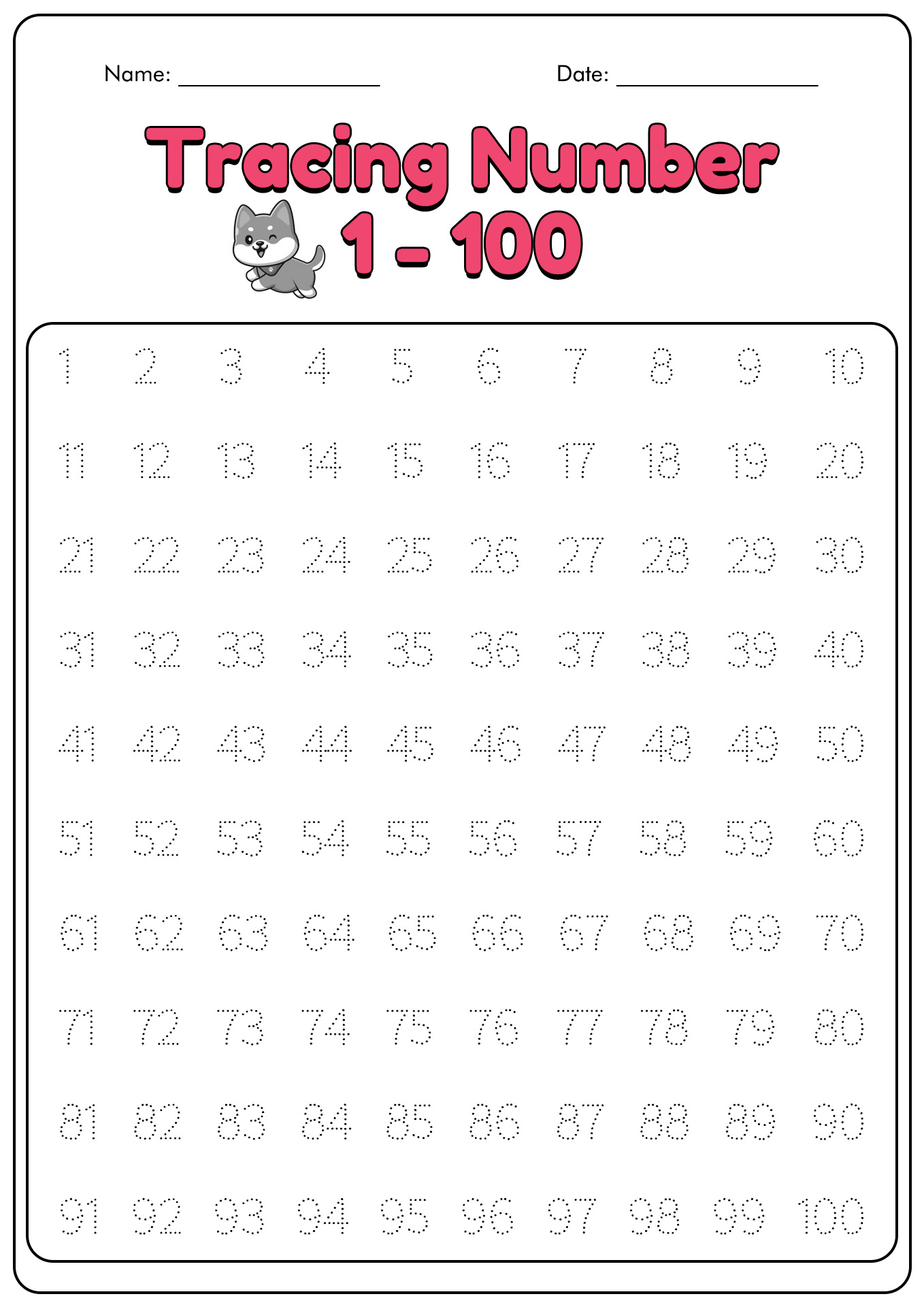
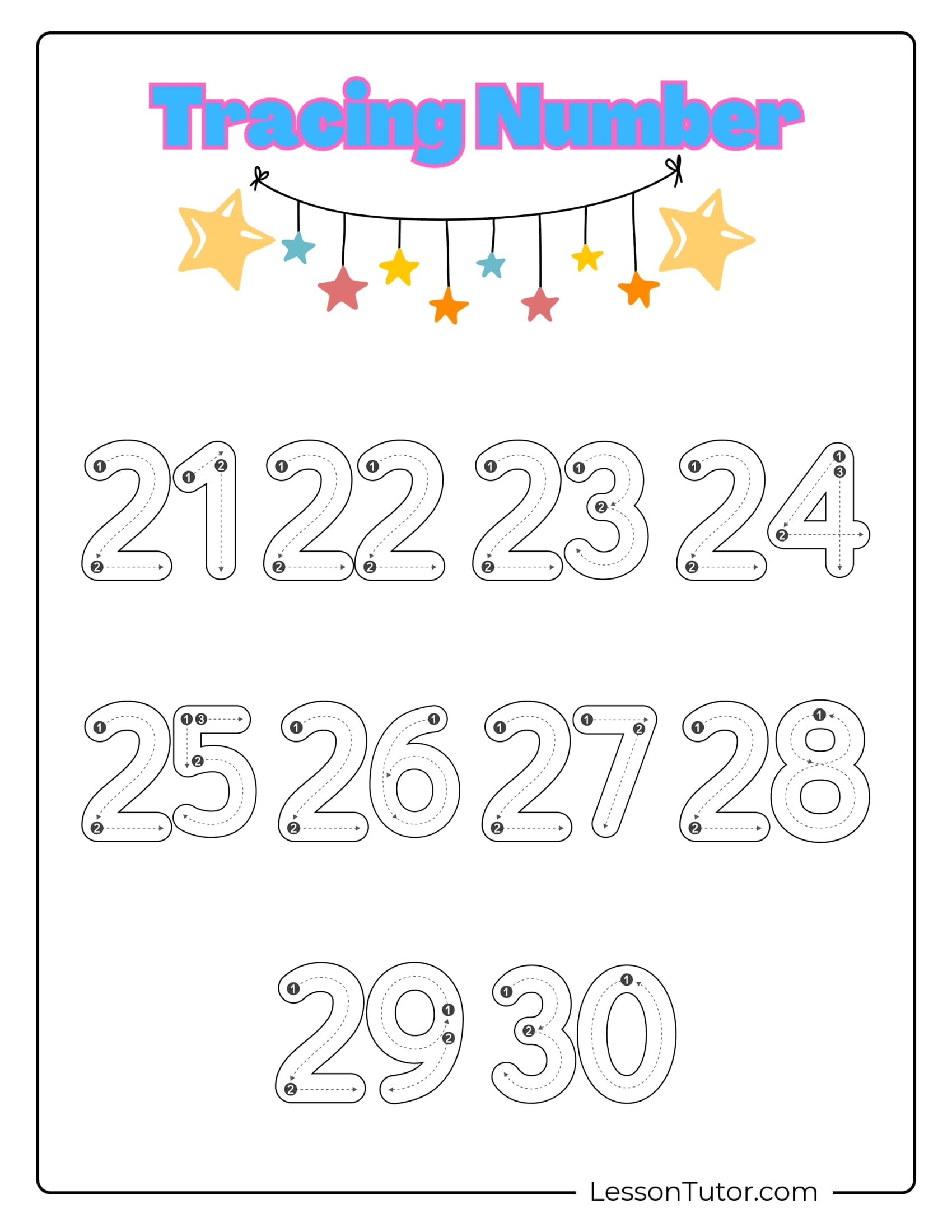
Watch any group of preschoolers, and children will frequently recite numbers up to one hundred with absolute delight, recognizing numerals long before tiny hands possess the physical endurance to form them on paper. According to the American Occupational Therapy Association, foundational fine motor control, adequate core strength, and mature grasp patterns must develop synchronously for children to successfully master pencil strokes and handwriting mechanics. It sounds simple, and that is the exact point of early numeric practice. Bridging the gap between cognitive mathematical understanding and physical execution requires intentional, structured guidance. This is where the free printable tracing number 1 to 100 resource provides essential support, offering a systematic pathway for young learners to translate auditory counting skills into confident, permanent pencil control. Structured tracking sheets alleviate the cognitive load of number generation so children can focus entirely on directional formation, proportional sizing, and spatial organization across the page.
💡 Educational Key Takeaways:
- Core Skill: Structured Tracing Number 1 Ton100 focused on developing pencil grip, stroke control, and early literacy/math confidence.
- Target Scope: Suited for homeschoolers, preschool, kindergarten, and elementary learners.
- Best Recommendation: Practice 10–15 minutes daily with ergonomic writing tools to reinforce muscle memory without hand fatigue.
What This Worksheet Covers
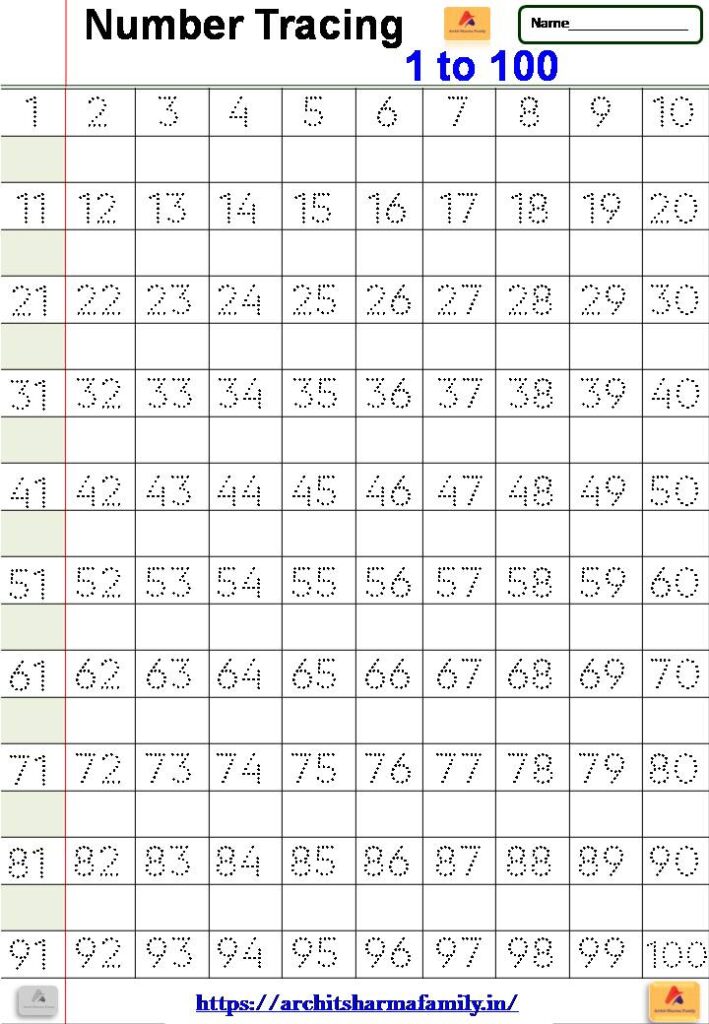
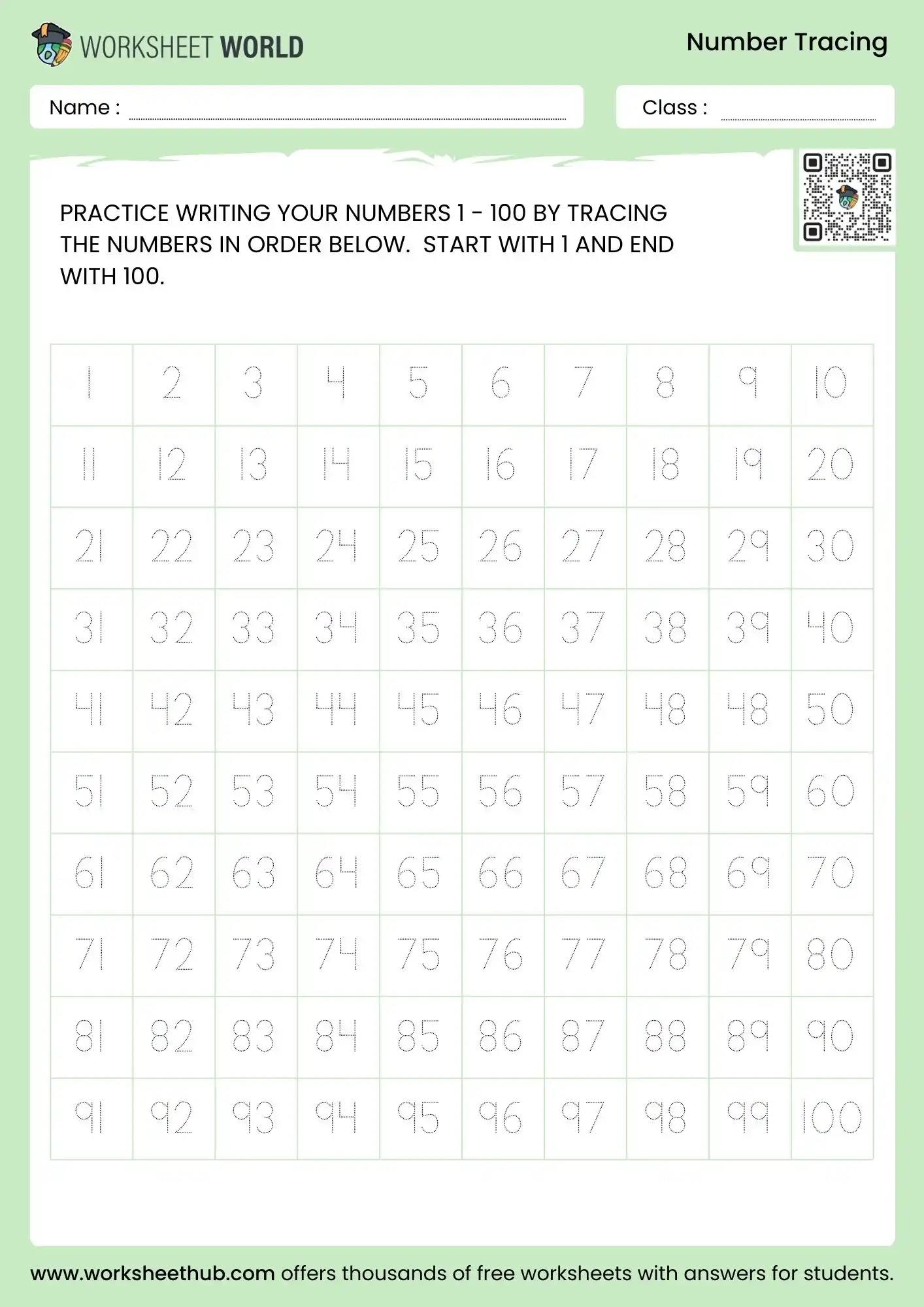
Mastering numerals requires more than just connecting random dots on a page; it demands an understanding of stroke sequences, vertical alignment, and consistent sizing from single digits into triple digits. This comprehensive resource guides children progressively from foundational digits up through the decades, ensuring that learners encounter consistent starting points and clear directional arrows for every single symbol. Many children recognize letters and numbers long before their fine motor coordination can form them, which makes structured dotted guides vital for bridging this developmental gap. The layout provides ample white space and properly proportioned grids to prevent visual crowding, supporting visual-motor integration as the eyes track across rows of numerals. By embedding these numbers into sequential rows, the activity simultaneously reinforces math literacy and foundational Fine Motor and Pre-Writing Skills without overwhelming the developing hand.
Key Learning Outcomes
Engaging systematically with comprehensive counting pages yields measurable benefits across early childhood development domains. Children develop precise pencil control by practicing continuous curved lines in figures like six and eight, alongside sharp directional changes required for numbers four and seven. Visual-motor integration strengthens as the hand translates what the eyes perceive into smooth, controlled strokes within designated boundaries. Additionally, numerical fluency deepens organically because tracing reinforces left-to-right reading habits, structural patterning, and the base-ten sequencing necessary for future mathematical success. Consistent repetition builds lasting muscle memory, transforming labored, jerky movements into fluid, automatic handwriting strokes that ultimately reduce academic fatigue during longer writing tasks.
How to Use This Worksheet
Success with high-volume counting pages depends heavily on pacing, environmental setup, and positive adult scaffolding rather than rushed completion. Adults should introduce these sheets in short, manageable bursts—perhaps focusing on a single row or decade per sitting—rather than demanding a grueling march all the way to one hundred in one sitting. Placing the paper on a flat, stable surface helps maintain proper posture and wrist extension, which protects the delicate small muscles of the hand from cramping. It helps to remember that hand fatigue is a real physical barrier for young children, so stopping before frustration sets in ensures that tracing remains a positive, confidence-building experience. Pairing the activity with multisensory tools, such as tracing the numbers in a shallow tray of sand or salt prior to pencil work, solidifies the kinesthetic pathway.
Practical Tips for Parents and Teachers
Guiding pencil grip effectively prevents the establishment of awkward habits that become exceptionally difficult to correct later in childhood. Adults should gently encourage a functional tripod or quadrupod grasp, ensuring the thumb and index finger pinch the writing tool while resting comfortably on the middle finger. Scaffolding the experience involves sitting beside the child to model the correct starting point at the top of each numeral, using verbal cues like “start at the top dot and pull straight down.” As confidence grows, adults can gradually fade support to encourage independent execution across the later rows. Teachers and parents can also utilize tools like short stubby crayons or broken chalk pieces, which naturally encourage optimal finger pinching rather than a clumsy fist grasp.
Age-Appropriate Recommendations
Developmental readiness dictates how children interact with numerical tracing resources across different early childhood stages. According to the National Association for the Education of Young Children developmentally appropriate practice guidelines, younger children aged two to four benefit most from exploring larger Shape and Line Tracing activities or individual single-digit numerals to build basic hand strength and directional awareness. By the time children reach ages five through eight, aligned with foundational school readiness milestones, they possess the sustained attention span, visual tracking capacity, and intrinsic hand endurance required to navigate multi-step resources like a full one-to-one-hundred tracking layout.
Foundational fine motor control, adequate core strength, and mature grasp patterns must develop synchronously for children to successfully master pencil strokes. — American Occupational Therapy Association
Frequently Asked Questions
Navigating early childhood writing tools raises common questions regarding implementation, printing logistics, and developmental milestones. Below are direct answers to help maximize the value of these educational printables at home or inside the classroom.
According to the National Center for Learning Disabilities, explicit instruction in handwriting mechanics and stroke sequence significantly reduces frustration and improves written expression in young learners. — National Center for Learning Disabilities
Explore More Free Printable Tracing Worksheets
Expanding a child’s early academic toolkit involves incorporating a wide variety of engaging, developmentally appropriate activities tailored to specific learning milestones. Beyond mastering numerals, children benefit tremendously from exploring letter formation found within Alphabet And Numbers Tracing collections, or building targeted letter-recognition habits through specialized Dotted Letters For Tracing pages. Educators and caregivers looking to maintain high engagement throughout the changing calendar year will also discover wonderful options within the Seasonal and Fun Themes archives. To browse the complete catalog of educational resources designed by experienced educators, visit the main library at KidTraces.com for unrestricted access to all available categories.
Developmental Milestone & Activity Table
| Development Stage | Recommended Daily Duration | Primary Learning Objective |
|---|---|---|
| Preschool & Pre-K | 10 – 15 Minutes | Pencil grip development & basic pre-stroke lines |
| Kindergarten | 15 – 20 Minutes | Letter/number formation & spatial line awareness |
| Early Elementary (Grade 1–2) | 20 – 30 Minutes | Fluency, sentence construction & neatness |
Images References