Introduction
Many young children recognize numerals long before their developing hands possess the intrinsic strength required to form them on paper. According to the American Occupational Therapy Association, foundational fine motor control and bilateral coordination must develop concurrently with cognitive mathematical awareness to ensure successful handwriting. Mastering numeral formation requires precise visual-motor integration, spatial planning, and consistent stroke directionality. Bridging this gap between visual recognition and physical execution often begins with structured practice materials like the number tracing 1-50,3″,0″,0%”,3.6667″” printable. This resource provides the guided repetition necessary for children to transition from erratic marks to controlled, legible digits.
💡 Educational Key Takeaways:
- Core Skill: Structured Number Tracing 1-50″,3″,0″,0%”,3.6667″ focused on developing pencil grip, stroke control, and early literacy/math confidence.
- Target Scope: Suited for homeschoolers, preschool, kindergarten, and elementary learners.
- Best Recommendation: Practice 10–15 minutes daily with ergonomic writing tools to reinforce muscle memory without hand fatigue.
What This Worksheet Covers
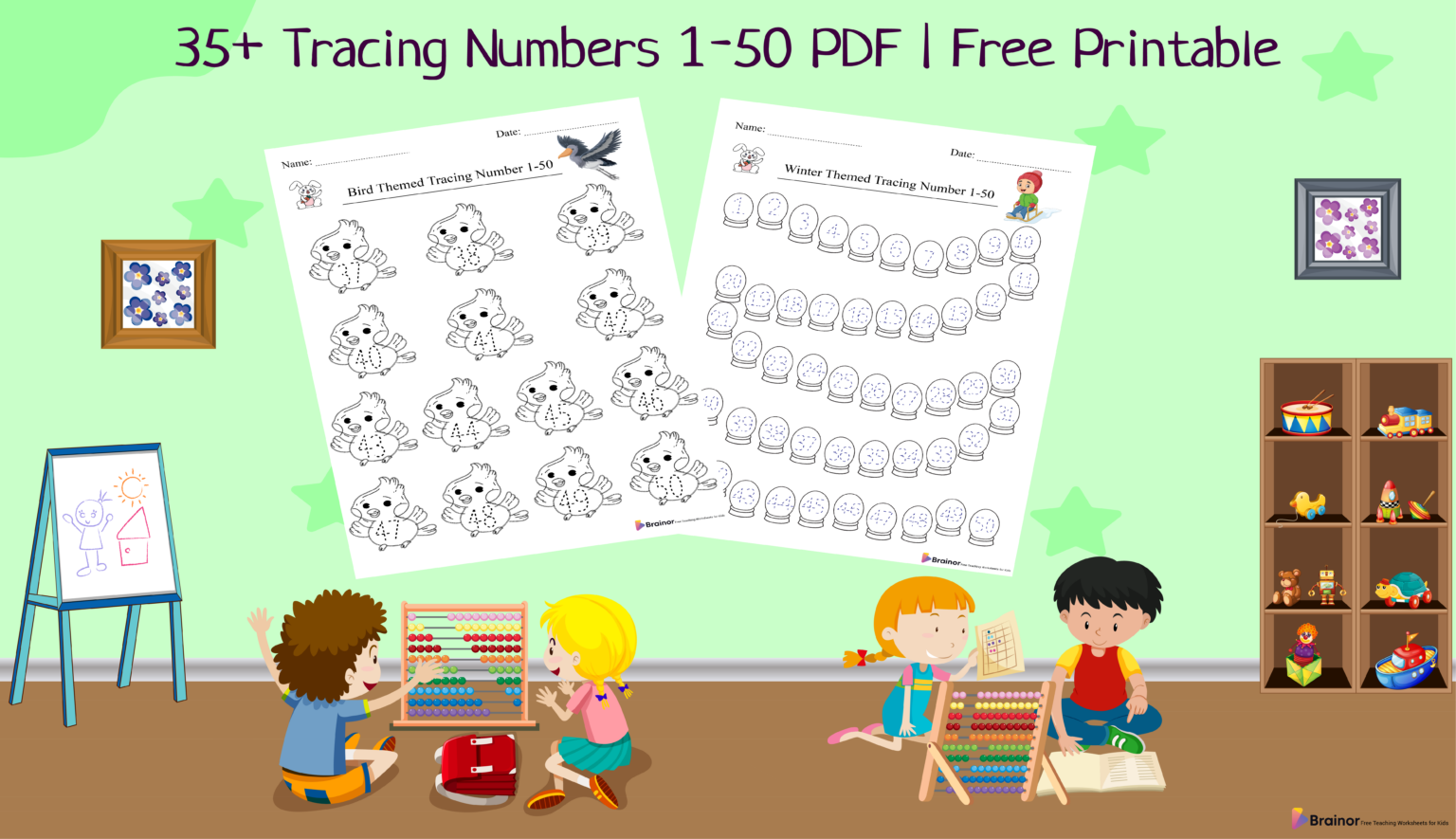
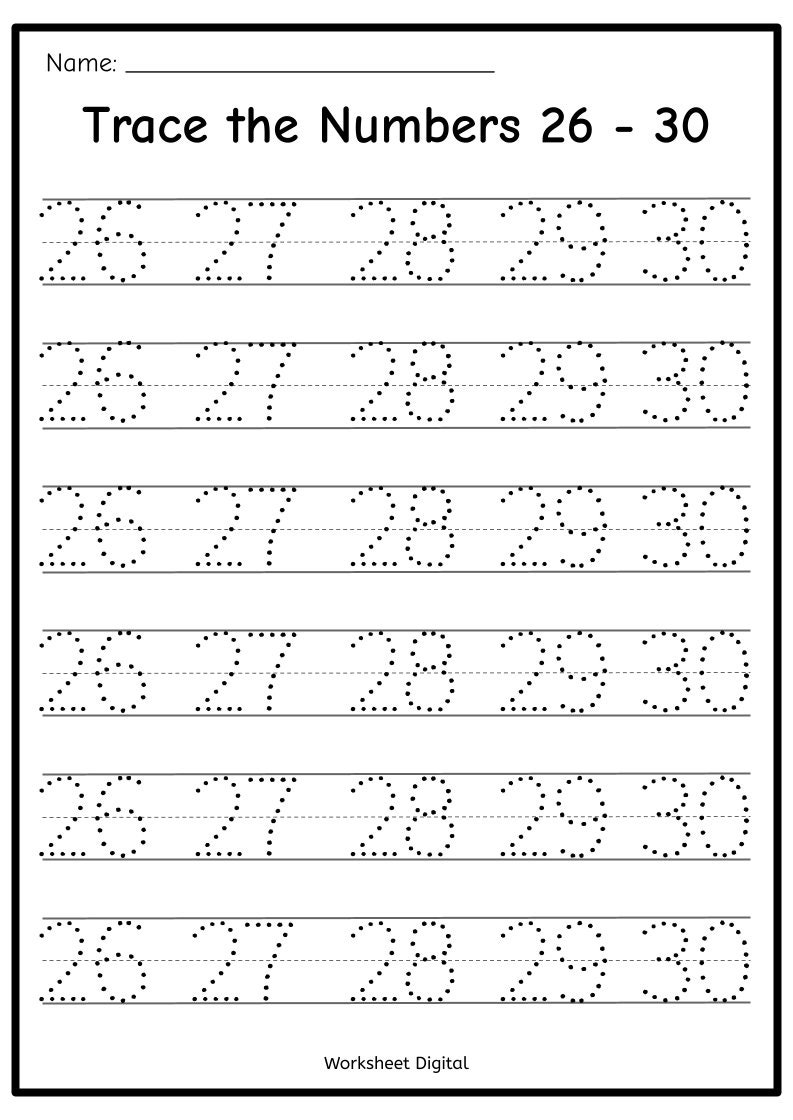
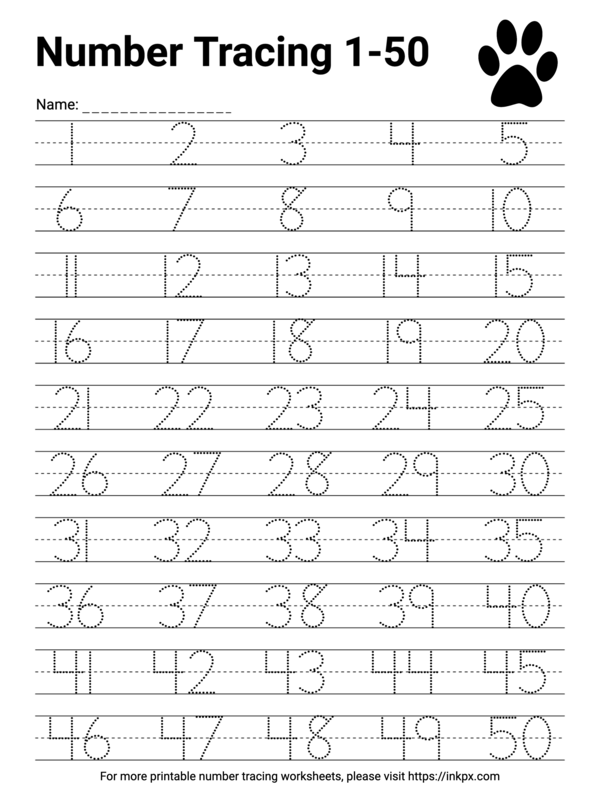
The printable resource systematically guides learners through the complete sequence of numbers from one to fifty, addressing both single-digit precision and double-digit spatial alignment. Every numeral is presented with clear visual cues, including designated starting points and directional arrows that teach proper stroke order from the very first mark. It sounds simple, and that’s the point: consistent exposure to correctly formed models reduces the likelihood of developing persistent reversals and awkward pencil grips. By breaking down the count into manageable rows, the layout prevents visual fatigue while steadily building endurance across the hand and wrist. Educators often find that structured numeral practice supports broader mathematical understanding, connecting the physical symbol directly to quantitative value. Exploring options within Tracing Number pages helps children solidify these foundational math and writing skills simultaneously.
Key Learning Outcomes
Engaging with this printable fosters immediate improvements in pencil control, visual-motor integration, and spatial awareness across the page. Learners build essential finger dexterity as they navigate the curves of numbers like three and eight, as well as the straight vertical lines required for ones and fours. Furthermore, the progression up to fifty reinforces sequential numerical order, anchoring cognitive counting skills into physical memory. Maintaining consistent size and alignment between digits strengthens proportional awareness, which serves as a direct precursor to legible math computation later in the elementary years. For foundational work leading up to complex numeral sequences, utilizing resources found in Fine Motor and Pre-Writing Skills establishes the necessary muscle tone and hand stability.
How to Use This Worksheet
Success with numeral tracing relies heavily on establishing a supportive physical environment before the pencil ever touches the paper. Feet should rest flat on the floor, hips and knees bent at ninety-degree angles, and the non-dominant hand should actively stabilize the top corner of the page. Introducing short, frequent sessions rather than long, fatiguing blocks yields the best results for developing hand muscles. According to Reading Rockets, brief daily writing practice significantly enhances letter and number automaticity in early elementary students. Adults can sit beside the learner to monitor pencil grasp, intervening gently if an immature fist grasp or excessive thumb wrap appears. When children struggle with specific formations, tracing over a completed line with a thick marker or textured material provides helpful tactile feedback.
Practical Tips for Parents and Teachers
Adults play a vital role in scaffolding the tracing process to match the unique needs of each developing writer. Modeling correct stroke order in the air or on a small whiteboard before letting the child touch the worksheet clarifies the expected movement pattern. Instead of erasing mistakes immediately, guiding the hand through a corrected stroke builds kinesthetic awareness without causing frustration. Tools like broken crayons or short pencils naturally encourage a functional tripod grasp by limiting the space available for resting fingers incorrectly. For children who master standard tracing quickly, challenging them to write the numerals independently in the blank spaces below the dotted lines extends the learning. Families seeking additional practice material often explore the diverse options available within Tracing Worksheets to maintain engagement.
Age-Appropriate Recommendations
According to CDC developmental milestones, children generally begin imitating vertical and horizontal lines around age two, gradually progressing to complex diagonal lines and closed shapes by age four. For younger learners aged two to four, focusing on large motor pre-writing strokes and simple counting is much more appropriate than demanding neat numeral formation on small lines. By ages five through eight, aligned with the National Association for the Education of Young Children Developmentally Appropriate Practice, children possess the hand strength and cognitive readiness to tackle structured multi-digit sequences like counting and writing to fifty. During these early elementary years, expectations should shift toward consistent baseline placement, proportional sizing, and correct left-to-right directionality. Incorporating thematic variations from Seasonal and Fun Themes keeps older preschoolers and kindergarteners motivated during skill practice.
Foundational fine motor control and bilateral coordination must develop concurrently with cognitive mathematical awareness to ensure successful handwriting. — American Occupational Therapy Association
Frequently Asked Questions
Navigating early writing development often brings up practical questions regarding materials, pacing, and readiness. The answers below address common inquiries from educators and families supporting young learners.
Tracing numbers supports fine motor development by strengthening intrinsic hand muscles and refining the visual-motor integration needed for precise pencil control. — American Occupational Therapy Association
Explore More Free Printable Tracing Worksheets
Supporting a child’s journey toward independent writing requires a diverse toolkit of engaging, developmentally appropriate materials. Exploring the full library at KidTraces.com reveals hundreds of printables designed to target everything from early pencil grips to complex letter sequences. Every child advances at an individual pace, and having access to a broad range of resources ensures practice remains fresh, encouraging, and perfectly matched to current developmental stages.
Developmental Milestone & Activity Table
| Development Stage | Recommended Daily Duration | Primary Learning Objective |
|---|---|---|
| Preschool & Pre-K | 10 – 15 Minutes | Pencil grip development & basic pre-stroke lines |
| Kindergarten | 15 – 20 Minutes | Letter/number formation & spatial line awareness |
| Early Elementary (Grade 1–2) | 20 – 30 Minutes | Fluency, sentence construction & neatness |
Images References