Introduction
Many children recognize letters, numbers, and shapes long before their fine motor skills can physically form them on paper. According to the American Occupational Therapy Association, foundational hand strength and dexterity are essential prerequisites for functional handwriting and classroom tool use. Sitting down with a pencil often brings frustration when small muscles tire quickly or lack the necessary stability to control strokes. Engaging themes can completely transform this dynamic, turning a tedious exercise into an exciting galactic mission. The free printable robot line tracing worksheet bridges that exact gap by capturing interest while systematically building the hand control required for future literacy and writing tasks. It sounds simple, and that is the point: removing the pressure of formal writing while targeting the precise biomechanics of pencil control.
💡 Educational Key Takeaways:
- Core Skill: Structured Robot Line Tracing Worksheet focused on developing pencil grip, stroke control, and early literacy/math confidence.
- Target Scope: Suited for homeschoolers, preschool, kindergarten, and elementary learners.
- Best Recommendation: Practice 10–15 minutes daily with ergonomic writing tools to reinforce muscle memory without hand fatigue.
What This Worksheet Covers
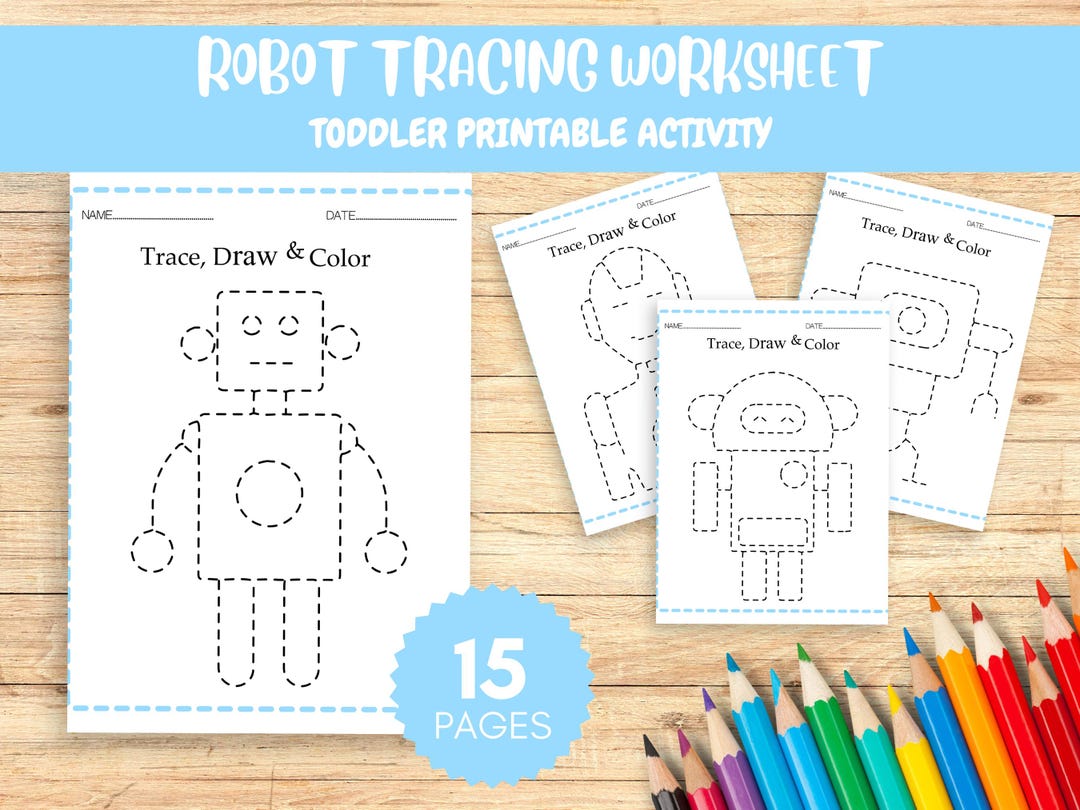
This resource focuses heavily on pre-writing strokes, directional tracking, and visual-motor integration using a fun mechanical theme. Children guide friendly robots through circuit boards, zigzag energy beams, and loop-de-loop flight paths. These paths simulate every baseline stroke found in the alphabet, from horizontal and vertical lines to diagonals, intersecting crosses, and continuous curves. By tracing these paths, learners build the spatial awareness and muscle memory needed for accurate Shape and Line Tracing. Hand-eye coordination improves naturally as eyes track ahead of the writing utensil to anticipate the next curve or corner.
Key Learning Outcomes
Working through these mechanical paths strengthens the intrinsic muscles of the hand, which directly supports a mature tripod grasp. Learners practice maintaining consistent downward pressure and fluid pacing from left to right, mirroring the visual scanning patterns required for early reading. The activity also develops bilateral coordination, requiring one hand to stabilize the paper while the other manipulates the writing tool. Over time, children transition from choppy, erratic segments to smooth, continuous lines. This progression forms the bedrock for advanced Fine Motor and Pre-Writing Skills without forcing premature letter formation.
How to Use This Worksheet
Flexibility is key when introducing fine motor activities to young children. Begin by placing the sheet on a flat, stable surface at a comfortable height where the feet can rest flat on the floor or a footrest. Encourage starting points on the left side of the page, guiding the hand naturally across the midline. If standard pencils cause immediate hand fatigue, consider using broken crayons, short golf pencils, or triangular grips to naturally encourage proper finger placement. Laminating the sheet or slipping it into a heavy-duty dry erase pocket allows for endless practice and error-free experimentation.
Practical Tips for Parents and Teachers
Adults play a powerful scaffolding role during early writing sessions. Model the correct grip first, emphasizing a relaxed pinch between the thumb and index finger supported by the middle finger. Guide a hesitant hand gently through the first few circuits, verbalizing the motion with fun sound effects like buzzing or zapping to keep the mood light. Scaffold the activity by allowing thicker markers for younger learners, gradually shifting to standard pencils as control improves. Extend the challenge for older children by asking them to trace the paths backward or using their non-dominant hand to build cross-hemispheric brain connections.
Age-Appropriate Recommendations
Developmental expectations vary significantly across early childhood, making tailored approaches crucial. According to the National Association for the Education of Young Children (NAEYC) Developmentally Appropriate Practice framework, toddlers and young preschoolers benefit most from gross-to-fine motor transitions, focusing on thick straight lines and large curves using finger paint or chunky crayons. Older preschoolers and early elementary students in kindergarten through grade two refine these skills through precise pencil control, tackling intricate zigzags, continuous loops, and tight corners. Recognizing these distinct stages prevents frustration and ensures that every child works at a pace matched to their neurological and physical development.
Foundational hand strength, bilateral coordination, and visual-motor integration are key developmental predictors for successful early writing and classroom tool mastery. — American Occupational Therapy Association (AOTA)
Frequently Asked Questions
Explore More Free Printable Tracing Worksheets
Building a robust foundation for writing requires variety, consistency, and plenty of engaging practice opportunities. The robot line tracing worksheet is just one exciting piece of a much larger developmental puzzle designed to support growing hands and minds. Caregivers and educators can discover an extensive library of free resources by visiting KidTraces.com. Whether transitioning into structured letter formation through Dotted Letters For Tracing or exploring engaging seasonal concepts via Seasonal and Fun Themes, every collection is crafted to make skill-building joyful. Explore the full range of Tracing Worksheets today to support every step of the early learning journey.
Developmental Milestone & Activity Table
| Development Stage | Recommended Daily Duration | Primary Learning Objective |
|---|---|---|
| Preschool & Pre-K | 10 – 15 Minutes | Pencil grip development & basic pre-stroke lines |
| Kindergarten | 15 – 20 Minutes | Letter/number formation & spatial line awareness |
| Early Elementary (Grade 1–2) | 20 – 30 Minutes | Fluency, sentence construction & neatness |
Images References