Introduction
Many children recognize letters, numbers, and geometric forms long before their fine motor skills and hand strength can actually form them on paper. According to the American Occupational Therapy Association, foundational fine motor control and visual-motor integration are critical prerequisites for successful handwriting and classroom participation. Educators and therapists constantly search for effective ways to bridge this gap between cognitive understanding and physical execution. The free printable pre writing shape square provides a structured, frustration-free pathway for young learners to master the exact strokes required for future letters like H, L, and T. It sounds simple, and that is precisely the point. By focusing intensely on mastering horizontal and vertical lines meeting at distinct 90-degree corners, children build the foundational muscle memory needed for advanced academic tasks.
💡 Educational Key Takeaways:
- Core Skill: Structured Pre Writing Shape Square focused on developing pencil grip, stroke control, and early literacy/math confidence.
- Target Scope: Suited for homeschoolers, preschool, kindergarten, and elementary learners.
- Best Recommendation: Practice 10–15 minutes daily with ergonomic writing tools to reinforce muscle memory without hand fatigue.
What This Worksheet Covers
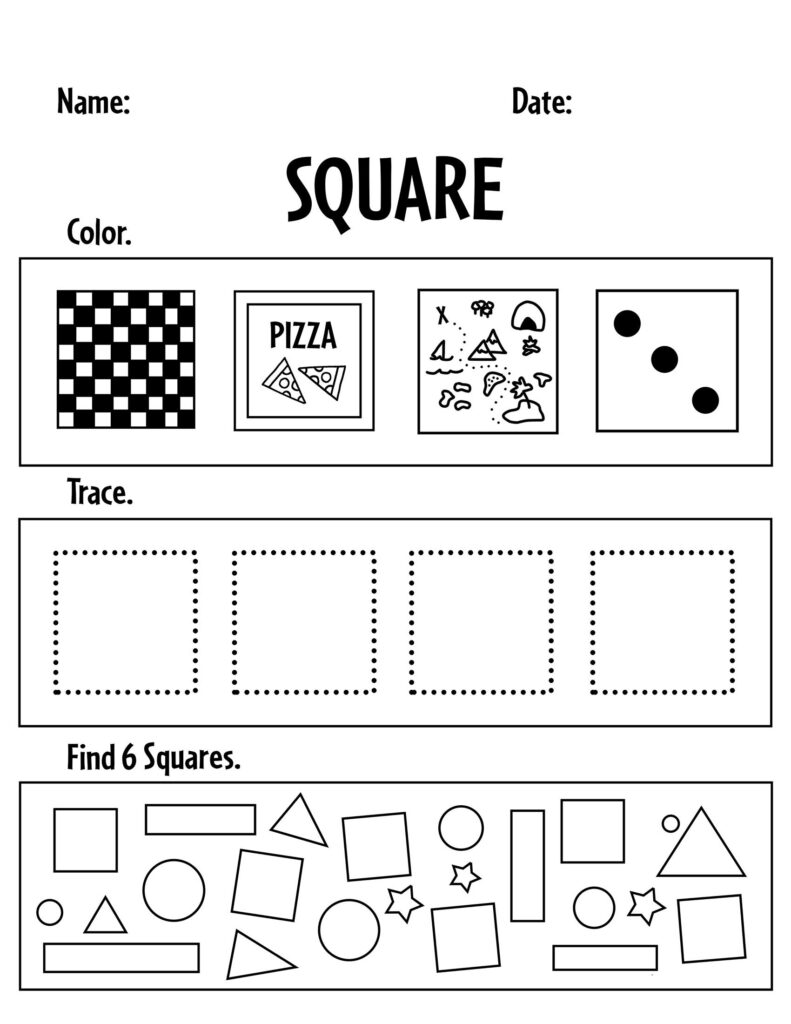
Targeting the fundamental building blocks of geometric drawing, this resource focuses on continuous line control, directional changes, and spatial awareness. The layout offers guided visual prompts that gently encourage young hands to slow down, regulate pressure, and pivot accurately at every corner rather than rounding off the edges. This intentional design addresses the biomechanical challenges of pencil control, helping learners transition from random scribbling to deliberate, controlled strokes. Integrating tools from Shape and Line Tracing collections allows children to explore these directional shifts in a playful, low-pressure format.
Key Learning Outcomes
Working through these guided squares fosters several critical developmental achievements simultaneously. Children naturally refine their pencil grasp as they navigate tight corners, shifting from a crude palmar grasp toward a mature dynamic tripod posture. Visual-motor integration improves significantly as the eyes guide the hand to start, stop, and turn at precise coordinates on the page. Additionally, learners develop bilateral coordination, utilizing one hand to stabilize the paper while the dominant hand executes the tracing movement. These combined outcomes strengthen overall hand strength and finger dexterity, preparing young learners for broader milestones found across Fine Motor and Pre-Writing Skills resources.
How to Use This Worksheet
Success with early writing tools relies heavily on the environment and the physical approach adopted during the activity. Adults should introduce the page when energy levels are high and distractions are minimal, ensuring the child sits with feet flat on the floor and hips at a ninety-degree angle for optimal core stability. It helps to start with a multisensory warm-up, such as drawing squares in the air or tracing tactile sandpaper cutouts before touching a pencil to paper. Scaffolding the experience properly prevents hand fatigue and keeps frustration at bay during early attempts at crisp geometric shapes.
Practical Tips for Parents and Teachers
Adults play a vital role in modeling proper pencil grip and offering gentle physical guidance without taking over the movement. Scaffolding the activity involves beginning with thicker writing utensils like short crayons or broken chalk pieces, which naturally encourage a proper tripod grasp, before transitioning to standard pencils. When a child struggles with the sharp corners, adults can place a small sticker at each vertex to serve as a visual “stop and turn” sign. Extending the lesson further involves encouraging children to find physical square objects around the room, connecting the 2D tracing exercise to their immediate three-dimensional environment.
Age-Appropriate Recommendations
According to the National Association for the Education of Young Children guidelines for developmentally appropriate practice, children aged two to four benefit most from large-scale pre-writing strokes using thick markers on vertical surfaces, which promotes shoulder stability and wrist extension. For children aged five to eight, the focus shifts toward refined pencil control, accurate corner formation, and maintaining consistent line pressure on standard worksheets. This older group can also explore complementary pages from Tracing Worksheets to reinforce letter and number geometry.
According to the Centers for Disease Control and Prevention developmental milestones, children typically learn to copy a square and draw basic geometric shapes around age four. — CDC
Frequently Asked Questions
Clear guidance on implementing tracing activities helps caregivers maximize the developmental benefits of every printable resource used at home or inside the classroom.
Explore More Free Printable Tracing Worksheets
Supporting a child’s developmental journey requires a diverse array of engaging, high-quality practice materials that grow alongside their expanding capabilities. The complete library at KidTraces.com offers countless free resources designed to build confidence, strengthen hand muscles, and foster a lifelong love of learning through structured, playful practice.
Developmental Milestone & Activity Table
| Development Stage | Recommended Daily Duration | Primary Learning Objective |
|---|---|---|
| Preschool & Pre-K | 10 – 15 Minutes | Pencil grip development & basic pre-stroke lines |
| Kindergarten | 15 – 20 Minutes | Letter/number formation & spatial line awareness |
| Early Elementary (Grade 1–2) | 20 – 30 Minutes | Fluency, sentence construction & neatness |
Images References