Introduction
Many children recognize letters, numbers, and geometric forms long before their fine motor control allows them to replicate those shapes on paper. According to the American Occupational Therapy Association, foundational fine motor skills—including hand strength, bilateral coordination, and visual-motor integration—must develop alongside cognitive awareness before a child can master fluid handwriting. It sounds simple, and that is precisely the point. The free printable draw shapes tracing to dot worksheet bridges the gap between seeing a shape and physically controlling a writing tool to create it. Pencil control does not happen by accident. Young learners need intentional, structured opportunities to connect starting points with precise stopping targets. Shape and line tracing acts as the essential stepping stone, transforming loose hand movements into purposeful, controlled strokes. Early childhood classrooms frequently reveal that children hold immense creative potential, yet their fingers and wrists tire quickly without proper foundational practice. This resource meets that exact developmental need, offering a structured path toward pencil mastery.
💡 Educational Key Takeaways:
- Core Skill: Structured Draw Shapes Tracing To Dot focused on developing pencil grip, stroke control, and early literacy/math confidence.
- Target Scope: Suited for homeschoolers, preschool, kindergarten, and elementary learners.
- Best Recommendation: Practice 10–15 minutes daily with ergonomic writing tools to reinforce muscle memory without hand fatigue.
What This Worksheet Covers
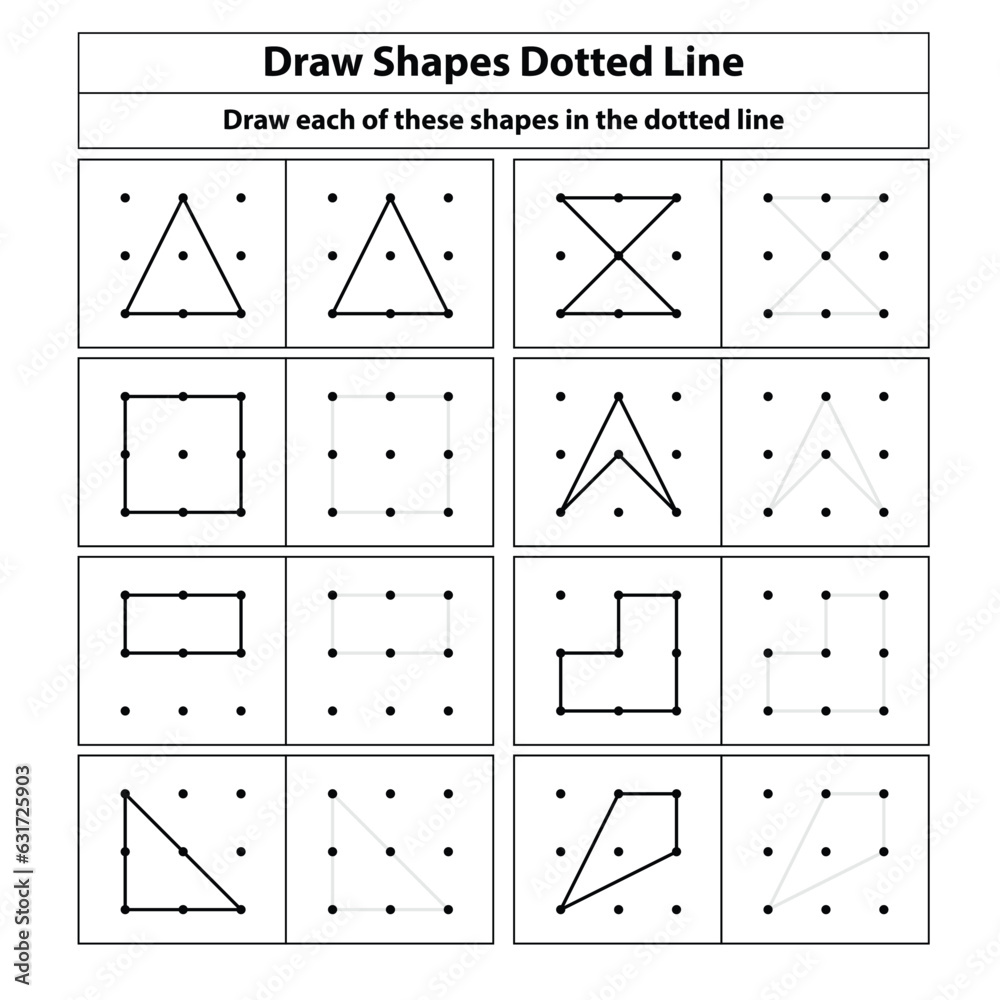
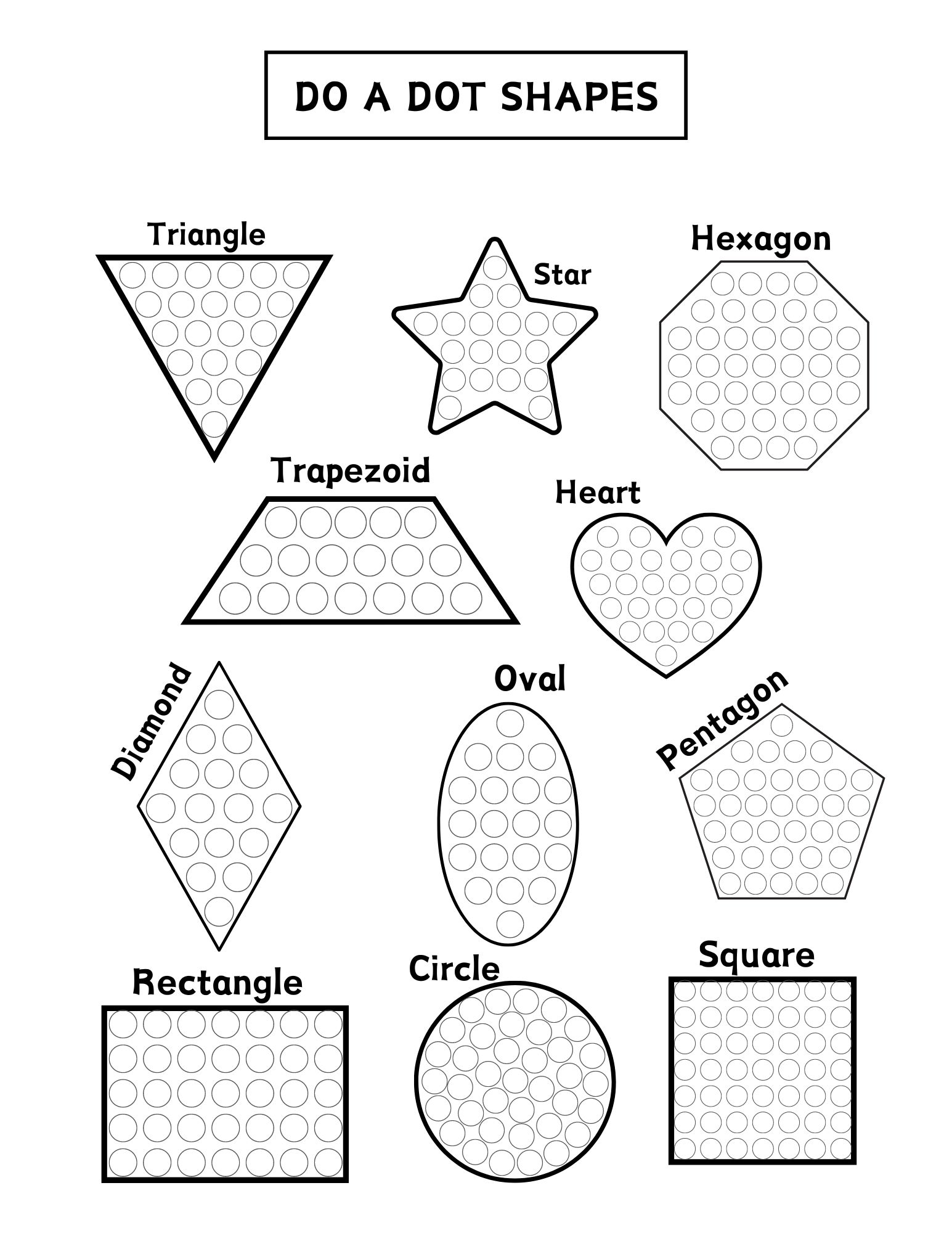
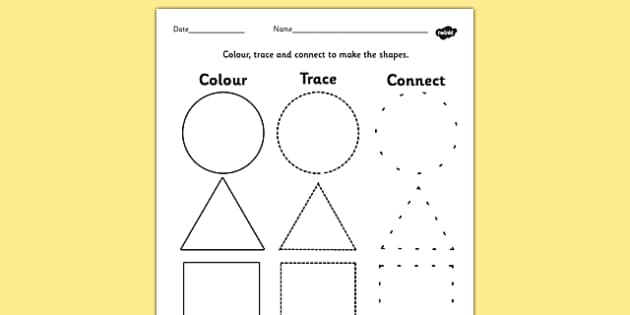
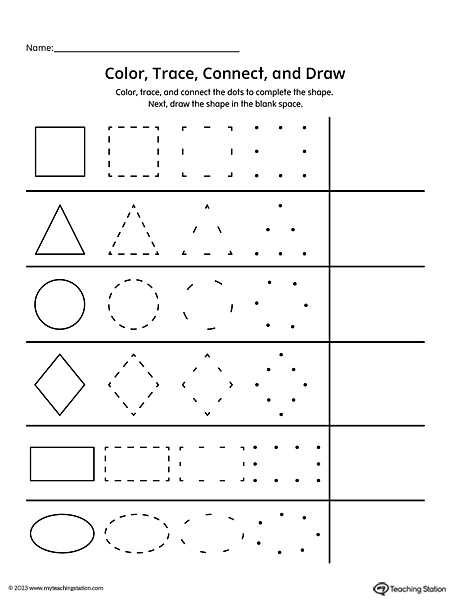
The draw shapes tracing to dot printable focuses directly on pre-writing strokes, spatial awareness, and visual-motor integration. Children encounter a series of geometric outlines, ranging from simple vertical and horizontal lines to complex circles, triangles, and squares, paired with distinct dot-to-dot markers. Every exercise requires careful visual tracking from a designated anchor point to a final destination. Hand muscles learn to modulate pressure, slowing down as the pencil tip approaches the target dot. This process directly supports the broader progression found within Shape and Line Tracing activities, where control matters far more than speed. As children complete each line, they reinforce the exact muscle memory required for future letter and numeral formation. Directionality—starting at the top and moving down, or starting on the left and moving right—becomes second nature through repeated dot-to-dot execution.
Key Learning Outcomes
Working through these dot-guided shape exercises yields measurable growth across multiple developmental domains. First, hand-eye coordination improves dramatically as the eyes guide the hand to land precisely on the target dot rather than drifting past it. Second, finger dexterity and intrinsic hand muscle strength develop as children maintain a functional pencil grasp over sustained periods. Third, visual closure and spatial perception strengthen, allowing young learners to understand boundaries, angles, and directional changes within geometric forms. Finally, cognitive concentration deepens, fostering the patience and perseverance necessary for early literacy tasks. Children begin to anticipate where lines intersect, building an intuitive understanding of geometry long before formal math instruction begins. These integrated outcomes lay the groundwork for success in broader Fine Motor and Pre-Writing Skills programs.
How to Use This Worksheet
Successful implementation begins with setting up an optimal workspace where feet rest flat on the floor and the table sits at elbow height. Slide the worksheet inside a heavy-duty clear plastic sheet protector and provide a dry-erase marker for low-stakes, repeatable practice. Children often relax more when they know an accidental slip can be easily wiped away. Encourage the use of colorful thin markers or crayons if using paper directly, as these tools provide pleasant sensory feedback against the page. Point directly to the starting dot before letting the hand take over, verbally reinforcing directional cues like top-to-bottom or left-to-right. Pairing these visual exercises with tactile exploration—such as tracing textured shapes in sand or shaving cream—helps lock the physical movement into long-term muscle memory before putting pencil to paper.
Practical Tips for Parents and Teachers
Watch closely for a tight, fisted grip and gently guide small fingers into a three-point tripod grasp using short, broken crayons or golf pencils to naturally restrict clumsy hand movements. Scaffolding is vital during early attempts; place a guiding hand lightly over the child’s hand for the first few shapes, then gradually fade physical assistance until independent tracing occurs. Extend the learning beyond the page by asking children to identify shapes found around the room after completing the worksheet, bridging abstract paper lines with the concrete physical environment. When fatigue sets in, pause the activity immediately, because forcing tired hand muscles to keep writing only reinforces poor biomechanics and frustration. Keep sessions brief, joyful, and focused on progress rather than perfection.
Age-Appropriate Recommendations
According to the National Association for the Education of Young Children Developmentally Appropriate Practice guidelines, children aged two to four benefit most from large-scale pre-writing strokes, vertical lines, and simple horizontal paths that engage shoulder and elbow joints. At this developmental stage, the draw shapes tracing to dot worksheet serves as an engaging introduction to holding a writing tool with purpose. By ages five through eight, children refine their motor control toward distal finger movements, allowing them to tackle complex closed shapes, sharp angles, and precise dot-to-dot sequences with accuracy. Transitioning smoothly into related writing tasks becomes much easier when foundational shape control is established during these early years. Educators can easily pair these exercises with resources found in Alphabet And Numbers Tracing to support comprehensive school readiness.
Visual-motor integration and fine motor control are primary predictors of early academic success and pencil legibility in primary school classrooms. — American Occupational Therapy Association
Frequently Asked Questions
Answering common questions helps caregivers maximize the benefits of daily pre-writing practice.
Explore More Free Printable Tracing Worksheets
Supporting a child’s journey toward independent writing requires a diverse library of engaging, skill-building resources. Beyond mastering geometric forms, young learners benefit greatly from exploring letter formation, seasonal motifs, and number recognition across different developmental stages. Caregivers and educators can discover a vast selection of targeted activities by visiting the complete collection at KidTraces.com. Every free printable is thoughtfully designed to build confidence, strengthen hand muscles, and foster a lifelong love of learning through playful, structured practice.
Developmental Milestone & Activity Table
| Development Stage | Recommended Daily Duration | Primary Learning Objective |
|---|---|---|
| Preschool & Pre-K | 10 – 15 Minutes | Pencil grip development & basic pre-stroke lines |
| Kindergarten | 15 – 20 Minutes | Letter/number formation & spatial line awareness |
| Early Elementary (Grade 1–2) | 20 – 30 Minutes | Fluency, sentence construction & neatness |
Images References