Introduction
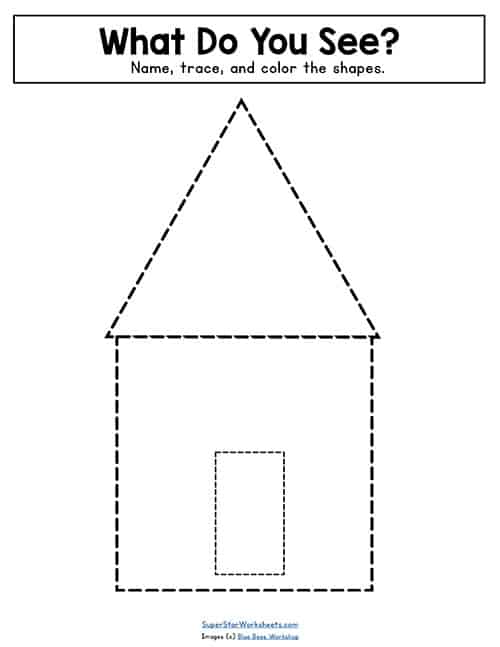
Many children recognize letters, numbers, and symbols long before their fine motor skills can consistently form them on paper. According to the American Occupational Therapy Association, foundational hand strength and visual-motor integration are critical prerequisites for functional handwriting and classroom success. Educators frequently observe an eagerness in young learners to express ideas through marks, yet the tiny muscles of the hand often require targeted preparation to execute those intentions smoothly. This developmental gap highlights the value of foundational geometry worksheets. Bridging the gap between visual recognition and physical execution happens best through engaging, manageable graphical elements. The simple house shape tracing worksheet offers a welcoming entry point into geometric control, turning an everyday drawing exercise into a powerful exercise for hand dominance, bilateral coordination, and visual tracking. It sounds simple, and that is the exact point.
💡 Educational Key Takeaways:
- Core Skill: Structured Simple House Shape Tracing focused on developing pencil grip, stroke control, and early literacy/math confidence.
- Target Scope: Suited for homeschoolers, preschool, kindergarten, and elementary learners.
- Best Recommendation: Practice 10–15 minutes daily with ergonomic writing tools to reinforce muscle memory without hand fatigue.
What This Worksheet Covers
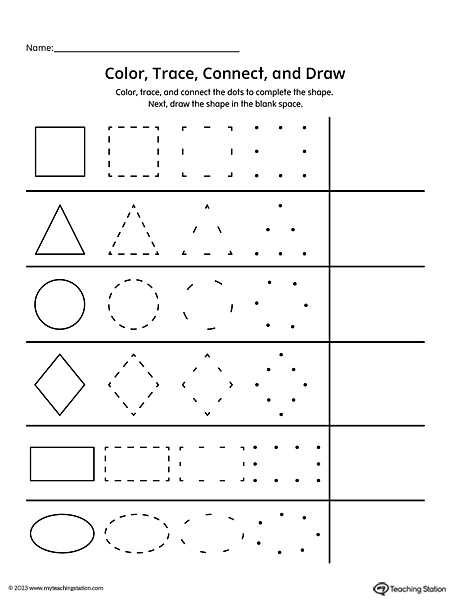
Tracing geometric outlines bridges the wide gap between scribbling and writing actual letters. A classic dwelling outline combines vertical lines, horizontal bases, diagonal rooflines, and often interior squares for doors and windows. Mastering these specific strokes requires precise directional shifts and changing muscle groups within the hand and wrist. Many children struggle with sharp corners because maintaining continuous momentum while changing direction demands advanced pencil control. This printable isolates those exact mechanical challenges, providing a structured canvas for practicing deliberate starts, stops, and sharp angular turns without the added pressure of letter formation. Exploring Shape and Line Tracing gives young learners the foundational confidence necessary for tackling complex alphanumeric characters later on.
Key Learning Outcomes
Engaging with this printable directly supports several interconnected developmental milestones. First, visual-motor integration improves as the eyes guide the hand along precise dotted paths. Second, spatial awareness develops naturally as learners navigate the boundaries of walls, roofs, and chimneys. Third, wrist stability and finger dexterity increase through the sustained pressure required to complete closed geometric shapes. Finally, crossing the midline occurs spontaneously when drawing continuous lines from one side of the page to the other, strengthening neural connections across both hemispheres of the brain.
How to Use This Worksheet
Success with early writing tools depends heavily on presentation and pacing rather than drilling repetition. Setting up a comfortable workspace where feet rest flat on the floor and the paper rests at a slight upward slant establishes optimal biomechanics for the wrist and fingers. Instead of demanding perfection on the very first pass, encouraging children to trace the lines using various tactile approaches builds familiarity and lowers anxiety. Tracing the outline first with a clean index finger, then with a thick wax crayon, and finally with a standard pencil allows the nervous system to map the physical trajectory before fine motor fatigue sets in.
Practical Tips for Parents and Teachers
Guiding pencil grip gently without forcing an unnatural hand posture keeps the experience positive and physically safe. Here’s what makes this worksheet different: it accommodates diverse skill levels by allowing adults to scaffold the task through tactile cues, such as placing a small dot of brightly colored sticker paper at the designated starting corner of the roof. Scaffolding might involve hand-over-hand assistance for very young learners, while extending the activity for older children involves asking them to draw their own matching structures freehand next to the dotted template. Offering frequent movement breaks between lines prevents hand cramping and maintains enthusiastic engagement.
Age-Appropriate Recommendations
According to the National Association for the Education of Young Children guidelines on developmentally appropriate practice, toddlers and preschoolers between ages two and four benefit most from large, gross motor pre-writing experiences and thick writing utensils that encourage a palmar or digital pronate grasp. For this younger cohort, printing the house outline larger or placing the sheet inside a clear plastic sleeve for dry-erase marker tracing works wonderfully. Children between ages five and eight transition toward refined tripod grasps, aligning with standard handwriting curricula where precise pencil pressure and corner control become essential for mastering legible manuscript and cursive letter formation. Exploring broader early childhood foundations through Fine Motor and Pre-Writing Skills helps tailor these expectations to individual developmental tempos.
Visual-motor integration and fine motor control emerge progressively through structured geometric drawing tasks before formal handwriting fluency is achieved. — American Occupational Therapy Association
Frequently Asked Questions
Clear answers regarding tracing materials help maximize the developmental value of home and classroom practice sessions.
Explore More Free Printable Tracing Worksheets
Expanding a young learner’s toolkit involves exploring diverse stroke patterns, alphabet sequences, and seasonal motifs that maintain high interest and sustained engagement. Discovering additional resources across the complete library at KidTraces.com supports every stage of early childhood development. For specialized practice focusing on letter shapes, browse the collection of Alphabet And Numbers Tracing. To find targeted sheets designed to build letter formation habits, explore the resources categorized under Dotted Letters For Tracing. Every incremental step contributes to lifelong writing confidence and physical independence.
Developmental Milestone & Activity Table
| Development Stage | Recommended Daily Duration | Primary Learning Objective |
|---|---|---|
| Preschool & Pre-K | 10 – 15 Minutes | Pencil grip development & basic pre-stroke lines |
| Kindergarten | 15 – 20 Minutes | Letter/number formation & spatial line awareness |
| Early Elementary (Grade 1–2) | 20 – 30 Minutes | Fluency, sentence construction & neatness |
Images References