Introduction
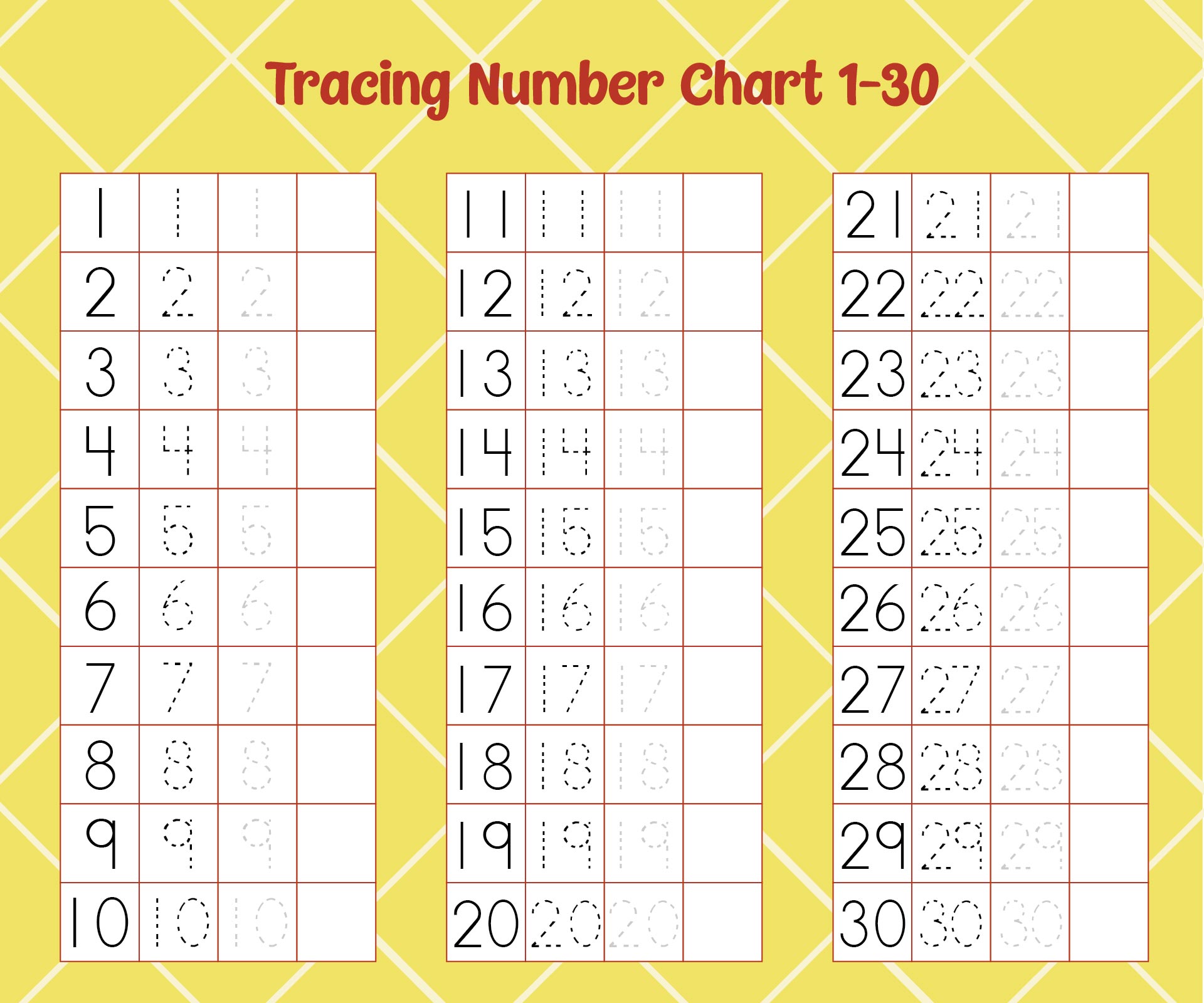
Many children recognize numerals long before their hand muscles possess the endurance and dexterity required to form them on paper. According to the National Association for the Education of Young Children (NAEYC), meaningful early literacy and numeracy experiences rely on hands-on exploration that respects physical development milestones. Bridging the gap between cognitive understanding and physical execution requires targeted, methodical practice. The free printable tracing number 1-30 resource provides structured repetition that supports young learners as they transition from recognizing quantities to controlling a writing utensil. Through consistent exposure to proper stroke order and guided dot formations, children build the muscle memory necessary for legible handwriting and foundational mathematical confidence.
💡 Educational Key Takeaways:
- Core Skill: Structured Tracing Number 1-30 focused on developing pencil grip, stroke control, and early literacy/math confidence.
- Target Scope: Suited for homeschoolers, preschool, kindergarten, and elementary learners.
- Best Recommendation: Practice 10–15 minutes daily with ergonomic writing tools to reinforce muscle memory without hand fatigue.
What This Worksheet Covers
Mastering numerals requires more than simply connecting dots on a page. It demands an understanding of spatial orientation, continuous line control, and directional habits that prevent frustrating reversals later on. The numbering sequence begins with foundational vertical strokes found in early digits and progressively advances to more complex loops and intersecting lines required for numbers in the twenties and thirties. Every digit includes distinct starting points and directional arrows, transforming abstract numerical symbols into predictable, physical pathways. This layout addresses the exact stroke mechanics that occupational therapists emphasize during clinical interventions, ensuring that children develop efficient motor patterns rather than awkward compensatory habits.
Key Learning Outcomes
Working through these numerical exercises fosters precise pencil control, foundational number recognition, and accurate stroke sequencing from top to bottom and left to right. Learners cultivate visual-spatial awareness by staying within structured boundaries, which translates directly to improved spatial organization in both math equations and written language. Furthermore, the progression up to thirty reinforces counting principles while simultaneously building hand stamina. It sounds simple, and that’s the point. Repetition anchors motor pathways in the developing brain, allowing children to eventually write numerals automatically without conscious exertion. Exploring the dedicated Tracing Number section offers additional layouts tailored to specific numerical ranges and developmental challenges.
How to Use This Worksheet
Success with early writing tools depends heavily on environmental setup and adult facilitation. Educators and caregivers should begin by inspecting the child’s workspace, ensuring the chair and table height allow feet to rest flat on the floor for optimal core stability. Before putting a pencil to paper, encourage the child to trace the large numerals with an index finger to experience the physical motion kinaesthetically. Following this tactile phase, introduce a short, grip-friendly writing utensil to discourage heavy fisted grasping. Integrating these pages into daily routines works best when kept to short, positive sessions rather than long, fatiguing drills.
Practical Tips for Parents and Teachers
Adults play a crucial role as facilitators by modeling correct stroke order in real-time, narrating the pencil movements aloud such as saying “straight down and around” for the number two. Scaffolding the activity means initially guiding a hand gently through the first few rows before fading physical assistance as confidence grows. For children who tire quickly, breaking the sheet into smaller segments across multiple days prevents hand cramping and negative associations with writing. When support needs expand beyond numbers, turning to resources like Alphabet And Numbers Tracing helps integrate literacy goals seamlessly alongside numerical mastery.
Age-Appropriate Recommendations
Developmental readiness dictates how children interact with numerical tracing activities across different stages of early childhood. According to the CDC developmental milestones, children typically begin imitating vertical and horizontal lines around age two, making early exposure a sensory-rich pre-writing experience rather than a strict handwriting test. By ages five through eight, aligned with Common Core standards for kindergarten and first grade (CCSS.MATH.CONTENT.K.CC.A.3), children apply these precise formation skills to write numbers from zero to twenty and beyond independently. Meeting children at their precise developmental tier ensures that practice remains encouraging, highly effective, and tailored to their unique neurological and physical growth.
Young children often develop strong numeral recognition skills months or even years before their fine motor stamina catches up to the physical demands of consistent handwriting. — American Occupational Therapy Association (AOTA)
Frequently Asked Questions
Clear guidance helps adults maximize the educational value of printable resources while avoiding common pitfalls associated with early writing instruction. The answers below address frequent inquiries regarding printing setup, fine motor acquisition, and trusted developmental frameworks.
Consistent engagement with structured tracing sheets improves spatial awareness and pencil control, directly benefiting early writing readiness. — Reading Rockets
Explore More Free Printable Tracing Worksheets
Expanding a child’s collection of practice materials keeps engagement high and targets various aspects of early development simultaneously. Beyond numerical sequences, children benefit greatly from exploring letter formation, curved lines, and thematic motor activities that strengthen the hand muscles. Reviewing the complete selection available at the main KidTraces.com library provides educators and caregivers with countless tools to support a well-rounded foundation. For targeted skill-building, browsing categories such as Fine Motor and Pre-Writing Skills or Shape and Line Tracing ensures every learner finds the exact support needed for lifelong academic success.
Developmental Milestone & Activity Table
| Development Stage | Recommended Daily Duration | Primary Learning Objective |
|---|---|---|
| Preschool & Pre-K | 10 – 15 Minutes | Pencil grip development & basic pre-stroke lines |
| Kindergarten | 15 – 20 Minutes | Letter/number formation & spatial line awareness |
| Early Elementary (Grade 1–2) | 20 – 30 Minutes | Fluency, sentence construction & neatness |
Images References