Introduction
Many children recognize letters and numerals long before their fine motor skills can actually form them on paper. This common disconnect often leads to frustration during early writing instruction if adults push too hard, too fast. According to the National Association for the Education of Young Children (NAEYC), developmentally appropriate practice requires aligning expectations with the physical maturation of small hands. The free printable number tracing planets worksheet bridges this gap by combining space-themed engagement with foundational numeral formation. It sounds simple, and that’s the point. Guided practice within a captivating celestial context allows learners to focus on stroke order and pencil control without feeling overwhelmed by blank pages.
💡 Educational Key Takeaways:
- Core Skill: Structured Number Tracing Planets focused on developing pencil grip, stroke control, and early literacy/math confidence.
- Target Scope: Suited for homeschoolers, preschool, kindergarten, and elementary learners.
- Best Recommendation: Practice 10–15 minutes daily with ergonomic writing tools to reinforce muscle memory without hand fatigue.
What This Worksheet Covers
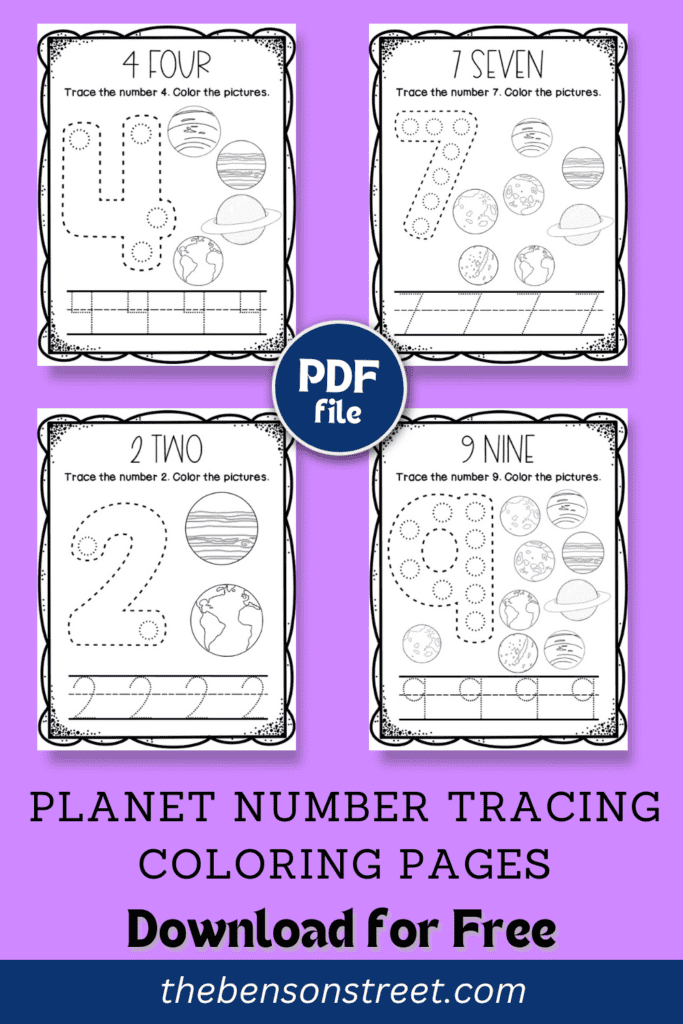
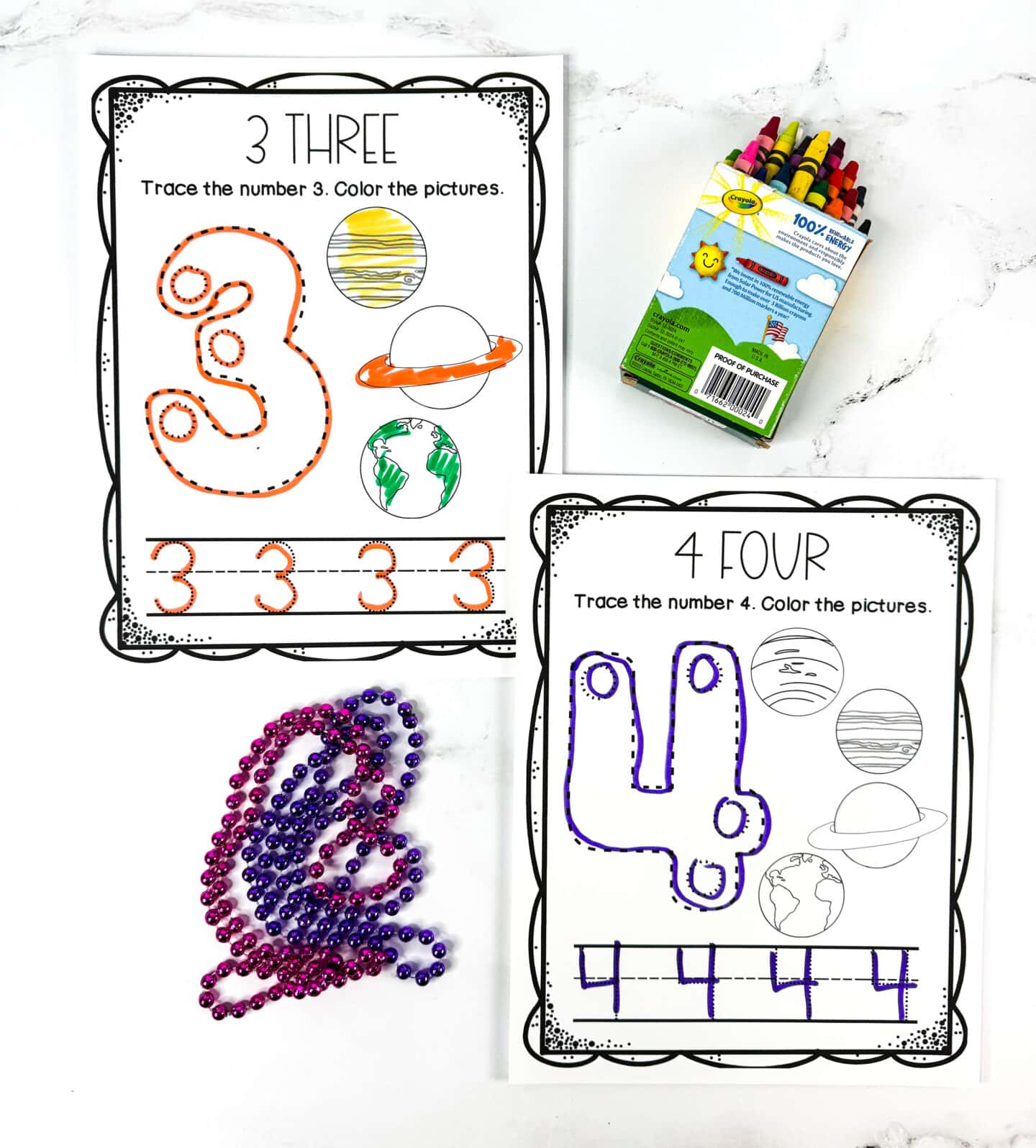
Targeting the mechanics of numerical handwriting, this specific printable guides children through counting sequences and proper formation strokes. Each numeral is presented with clear starting points, directional arrows, and dotted lines that encourage fluid hand movements rather than rigid, jerky drawing. This resource supports foundational Tracing Number competencies by breaking down complex curves and straight lines into manageable segments. Children trace numbers alongside orbiting planets and starry backgrounds, turning an abstract math skill into a visual, tactile experience.
Key Learning Outcomes
Working consistently with these planetary tracing sheets helps children master correct stroke sequence and directional habits from the very beginning. Proper numeral formation prevents the development of reverse handwriting habits that become difficult to correct later in elementary school. Learners simultaneously build hand-eye coordination by staying within designated paths, strengthening the intrinsic muscles required for sustained writing endurance. Furthermore, visual-spatial awareness improves as children navigate around planetary illustrations, reinforcing the relationship between size, proportion, and alignment on a lined page.
How to Use This Worksheet
Success with early writing tasks depends heavily on the physical setup and the adult’s approach during the activity. Introduce the worksheet on a flat, stable surface where the child’s feet rest flat on the floor, promoting core stability that directly influences distal hand control. Encourage a functional tripod grasp, but avoid micromanaging every finger adjustment if the hand is still building intrinsic strength. It is often helpful to start by having the child trace the large planetary numerals with an index finger before picking up a writing utensil. This multisensory approach builds muscle memory through kinesthetic feedback, making the transition to pencils much smoother.
Practical Tips for Parents and Teachers
Scaffolding makes all the difference when introducing new pre-writing strokes and numbers. Adults should model correct formation on a separate sheet first, verbalizing the motions out loud, such as “start at the top, curve around, and slide across.” For learners who struggle with spatial bounds, sliding a clear plastic sheet protector over the printable and using dry-erase markers allows for low-pressure practice and easy erasing. When fatigue sets in, stop immediately; forcing weak hands to continue leads to awkward compensatory grips. To build broader foundational skills, pair this activity with exercises found in the Fine Motor and Pre-Writing Skills collection.
Age-Appropriate Recommendations
Younger children between ages two and four benefit most from using thick crayons or markers to trace oversized planetary numbers, focusing primarily on gross motor control and general stroke direction. According to the CDC developmental milestones, children in this early window are learning to draw vertical and horizontal lines, making large-format tracing an ideal stepping stone. For older children in kindergarten through second grade, the focus shifts toward precision, correct starting points, and fitting numerals neatly within defined spaces. Exploring additional resources like the Alphabet And Numbers Tracing library ensures a well-rounded approach to early literacy and numeracy milestones.
Handwriting proficiency in early elementary years directly correlates with overall academic confidence and written expression capabilities. — Reading Rockets
Frequently Asked Questions
Answers to common questions regarding printing setup, developmental readiness, and educational standards appear below to guide adults in supporting young learners effectively.
Explore More Free Printable Tracing Worksheets
Accessing high-quality educational resources should be straightforward and stress-free for every caregiver, educator, and therapist. The entire collection at KidTraces.com offers countless ways to support pencil control, cognitive growth, and creative confidence. Browse through specialized categories to find activities tailored to every developmental stage and seasonal interest.
Developmental Milestone & Activity Table
| Development Stage | Recommended Daily Duration | Primary Learning Objective |
|---|---|---|
| Preschool & Pre-K | 10 – 15 Minutes | Pencil grip development & basic pre-stroke lines |
| Kindergarten | 15 – 20 Minutes | Letter/number formation & spatial line awareness |
| Early Elementary (Grade 1–2) | 20 – 30 Minutes | Fluency, sentence construction & neatness |
Images References