Introduction
Many children recognize letters, numbers, and basic geometric forms long before their fine motor control and hand strength allow them to successfully form those shapes on paper. According to the American Occupational Therapy Association, foundational fine motor skills involving hand strength, bilateral coordination, and precise finger movements are essential prerequisites for successful handwriting and daily functional tasks. Traditional pencil-and-paper exercises often fail to bridge this developmental gap because they demand too much precision too quickly. Mastering the foundational mechanics of writing requires targeted practice with predictable geometric paths. The star oval diamond heart worksheet provides a structured, visually engaging platform for children to refine these vital pre-writing strokes without the overwhelming pressure of standard letter formation. Through intentional design and varied geometric trajectories, young learners bridge the crucial gap between visual recognition and physical execution.
💡 Technical Key Takeaways:
- Core Focus: Diagnostic schematic and terminal connection layout for Star Oval Diamond Heart Woksheet.
- Target Scope: Field technicians, automotive DIYers, and residential/commercial electricians.
- Safety Rule: Always disconnect the primary power source/battery terminal and verify zero voltage with a multimeter before touching wires.
What This Worksheet Covers
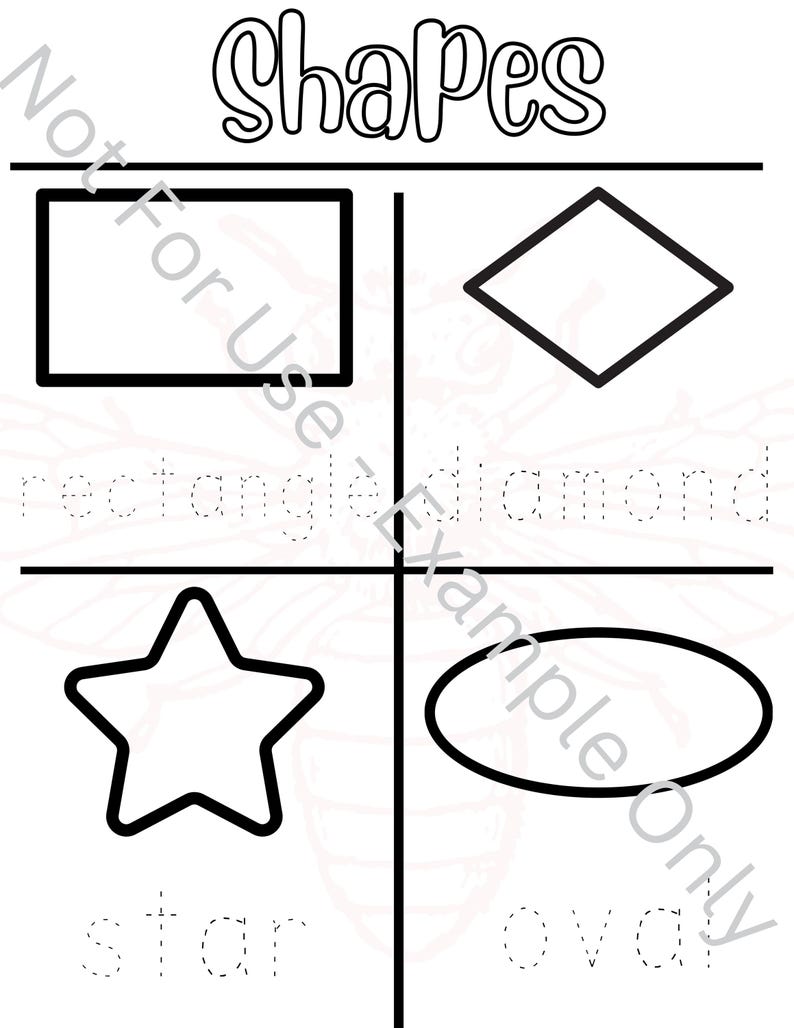
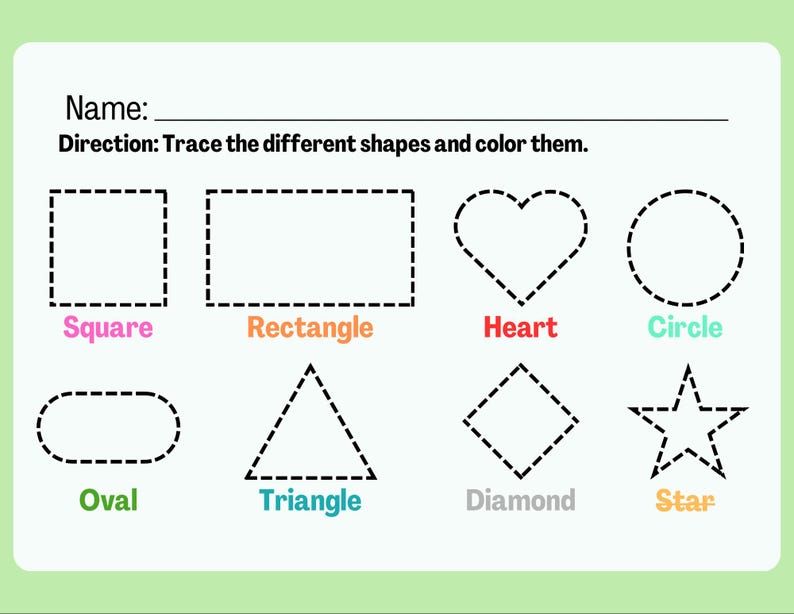
Geometric shape tracing serves as a physical stepping stone to advanced pre-writing control. It sounds simple, and that is the exact point of early childhood motor intervention. Children must learn to navigate continuous lines, sharp directional changes, curved trajectories, and closed loops before attempting formal letters and numbers. This specific printable focuses on fundamental geometric configurations that appear repeatedly in alphabet and numeral formation. The star introduces complex intersections and acute angle changes, requiring children to pause, pivot, and redirect the writing utensil with intention. The oval challenges the wrist and fingers to maintain a continuous, flowing curve without distorting into a flattened line. The diamond tests diagonal line control, which frequently trips up early learners who are more accustomed to purely vertical or horizontal movements. Finally, the heart demands a delicate balance of bilateral symmetry, combining rounded top lobes with a sharp bottom vertex. Integrating these varied forms expands a child’s spatial awareness and builds the muscle memory necessary for comprehensive Shape and Line Tracing practice.
Key Learning Outcomes
Engaging with geometric tracing templates systematically reinforces several foundational milestones in early childhood development. Children naturally build critical hand-eye coordination as their eyes guide the pencil tip along dotted boundary lines. Fine motor precision improves significantly as tiny hand muscles contract and relax to navigate complex corners and smooth curves. Directionality and spatial orientation develop concurrently, teaching young learners how to move a writing instrument from top to bottom and left to right across a shared page. According to the National Association for the Education of Young Children, active engagement in meaningful, hands-on graphic activities supports the intentional development of self-regulation and sustained attention span in preschool classrooms. Furthermore, mastering these distinct geometric components directly supports future progress found within structured Fine Motor and Pre-Writing Skills curricula, laying a secure foundation for lifelong academic success.
How to Use This Worksheet
Successful implementation relies on meeting children at their current developmental level rather than forcing rigid compliance. Begin by reviewing the shapes together on the page, encouraging the child to trace each outline using an index finger first to build a sensory map of the movement. Transitioning to a writing utensil requires close attention to how the hand grasps the tool. Offer a variety of short pencils, crayons, or broken pieces of chalk, as these naturally encourage a functional tripod or quadrupod grasp by discouraging fisted hand postures. It is helpful to anchor the paper firmly to the table using low-tack painter tape, preventing frustration for children who struggle with bilateral hand stabilization. Let the child explore at their own pace, celebrating moments of careful pencil control rather than demanding absolute perfection along every dotted line.
Practical Tips for Parents and Teachers
Scaffolding instruction effectively transforms a frustrating task into an enjoyable learning experience. Model the correct starting point for each shape explicitly, pointing out directional arrows or visual cues before the child begins. If a learner grows fatigued after completing only the star and oval, praise their effort and save the diamond and heart for a fresh session later in the day. Extend the learning beyond the flat printed page by inviting children to trace the same shapes in sensory trays filled with salt, sand, or colored rice. Multi-sensory reinforcement solidifies the underlying neural pathways without causing hand cramping from excessive writing. For educators and caregivers looking to expand this thematic progression, integrating resources from Seasonal and Fun Themes keeps motivation high throughout changing classroom units.
Age-Appropriate Recommendations
Developmental expectations must remain flexible when introducing multi-shape tracing exercises. For toddlers and preschoolers aged two to four, the focus should rest primarily on exploratory tracing, sensory engagement, and building foundational hand strength in alignment with the Head Start Early Learning Outcomes Framework. At this stage, complete accuracy is entirely secondary to positive engagement and the willingness to hold a drawing tool. By ages five through eight, children operating within foundational academic expectations can utilize these geometric sheets to refine pencil pressure, improve stroke fluidity, and prepare for complex writing demands. Teachers and parents supporting older children who require extra pencil control practice can seamlessly pair these geometric exercises with targeted activities found in Dotted Letters For Tracing.
Foundational fine motor control and visual-motor integration skills strongly predict later academic achievement in writing and mathematics during early elementary school years. — American Occupational Therapy Association
Frequently Asked Questions
Navigating early childhood learning tools raises common questions among educators and families. Clear, direct answers help maximize the benefits of daily practice sessions.
How do I download and print this worksheet? — Click the download button on the resource page to save the PDF file directly to a computer or mobile device, then open it in any standard document viewer and select print on standard letter-sized paper.
How does geometric tracing support fine motor development? — Tracing varied shapes requires precise control of intrinsic hand muscles, bilateral coordination to stabilize the paper, and visual-motor integration to guide the pencil along intentional paths.
Why are pre-writing strokes emphasized by organizations like NAEYC? — The National Association for the Education of Young Children emphasizes that mastering horizontal, vertical, and diagonal strokes builds the physical strength and cognitive mapping required for formal letter and number formation.
Explore More Free Printable Tracing Worksheets
Supporting a young writer’s journey requires a diverse library of accessible, engaging practice materials tailored to every developmental stage. Exploring additional resources can help maintain high interest and targeted skill acquisition across different learning domains. Discover a comprehensive collection of supplementary activities, alphabet guides, and numeral paths by visiting the full library at KidTraces.com.
Quick Wiring Specifications & Terminal Guide
| Component / Circuit | Standard Wire Gauge | Recommended Protection |
|---|---|---|
| Control & Trigger Signals | 18 – 20 AWG | 5A – 7.5A Inline Fuse |
| Standard Auxiliary Load | 14 – 16 AWG | 15A – 20A Circuit Breaker |
| Main Power Feed / Supply | 10 – 12 AWG | 30A – 40A Heavy-Duty Relay |
Images References