Introduction
Many children recognize letters, numbers, and geometric forms long before their intrinsic hand strength and postural stability are fully developed enough to form them on paper. According to the American Occupational Therapy Association, foundational fine motor control and visual-motor integration are essential precursors to functional academic performance and handwriting. Transforming this early visual awareness into controlled physical output requires intentional practice with foundational shapes. That developmental bridge is built using the free printable tracing dooted square with arrow. It sounds simple, and that’s the point. By stripping away complex visual clutter, this tool allows young learners to focus exclusively on directional execution, line control, and spatial boundaries. Countless hours in the clinic and classroom reveal that mastering a square is the true gateway to mastering complex letter formations.
💡 Educational Key Takeaways:
- Core Skill: Structured Tracing Dooted Square With Arrow focused on developing pencil grip, stroke control, and early literacy/math confidence.
- Target Scope: Suited for homeschoolers, preschool, kindergarten, and elementary learners.
- Best Recommendation: Practice 10–15 minutes daily with ergonomic writing tools to reinforce muscle memory without hand fatigue.
What This Worksheet Covers
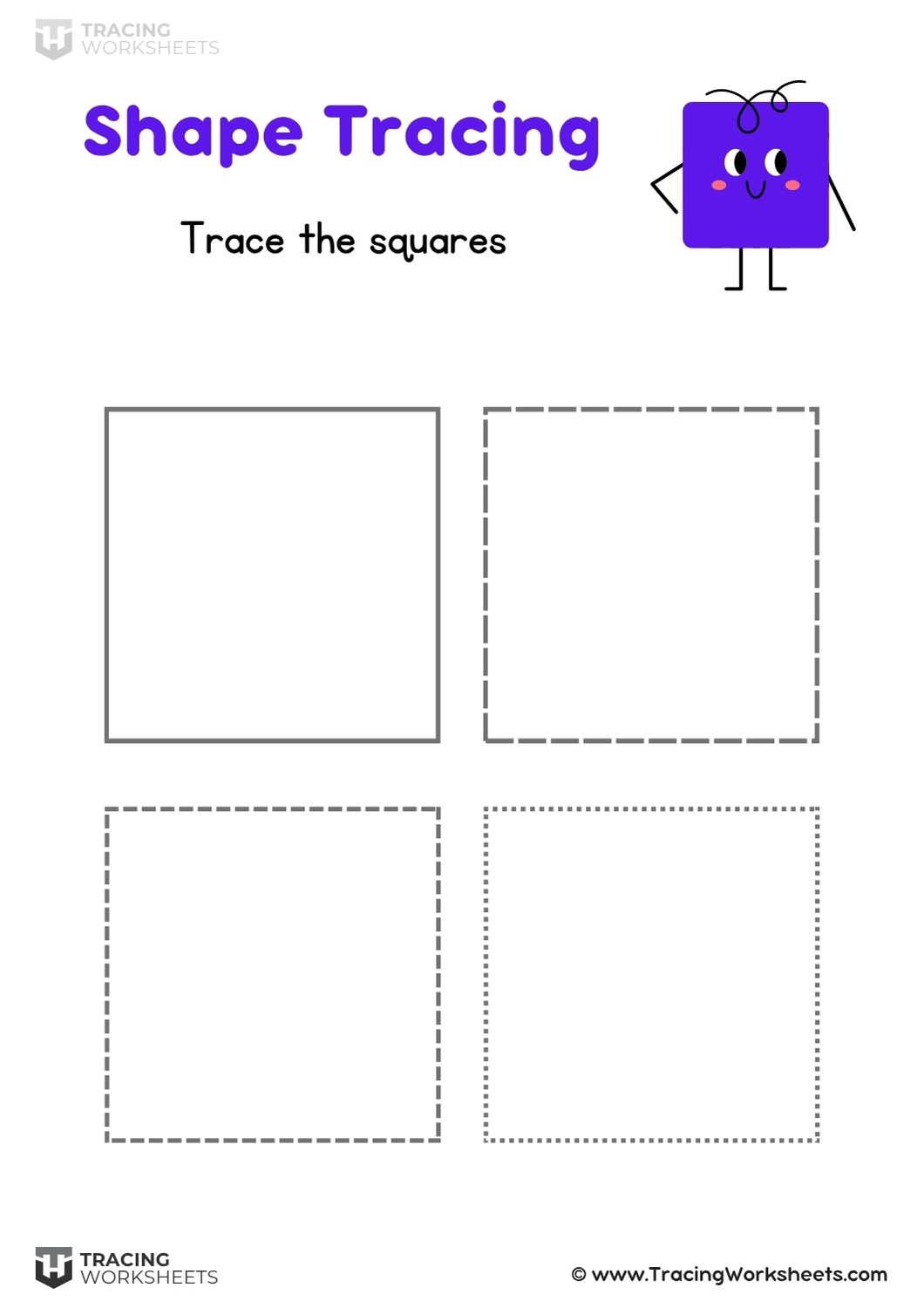
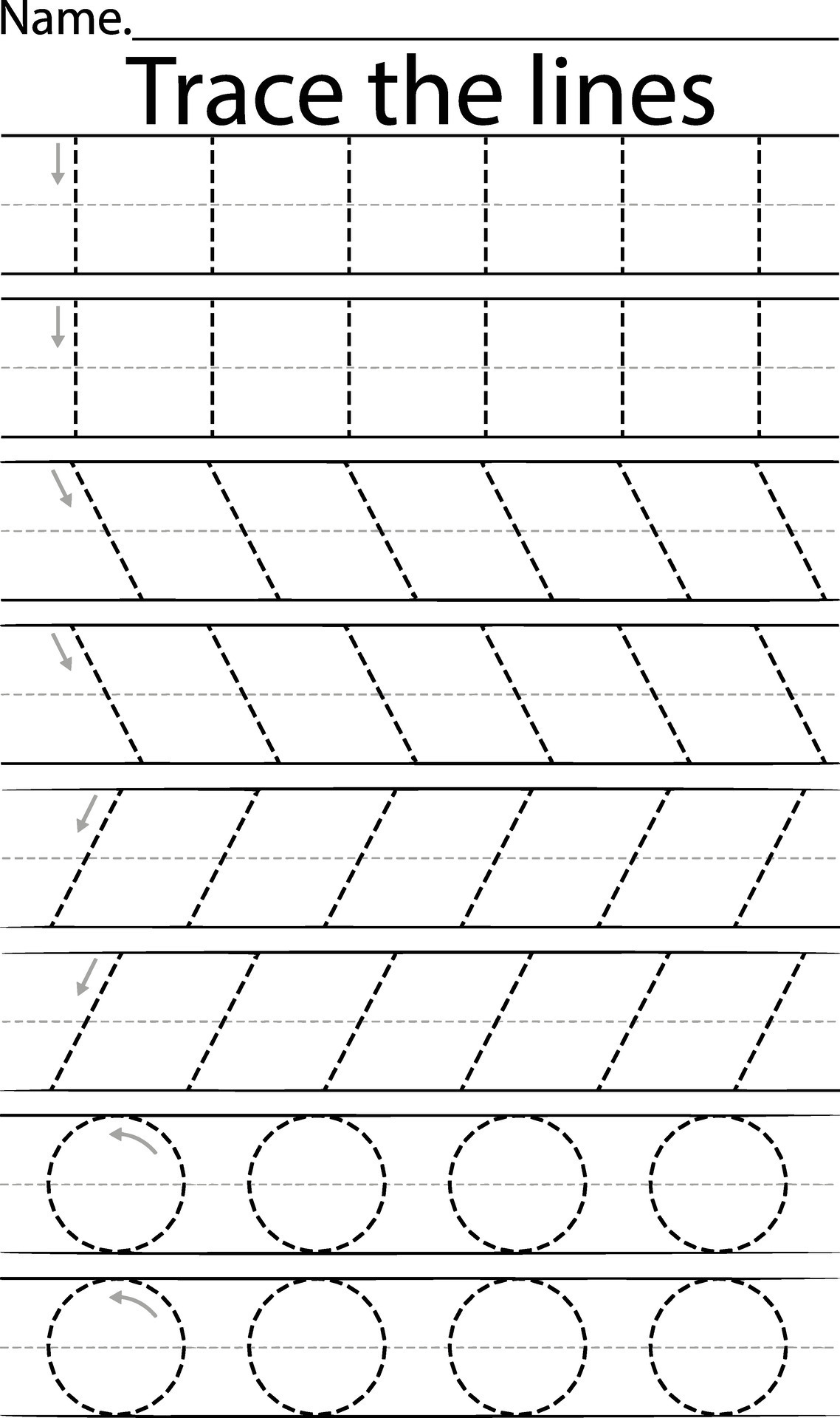
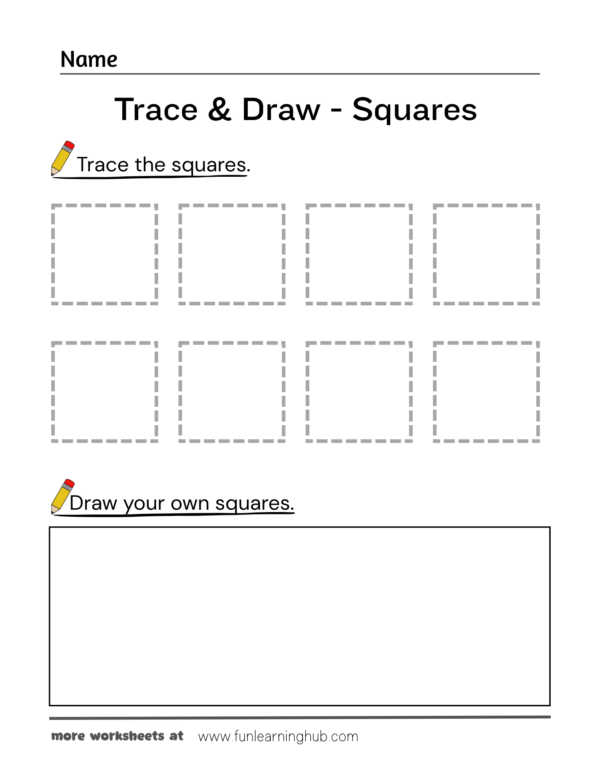
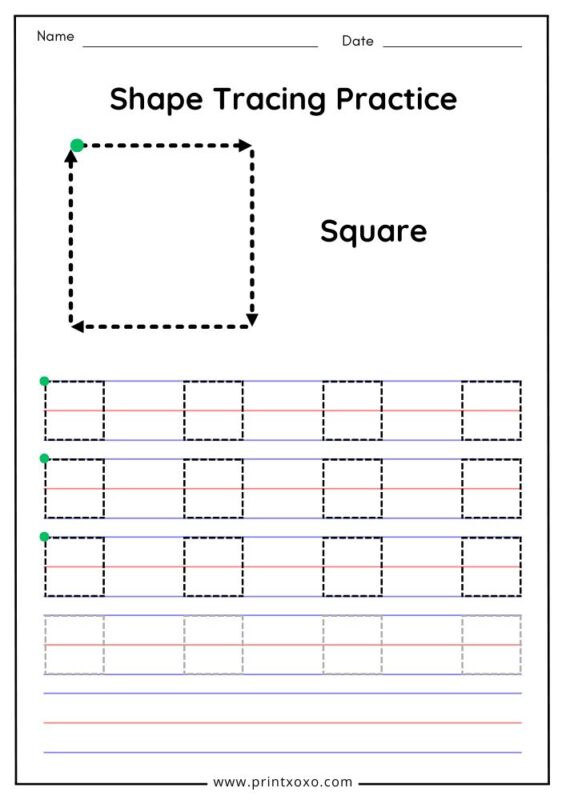
This specific printable targets directional pre-writing strokes through a structured geometric outline. The visual layout features clearly marked starting points coupled with directional arrows that teach the continuous, flowing nature of closed shapes. Instead of random scribbling, the hand learns to navigate four distinct 90-degree corners, requiring a deliberate shift in both wrist positioning and pencil manipulation. Developing these competencies naturally supports the broader collection of Shape and Line Tracing resources available for early learners. Furthermore, children explore the spatial relationship between top, bottom, left, and right, establishing cognitive awareness that later translates directly into letter and number execution found within Alphabet And Numbers Tracing galleries.
Key Learning Outcomes
Executing this geometric exercise successfully yields several critical developmental milestones for young children. First, learners refine continuous line control by practicing the unbroken visual-motor coordination needed to complete a four-sided shape without lifting the writing utensil. Second, directional awareness improves drastically as the eye follows the embedded arrows from the designated starting point around the perimeter. Third, children build crucial finger and hand endurance, conditioning the intrinsic muscles required for sustained writing tasks. Finally, visual closure is reinforced, helping the developing brain recognize and replicate boundaries, an ability that proves vital when transitioning to early literacy assignments found throughout Fine Motor and Pre-Writing Skills collections.
How to Use This Worksheet
Introducing the tracing dooted square with arrow requires a balance of physical guidance and independent exploration. Begin by sitting alongside the child at a table where both feet rest flat on the floor, ensuring optimal core stability for hand control. Invite the child to point an index finger at the arrow, tracing the path physically in the air before any pencil touches the paper. According to Reading Rockets, multi-sensory approaches significantly enhance a young learner’s ability to retain directional concepts and stroke patterns. Once the physical path is understood, introduce a short, thick writing tool—such as a broken crayon or a golf pencil—to encourage an efficient, functional grasp rather than a restrictive fist.
Practical Tips for Parents and Teachers
Scaffolding the experience properly ensures the child remains confident and motivated throughout the session. If hand fatigue sets in quickly, place the paper inside a heavy-duty dry-erase sleeve and let the child trace the shape using a dry-erase marker, which offers less friction and allows for easy mistakes. Model the correct starting point explicitly, talking through the movement by saying down, across, up, and over. Avoid correcting every slight deviation from the dotted line; instead, celebrate the flow, posture, and effort. When the child masters basic geometric templates, bridge the gap to early literacy by incorporating alphabet practice pages like Dotted Letters For Tracing.
Age-Appropriate Recommendations
For children ages two to four, align expectations with the National Association for the Education of Young Children Developmentally Appropriate Practice framework. At this stage, toddlers and preschoolers are learning vertical and horizontal lines, making the individual strokes of a square a wonderful stretch goal that requires patience and encouragement. For children ages five to eight, the focus shifts toward precision, corner control, and automaticity. Older kindergarteners and first-graders use these exact closed-shape principles to refine uppercase letter formations like square-based letters, supporting early school readiness standards across educational domains.
Visual-motor integration and foundational geometric shape reproduction are vital predictors of subsequent handwriting proficiency and spatial organization in early elementary students. — American Occupational Therapy Association
Frequently Asked Questions
Explore More Free Printable Tracing Worksheets
Supporting a child through early writing development is a rewarding journey that thrives on consistency, patience, and engaging materials. Building a robust foundation of pencil control, shape recognition, and spatial awareness prepares young minds for the academic rigors ahead. Caregivers, educators, and therapists can discover an extensive selection of targeted resources by browsing the complete library of educational printables at KidTraces.com to keep learning fun and accessible every single day.
Developmental Milestone & Activity Table
| Development Stage | Recommended Daily Duration | Primary Learning Objective |
|---|---|---|
| Preschool & Pre-K | 10 – 15 Minutes | Pencil grip development & basic pre-stroke lines |
| Kindergarten | 15 – 20 Minutes | Letter/number formation & spatial line awareness |
| Early Elementary (Grade 1–2) | 20 – 30 Minutes | Fluency, sentence construction & neatness |
Images References