Introduction
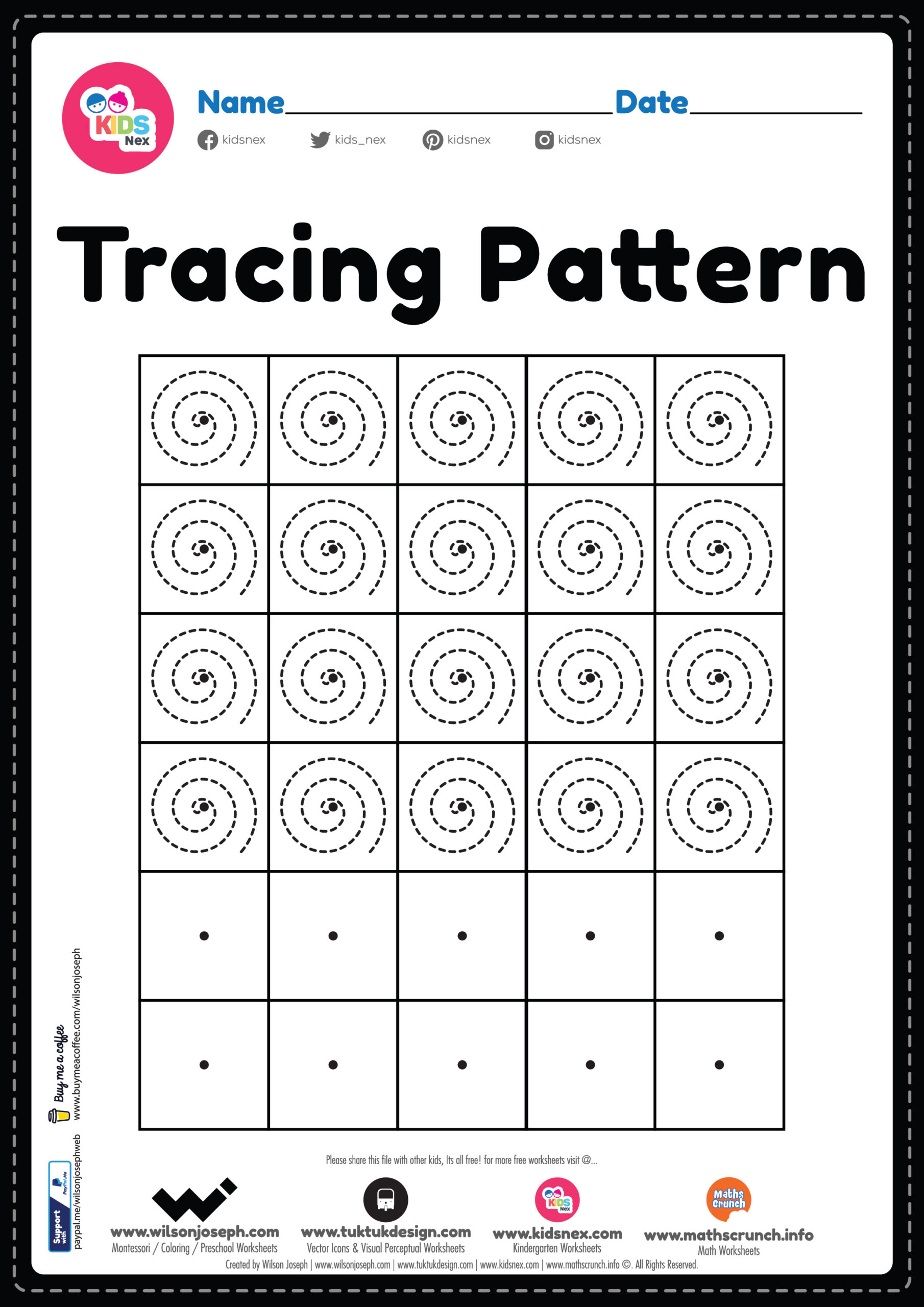
Many children recognize letters, shapes, and patterns long before their hands possess the muscular endurance to form them on paper. According to the American Occupational Therapy Association, foundational fine motor skills and sustained postural control are essential prerequisites for functional handwriting and classroom success. It is a common observation in early learning environments that cognitive readiness outpaces physical capability by several months or even years. Bridging this gap requires targeted interventions that strengthen the small muscles of the hand while building fluid pencil control. The free printable spiral line tracing worksheet serves as a powerful bridge in this developmental journey, transforming complex wrist and finger movements into an engaging, continuous visual path. By moving away from rigid letter formation and focusing on sweeping, curved paths, children build the foundational coordination needed for future writing tasks without the frustration of premature academic pressure.
💡 Educational Key Takeaways:
- Core Skill: Structured Spiral Line Tracing focused on developing pencil grip, stroke control, and early literacy/math confidence.
- Target Scope: Suited for homeschoolers, preschool, kindergarten, and elementary learners.
- Best Recommendation: Practice 10–15 minutes daily with ergonomic writing tools to reinforce muscle memory without hand fatigue.
What This Worksheet Covers
This specific printable focuses entirely on continuous circular motion and fluid hand-eye coordination. Tracing spirals requires a complex integration of visual tracking, proprioceptive feedback, and bilateral integration, as the non-dominant hand must stabilize the paper while the dominant hand executes a gradually tightening or expanding arc. It sounds simple, and that’s the point. Yet, behind this seemingly basic activity lies a sophisticated progression of pre-writing strokes. Children must constantly adjust their grip and modulate pressure as the pencil transitions from wide, sweeping loops into tight, compact circles. This continuous fluid motion directly targets the intrinsic muscles of the hand, preparing the fingers for the dynamic tripod grasp required later on. Building proficiency in curved paths also prevents the heavy-handedness and finger-cramping frequently observed when children jump straight into dense alphabetical worksheets too early. For more related activities, check out our What Does Line Tracing In Prek Reinforce?.
Key Learning Outcomes
Working through these spiral lines fosters superior visual-motor integration, allowing the brain and hand to communicate rapidly and accurately. According to the National Association for the Education of Young Children, active manipulation of writing implements during exploratory play directly correlates with later academic dexterity. Children develop advanced wrist rotation, moving away from rigid elbow-driven movements toward mature, fluid wrist and finger articulation. Spatial awareness improves significantly as young learners navigate the boundaries of the printed line, learning to anticipate directional changes before the pencil tip actually reaches them. Hand strength and endurance increase noticeably over repeated sessions, reducing fatigue during extended classroom activities like coloring, cutting, and writing. Finally, sustained focus and self-regulation blossom as children concentrate on maintaining an unbroken line from the outer edge to the center of the spiral.
How to Use This Worksheet
Success with pre-writing sheets depends heavily on the initial setup and the physical posture of the learner. Feet should rest flat on the floor, hips and knees bent at a ninety-degree angle, with the non-dominant hand firmly anchoring the page. Instead of handing over a standard graphite pencil immediately, educators and caregivers can experiment with broken crayons or short golf pencils, which naturally encourage a functional grasp by eliminating the excess length that invites a fist grip. It helps to start with a finger-tracing warm-up, having the child trace the spiral in the air or directly on the paper with an index finger before introducing a writing tool. Encouraging a slow, deliberate pace rather than a rushed race to the center ensures that the small muscles of the hand do the actual work rather than relying on momentum alone.
Practical Tips for Parents and Teachers
Scaffolding this activity makes all the difference for children who experience early frustration with fine motor tasks. If a child struggles with the tight inner loops of the spiral, slide the printable inside a heavy-duty plastic dry-erase sleeve and let them use a thick whiteboard marker first; the reduced friction and easy erasability lower the stakes considerably. For advanced learners, introduce a sensory element by placing the worksheet over a textured surface like craft foam or sandpaper, which provides rich tactile feedback through the pencil tip. Teachers can easily integrate these patterns into morning fine motor stations, while parents can slide a laminated copy into a travel bag with a dry-erase marker for restaurants or quiet afternoons. Always model the motion slowly in front of the child, verbalizing the direction of the curve to help internalize the motor plan before independent practice begins.
Age-Appropriate Recommendations
Aligning expectations with developmental milestones prevents undue frustration for both children and adults. For toddlers and preschoolers ages two through four, the focus aligns directly with the CDC developmental milestones regarding basic scribbling, imitating vertical and circular strokes, and manipulating thick writing tools with a palmar or transitional digital grasp. At this stage, expect wandering lines and varied spacing; the goal is simply joyful exploration of circular motion. For older children ages five through eight, framework expectations shift toward advanced visual-motor control, aligning with specific Handwriting Without Tears developmental progressions for fluid cursive loops and complex pre-writing lines. Older children should be encouraged to maintain a steady, even pressure and a smooth, uninterrupted stroke from start to finish, building the precise stamina needed for sentence writing found in Shape and Line Tracing and related Fine Motor and Pre-Writing Skills resources.
Foundational fine motor control, including continuous line tracing and spatial awareness, serves as a primary predictor of later writing fluency and academic confidence in early childhood settings. — American Occupational Therapy Association (AOTA)
Frequently Asked Questions
Here are answers to common questions about implementing tracing printables at home or in the classroom.
How do I download and print this spiral line tracing worksheet?
Click the download link on this page to save the PDF file directly to your device, then print it using standard letter-sized paper at one-hundred percent scale for the best proportions.
How does tracing spirals improve fine motor development?
Tracing spirals requires continuous wrist rotation, visual tracking, and precise pressure control, which together strengthen the intrinsic hand muscles necessary for mature pencil grips.
What does the American Occupational Therapy Association say about pre-writing?
The American Occupational Therapy Association emphasizes that foundational hand strength, postural stability, and motor planning must be established before children can successfully master complex writing tasks.
Explore More Free Printable Tracing Worksheets
Expanding a child’s fine motor toolkit requires variety, consistency, and engaging visual themes that capture their natural curiosity. After mastering circular patterns, learners can transition smoothly into learning letter forms and numerical sequences through our comprehensive collections of Alphabet And Numbers Tracing and targeted Dotted Letters For Tracing exercises. Every child progresses at an entirely unique pace, making it helpful to maintain a diverse selection of resources available for daily practice. Explore the complete library of free educational materials, seasonal printables, and foundational skill builders at KidTraces.com to support your child’s journey from early scribbles to confident, fluid handwriting.
Developmental Milestone & Activity Table
| Development Stage | Recommended Daily Duration | Primary Learning Objective |
|---|---|---|
| Preschool & Pre-K | 10 – 15 Minutes | Pencil grip development & basic pre-stroke lines |
| Kindergarten | 15 – 20 Minutes | Letter/number formation & spatial line awareness |
| Early Elementary (Grade 1–2) | 20 – 30 Minutes | Fluency, sentence construction & neatness |
Images References