Introduction
Watch any group of preschoolers hold a crayon, and a fascinating developmental truth becomes clear: many children recognize letters and shapes long before their fine motor control is strong enough to cleanly form them. According to the American Occupational Therapy Association, foundational fine motor skills—such as hand strength, bilateral coordination, and visual-motor integration—must develop alongside cognitive awareness to make independent writing possible. That gap between what a child’s mind understands and what their tiny hands can execute is where targeted preparation matters most. Simple geometry offers a brilliant bridge across this gap. The free printable rectangle tracing worksheet gives young learners a structured, low-stress way to build the exact hand-eye coordination required for future writing success.
💡 Educational Key Takeaways:
- Core Skill: Structured Rectangle Tracing focused on developing pencil grip, stroke control, and early literacy/math confidence.
- Target Scope: Suited for homeschoolers, preschool, kindergarten, and elementary learners.
- Best Recommendation: Practice 10–15 minutes daily with ergonomic writing tools to reinforce muscle memory without hand fatigue.
What This Worksheet Covers
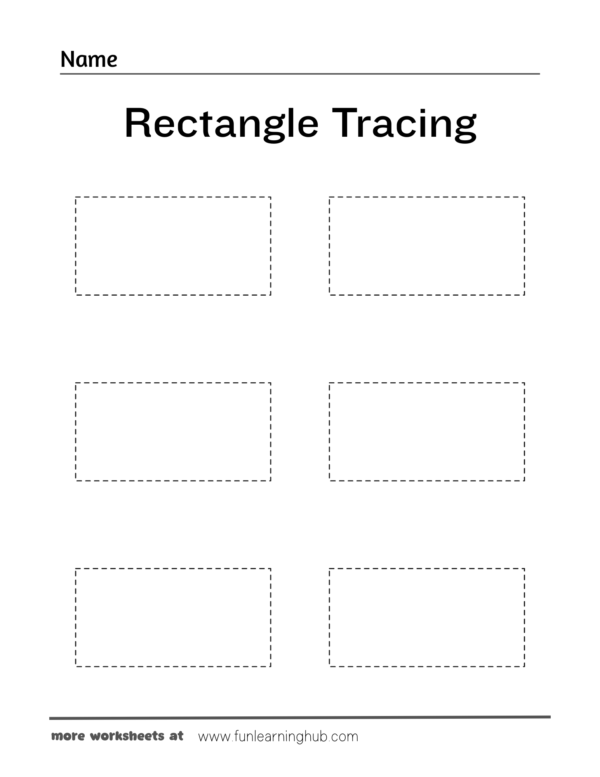
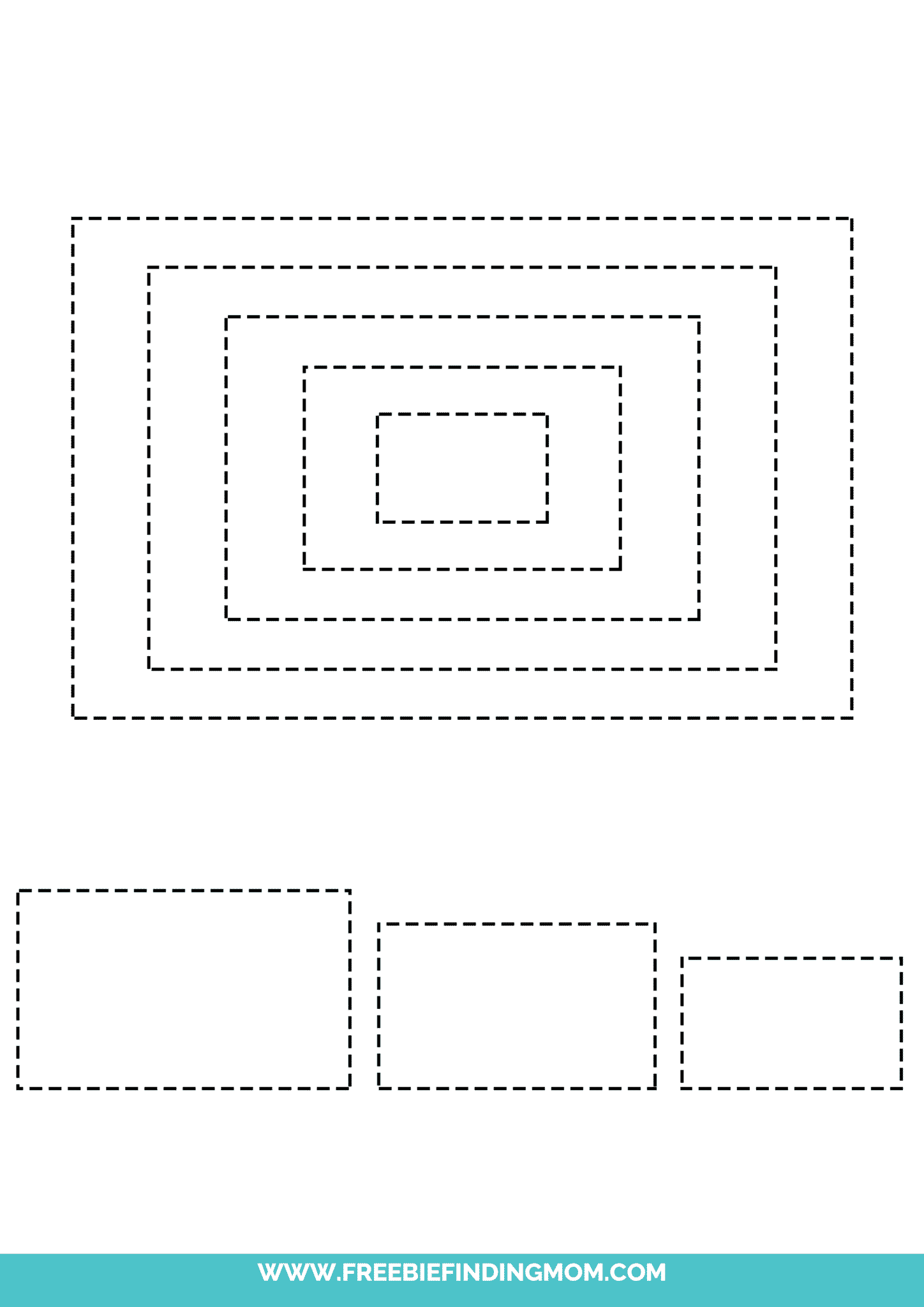
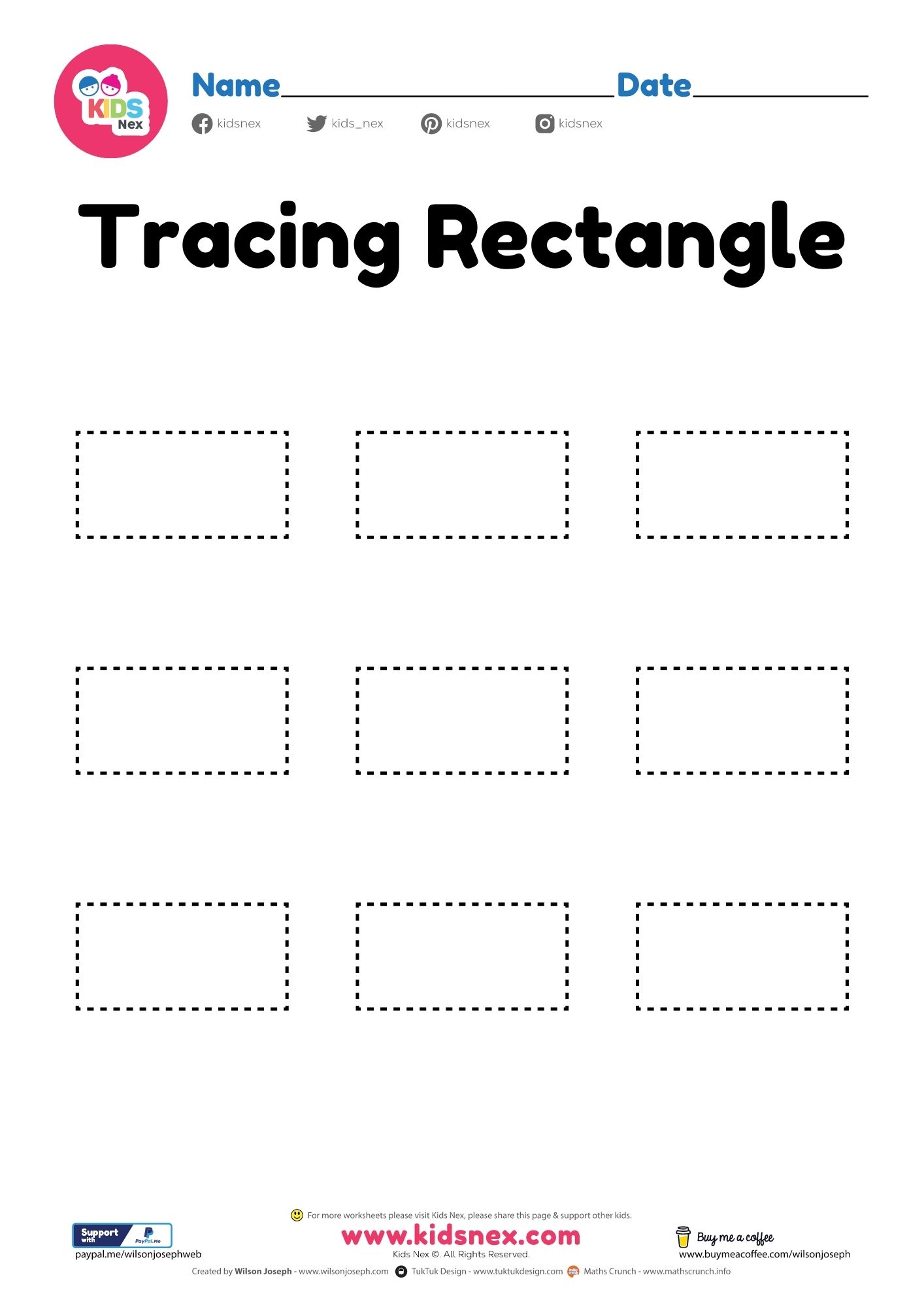
Mastering straight lines and sharp corners is no small feat for a developing hand. Geometric shape practice focuses heavily on spatial awareness, directional tracking, and pencil control. This specific printable centers on the rectangle, a foundational form that introduces parallel lines of varying lengths and requires deliberate directional changes. Unlike circular motions which rely on continuous fluid arcs, rectangles demand crisp, controlled stops and intentional ninety-degree turns. It sounds simple, and that is precisely the point. By isolating these precise physical movements, children learn how to manage hand pressure, maintain visual tracking from top to bottom and left to right, and steady the writing hand through distinct linear segments. For more related activities, check out our Virtual Punnett Square Activity.
Key Learning Outcomes
Working through these geometric tracing pages strengthens several critical developmental domains simultaneously. Children refine visual-motor integration by coordinating eye movements with hand actions to stay on the dotted path. Hand and finger muscles build essential endurance as pencils or crayons maintain steady contact with the page through both horizontal and vertical strokes. Spatial organization improves as learners recognize boundaries, margins, and the concept of inside versus outside space. Furthermore, directional control is deeply reinforced because forming a rectangle requires intentional pausing and pivoting at every corner, mirroring the exact motor planning needed later for letters like ‘E’, ‘H’, and ‘L’.
How to Use This Worksheet
Introducing a new sheet works best when the environment feels inviting rather than academic. Begin by placing the printable on a stable, flat surface where feet rest flat on the floor, promoting core stability that directly supports upper body control. Encourage the child to use the non-dominant hand to anchor the paper firmly while the dominant hand grips the writing tool. It is often helpful to start with larger, multisensory explorations before touching the paper—such as tracing a giant imaginary rectangle in the air, building one with craft sticks, or tracing textured plastic cutouts with an index finger to build tactile muscle memory.
Practical Tips for Parents and Teachers
Here is what makes this worksheet different: success relies less on staying perfectly inside the dots and more on the physical journey of the hand. Adults can model a mature tripod grasp by keeping their own fingers relaxed and close to the pencil tip, providing a clear visual cue for the child. Scaffolding the activity means letting children use thick markers or scented crayons first, as thicker tools require less downward pressure and offer immediate visual feedback. For children who struggle with corner transitions, place a tiny star sticker at each vertex to signal a physical pause and a change in direction. Always celebrate the effort of the entire stroke rather than focusing solely on whether the line wandered off the path.
Age-Appropriate Recommendations
Developmental readiness spans a wide spectrum between toddlerhood and early elementary school. According to the National Association for the Education of Young Children guidelines for developmentally appropriate practice, toddlers and young preschoolers ages two to four benefit most from large-format, sensory-rich tracing exercises using thick crayons or finger paints to explore basic shapes. As children progress into kindergarten and early primary grades around ages five through eight, expectations shift toward refined pencil control, proper letter proportions, and independent stroke execution. At this stage, the free printable rectangle worksheet supports complex Shape and Line Tracing curricula by bridging basic pre-writing strokes with structured Fine Motor and Pre-Writing Skills that translate directly into cleaner handwriting and organized math layouts.
Visual-motor integration and fine motor control are foundational predictors of early academic success and efficient written expression. — American Occupational Therapy Association (AOTA)
Frequently Asked Questions
Common questions regarding shape tracing often center on implementation, printing, and developmental alignment. Clear answers help parents and educators maximize the value of every single practice session.
Developmentally appropriate writing readiness includes the ability to imitate vertical lines, horizontal lines, and intersecting crosses before attempting complex geometric shapes. — Centers for Disease Control and Prevention (CDC)
Explore More Free Printable Tracing Worksheets
Building a robust foundation for handwriting requires variety, consistency, and plenty of engaging practice material. Beyond geometric shapes, young learners thrive when exploring diverse paths that target every aspect of early pencil control. Educators and parents can discover a comprehensive collection of resources across categories like Alphabet And Numbers Tracing and Dotted Letters For Tracing. Additional developmental practice is always available through seasonal units and targeted writing activities found within the main library at KidTraces.com.
Developmental Milestone & Activity Table
| Development Stage | Recommended Daily Duration | Primary Learning Objective |
|---|---|---|
| Preschool & Pre-K | 10 – 15 Minutes | Pencil grip development & basic pre-stroke lines |
| Kindergarten | 15 – 20 Minutes | Letter/number formation & spatial line awareness |
| Early Elementary (Grade 1–2) | 20 – 30 Minutes | Fluency, sentence construction & neatness |
Images References