Introduction
Many children recognize numerals and letters long before their fine motor skills are strong enough to actually form them on paper. According to the National Association for the Education of Young Children (NAEYC), developmentally appropriate practice requires aligning early learning tasks with a child’s current physical and cognitive capabilities rather than forcing advanced production. Bridging this gap between visual recognition and physical execution takes gentle, structured scaffolding. The numbers english tracing 1-5 worksheet offers an approachable starting point for young learners who are just beginning to explore numeral formation. It sounds simple, and that is precisely the point. By focusing exclusively on the digits one through five, the activity removes cognitive overload, allowing the hands and fingers to concentrate purely on stroke order, pencil control, and spatial awareness without becoming overwhelmed by a crowded page.
💡 Educational Key Takeaways:
- Core Skill: Structured Numbers English Tracing 1-5 Worksheet focused on developing pencil grip, stroke control, and early literacy/math confidence.
- Target Scope: Suited for homeschoolers, preschool, kindergarten, and elementary learners.
- Best Recommendation: Practice 10–15 minutes daily with ergonomic writing tools to reinforce muscle memory without hand fatigue.
What This Worksheet Covers
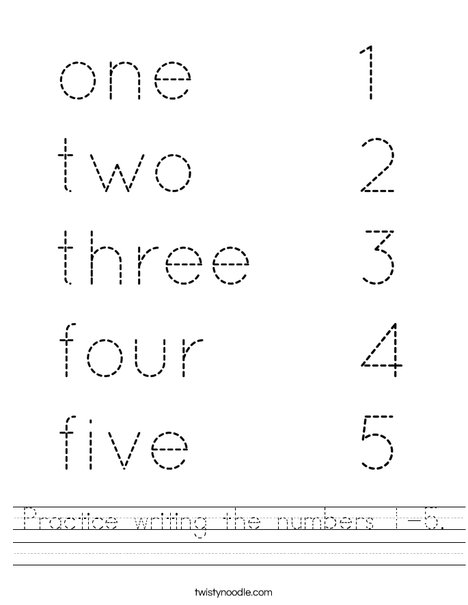
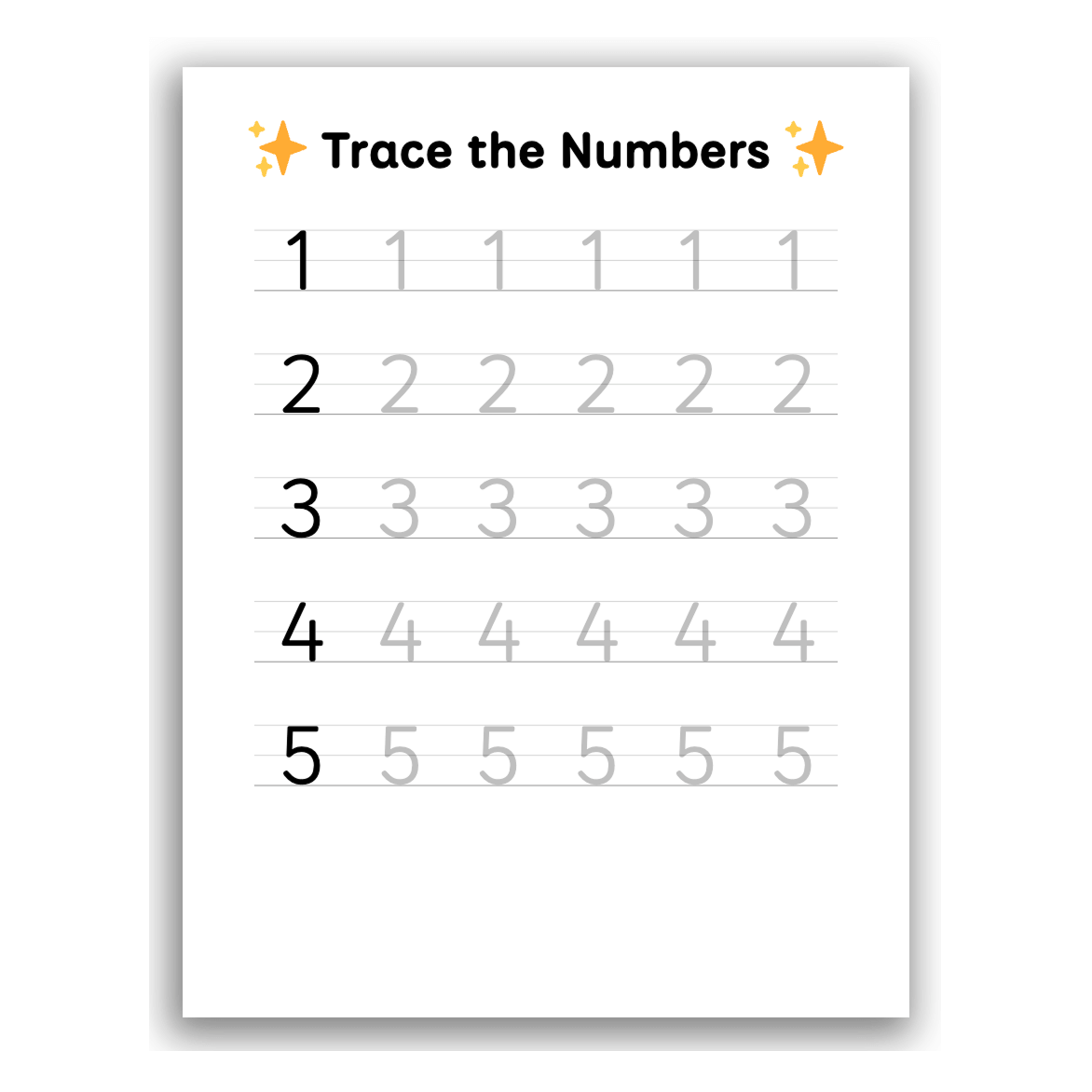
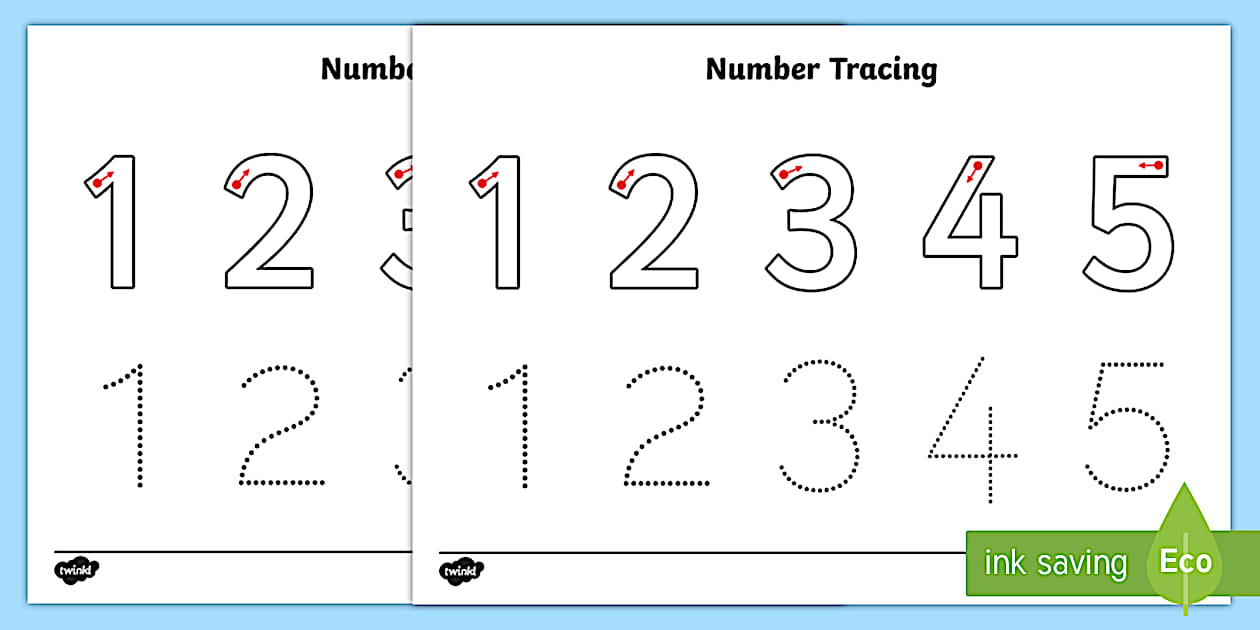
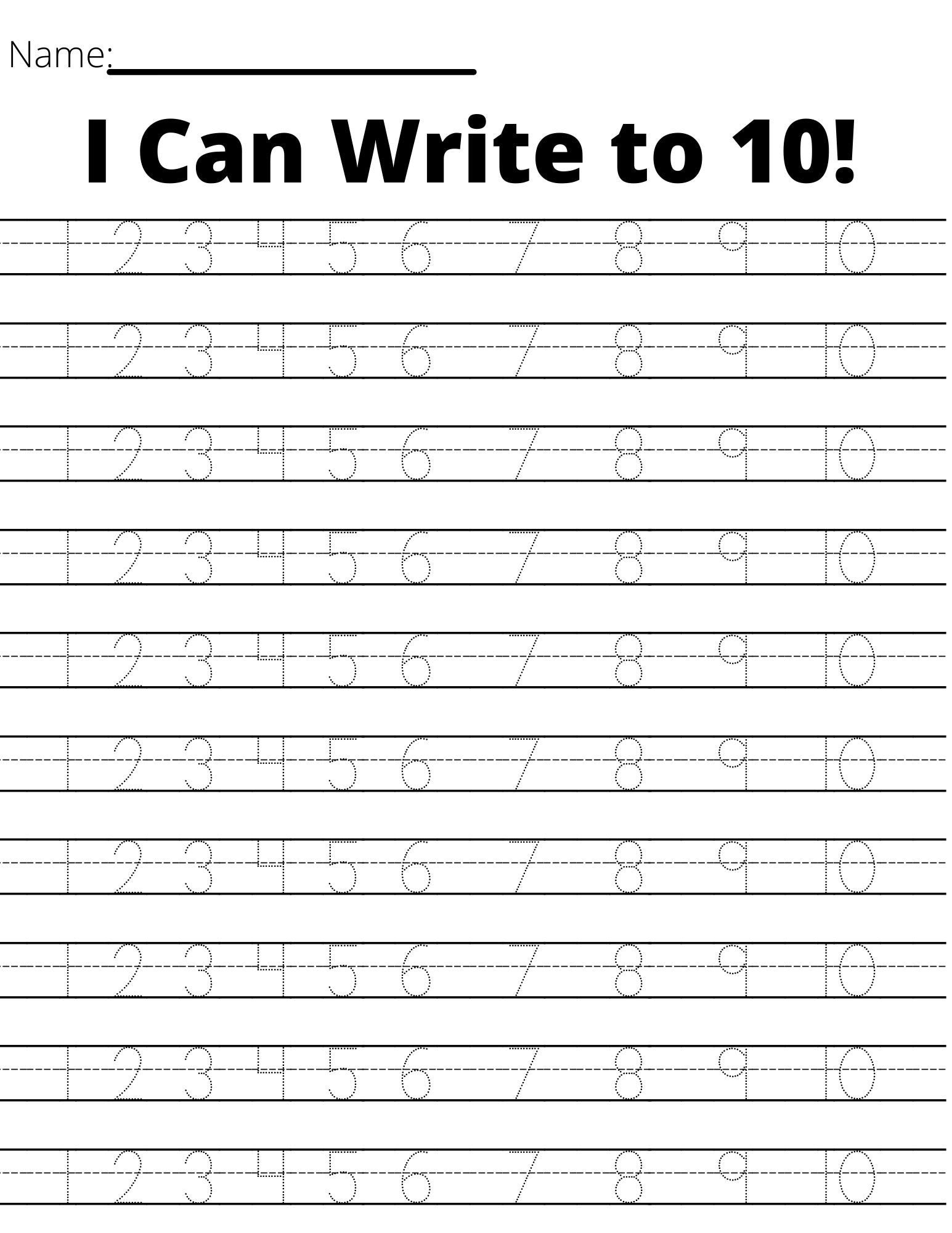
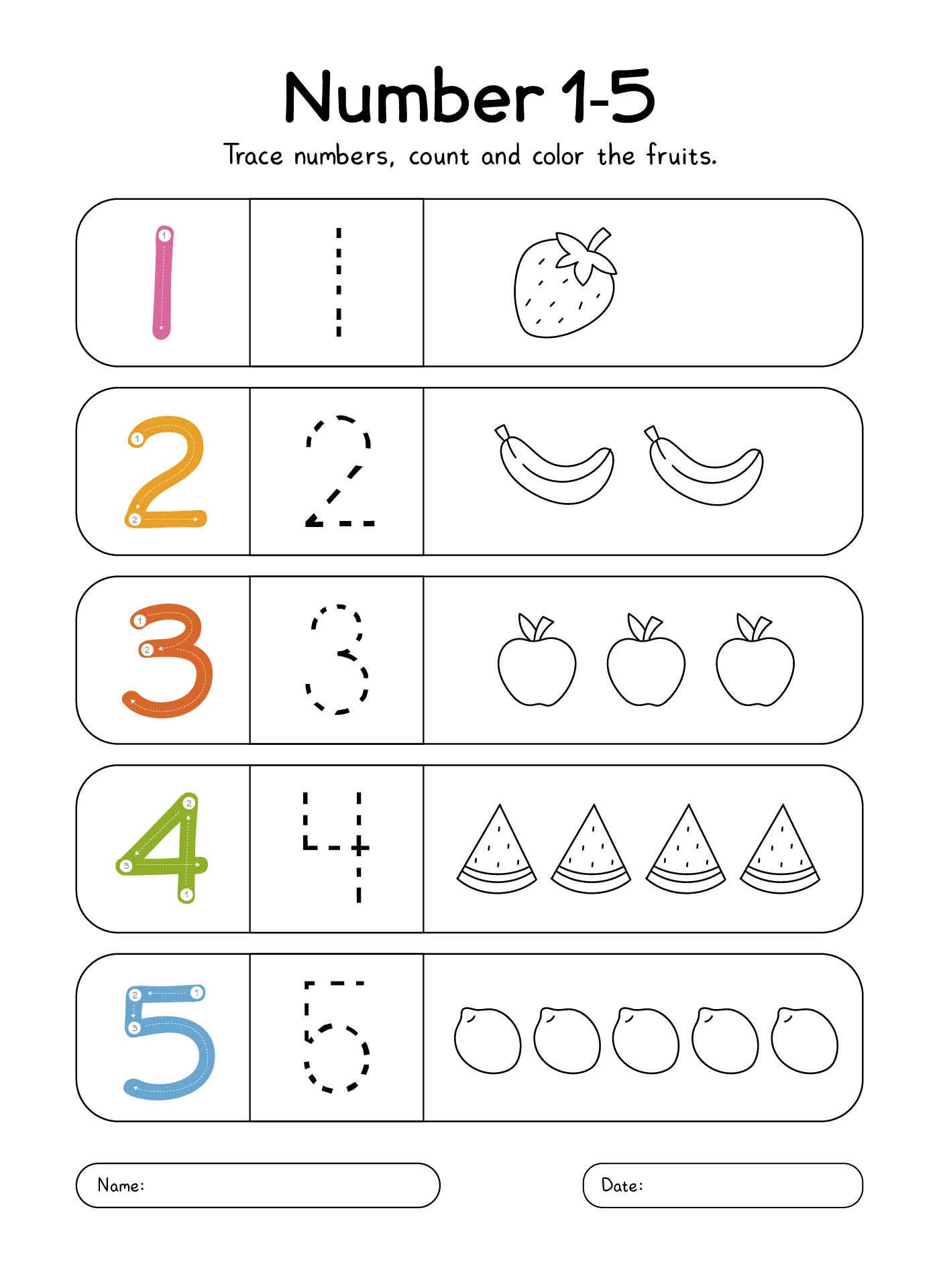
Targeting the foundational digits from one to five, this resource provides targeted practice with numeral formation, directional stroke sequences, and spatial orientation on primary lines. Each number features explicit visual cues, such as distinct starting dots and directional arrows, which guide the pencil through the correct path from top to bottom and left to right. This deliberate structure helps prevent common formation errors, such as drawing numbers from the bottom up or using fragmented, disjointed strokes. Beyond simply copying lines, learners engage in guided repetition that reinforces the cognitive connection between the abstract symbol, its spoken name, and the physical motion required to create it. Mastery of these first five numerals lays critical groundwork for future mathematical literacy and advanced handwriting tasks found within comprehensive Tracing Worksheets.
Key Learning Outcomes
Working through these early numerical exercises yields several distinct developmental benefits for young learners. Children develop refined visual-motor integration as their eyes track the dotted lines while guiding the hand to follow suit. Fine motor precision improves significantly through the sustained grip and muscle control needed to stay within primary tracing pathways. According to the American Occupational Therapy Association (AOTA), mastering early pre-writing lines and basic symbol formation builds the intrinsic hand strength required for lifelong functional writing. Additionally, learners internalize correct stroke sequence and directionality, which reduces hand fatigue and increases writing fluency over time. Finally, repeated exposure strengthens numeral recognition and counting correspondence, reinforcing early math concepts alongside essential pencil skills found throughout Tracing Number collections.
How to Use This Worksheet
Successful implementation relies on keeping sessions short, engaging, and low-pressure. Begin by sitting alongside the learner to observe how they approach the page and hold their writing utensil. Invite the child to point to the numeral, trace it in the air with a finger, or trace over the dotted lines using a textured marker before moving to a standard pencil. It sounds simple, but multi-sensory preparation activates neural pathways that make pencil-on-paper practice much more successful. If frustration arises, pause the activity immediately or scale back the expectations. Building positive associations with writing tools matters far more than finishing every single line on a single sitting.
Practical Tips for Parents and Teachers
Encouraging a functional tripod grasp prevents early hand fatigue and ensures smooth, controlled pencil movement across the page. When a child struggles with hand strength, try placing the worksheet on a slightly inclined vertical surface, such as an easel or a sturdy binder, to naturally activate wrist extension. Scaffolding the experience involves starting with larger, tactile tracing methods before transitioning down to standard paper sheets. For learners who need an extra challenge, extend the lesson by asking them to count out physical objects like blocks or buttons to match each traced numeral. Adults should consistently model correct stroke order aloud, describing the movements as simple stories, such as starting at the top and pulling straight down to make the number one.
Age-Appropriate Recommendations
For toddlers and younger preschoolers aged two to four, the focus centers primarily on gross motor lines, sensory exploration, and large-scale imitation rather than perfect pencil control. According to CDC developmental milestones, children in this age bracket typically develop the ability to imitate vertical and horizontal strokes, making early tracing exposure an exploratory sensory experience rather than a strict handwriting drill. Older preschoolers and kindergartners aged five to eight are ready to refine their pencil grips, adhere to primary writing lines, and master proper stroke directionality for numerals and letters. Educators utilizing Handwriting Without Tears methodologies will find that these simplified 1-5 numerals align seamlessly with developmental progression guidelines, ensuring that children build confidence step by step before advancing to broader writing practice explored in Alphabet And Numbers Tracing.
Mastering basic numeral formation and pre-writing strokes during the early childhood years significantly correlates with improved spatial organization and writing speed in later elementary grades. — American Occupational Therapy Association (AOTA)
Frequently Asked Questions
Structured handwriting instruction and visual-motor practice help children develop the muscle memory required for legible, efficient, and fatigue-free written communication. — National Association for the Education of Young Children (NAEYC)
Explore More Free Printable Tracing Worksheets
Supporting a young writer involves offering a rich variety of engaging, developmentally appropriate practice materials tailored to every stage of growth. Parents, teachers, and caregivers looking to expand their toolkit will find an extensive collection of resources designed to build foundational coordination, pencil control, and cognitive readiness. Every printable is crafted with care to ensure learning remains joyful, accessible, and structured for success. Explore the complete library of resources available to support early learners at KidTraces.com today.
Developmental Milestone & Activity Table
| Development Stage | Recommended Daily Duration | Primary Learning Objective |
|---|---|---|
| Preschool & Pre-K | 10 – 15 Minutes | Pencil grip development & basic pre-stroke lines |
| Kindergarten | 15 – 20 Minutes | Letter/number formation & spatial line awareness |
| Early Elementary (Grade 1–2) | 20 – 30 Minutes | Fluency, sentence construction & neatness |
Images References