Introduction
Many children recognize letters and numbers long before their fine motor skills can comfortably form them on paper. According to the National Association for the Education of Young Children (NAEYC), meaningful early childhood writing experiences emerge through purposeful play, hands-on practice, and developmentally appropriate guided tasks. Bridging this gap between cognitive understanding and physical execution requires targeted tools that build hand strength, spatial awareness, and confidence. The free printable number words to 100 tracing resource offers a structured pathway for young learners to connect numerical concepts with literacy skills. It sounds simple, and that is the exact point of effective early education materials. Children navigate complex multi-step learning processes best when cognitive loads remain manageable and physical movements are clearly guided.
💡 Educational Key Takeaways:
- Core Skill: Structured Number Words To 100 Tracing focused on developing pencil grip, stroke control, and early literacy/math confidence.
- Target Scope: Suited for homeschoolers, preschool, kindergarten, and elementary learners.
- Best Recommendation: Practice 10–15 minutes daily with ergonomic writing tools to reinforce muscle memory without hand fatigue.
What This Worksheet Covers
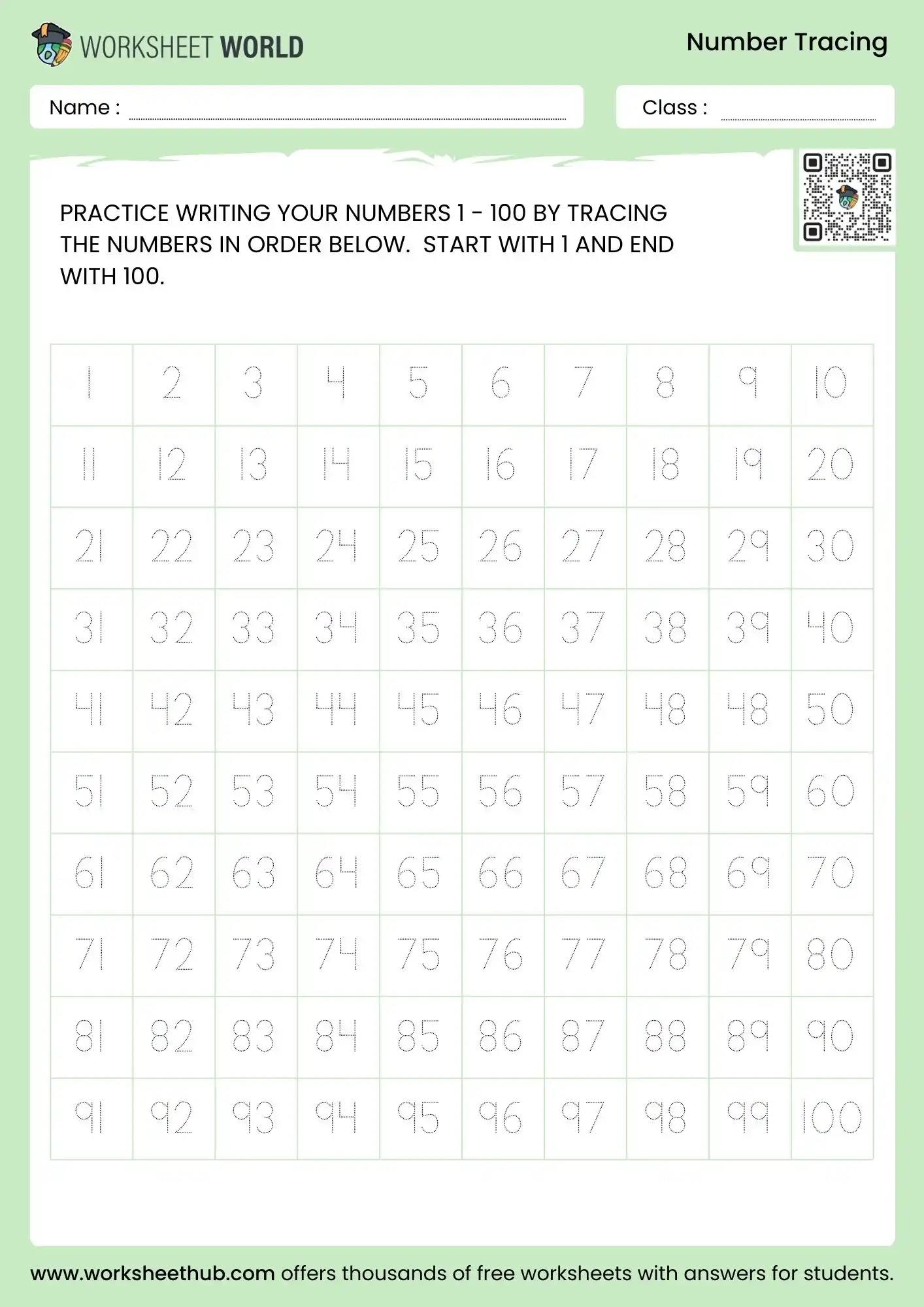
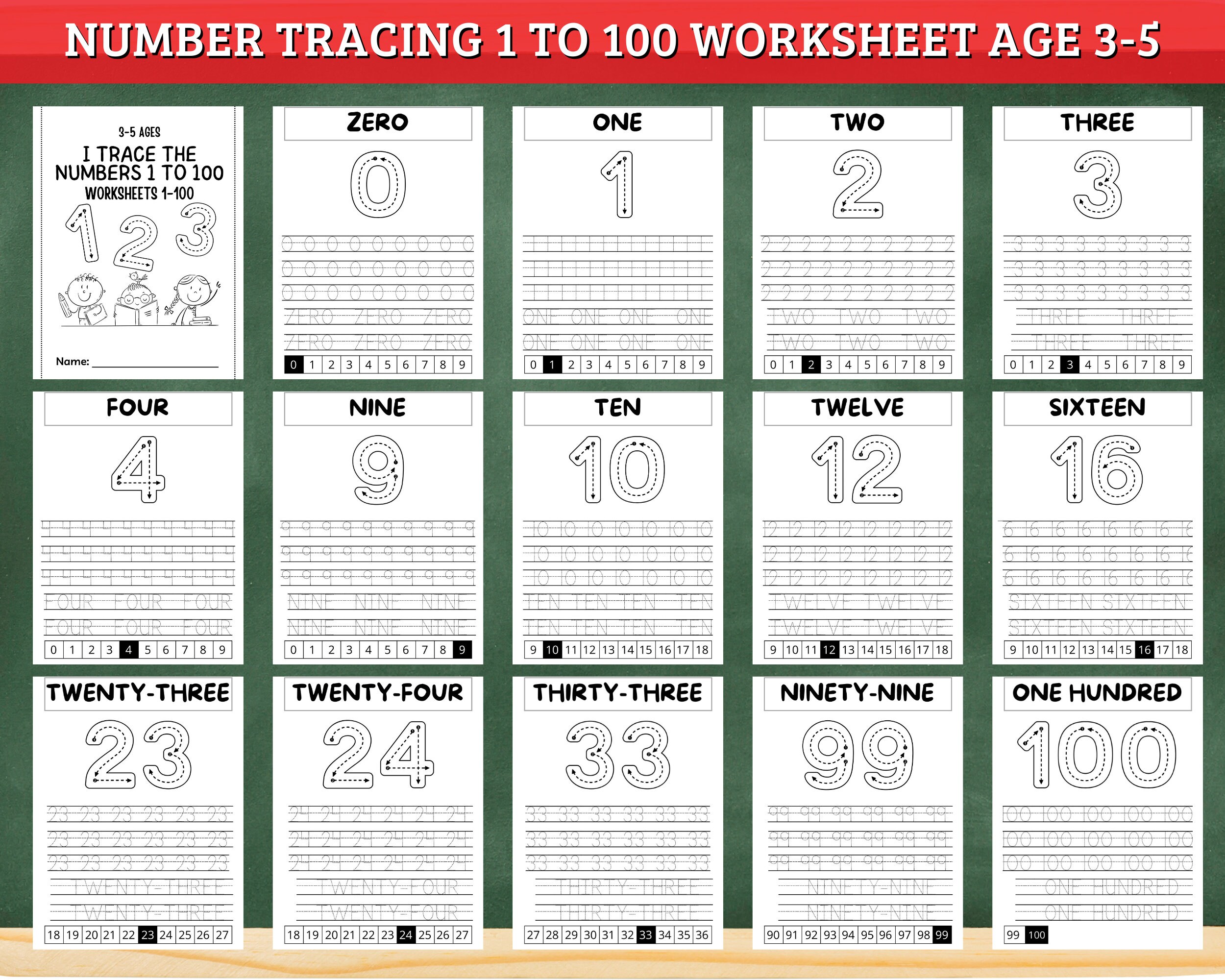
Mastering numerical literacy involves much more than simply memorizing digits from one to one hundred. This specialized resource guides learners through the transition from symbolic numerals to fully spelled-out number words, reinforcing spelling patterns alongside pencil control. Every page focuses on proper stroke order, letter sequencing, spacing, and left-to-right reading directionality. Children frequently confuse similarly structured number words like thirteen and thirty, making structured tracing an invaluable tool for visual and kinesthetic discrimination. Guided dotted lines provide predictable starting points that teach consistent formation habits. Exploring resources within Tracing Number ensures children receive the repetitive, low-stress practice necessary to build muscle memory across a wide variety of numerical formations.
Key Learning Outcomes
Consistent engagement with these tracing sheets yields several measurable developmental benefits. Learners steadily improve fine motor precision by maintaining continuous contact along intricate letter and number paths. Hand-eye coordination strengthens as developing eyes track pencil tips across expansive multi-word sequences. Spelling retention increases naturally because tactile tracing engages motor pathways in the brain alongside visual memory systems. Furthermore, children develop spatial orientation, learning how to space words evenly across a writing line without crowding letters together. According to the American Occupational Therapy Association (AOTA), foundational fine motor proficiency directly supports later academic success and classroom stamina.
How to Use This Worksheet
Successful implementation relies on creating a supportive environment where patience outweighs perfection. Begin by introducing a few target words at a time rather than overwhelming the learner with the entire numerical sequence at once. Observing children in clinic and classroom settings reveals that short, frequent practice sessions yield much better results than long, fatiguing drills. Encourage learners to trace each word with an index finger first to internalize the movement pattern before introducing a writing utensil. Pairing these exercises with materials found in Fine Motor and Pre-Writing Skills helps build the underlying hand strength required for sustained writing tasks.
Practical Tips for Parents and Teachers
Adult guidance shapes how children perceive writing tasks from the very beginning. Model an efficient tripod grasp before asking children to pick up a pencil, ensuring fingers stay relaxed and flexible. Scaffold the learning experience by sitting beside the learner to verbally cue starting points and directionality cues like top-to-bottom and left-to-right. Extend the activity by having children count real objects around the room to match the number word they just traced, cementing the connection between abstract words and concrete quantities. If hand fatigue sets in early, switch to thicker markers or crayons to provide tactile resistance without demanding excessive finger pressure. Browsing through Word and Name Tracing offers additional thematic vocabulary practice to keep engagement high.
Age-Appropriate Recommendations
Developmental readiness dictates how adults should introduce these printables across different age groups. For younger children around ages two to four, the focus remains on gross motor control, sensory exploration, and basic pre-writing strokes aligned with early CDC developmental milestones. These young learners benefit most from large-format tracing, finger-painting number words, or using thick chalk outdoors. By ages five through eight, children enter the formal schooling years described in Common Core ELA standards (such as CCSS.ELA-LITERACY.L.K.1), where they actively learn to print upper- and lowercase letters, spell simple words, and connect numerical symbols with written words. During this older stage, the number words tracing sheets serve as an exceptional tool for spelling mastery, neatness, and sustained pencil control during independent seatwork.
Foundational fine motor proficiency and proper pencil grasp directly correlate with improved legibility, writing speed, and academic stamina in early elementary classrooms. — American Occupational Therapy Association (AOTA)
Frequently Asked Questions
Clear guidance helps educators and families maximize the utility of every printed page. Below are answers to common questions regarding downloading, printing, and skill development.
Explore More Free Printable Tracing Worksheets
Supporting a child’s educational journey requires a rich variety of engaging, accessible resources. Families and educators can discover an extensive collection of educational materials designed to foster lifelong writing and learning habits across diverse topics. Exploring the full library at KidTraces.com provides endless opportunities to nurture pre-writing confidence, letter formation, and fine motor growth every single day. Print today.
Developmental Milestone & Activity Table
| Development Stage | Recommended Daily Duration | Primary Learning Objective |
|---|---|---|
| Preschool & Pre-K | 10 – 15 Minutes | Pencil grip development & basic pre-stroke lines |
| Kindergarten | 15 – 20 Minutes | Letter/number formation & spatial line awareness |
| Early Elementary (Grade 1–2) | 20 – 30 Minutes | Fluency, sentence construction & neatness |
Images References