Introduction
Many children recognize numbers and letters long before their fine motor skills possess the strength and coordination to cleanly form them on paper. This common developmental gap creates an urgent need for guided, structured practice tools that bridge cognitive understanding and physical execution. According to the National Association for the Education of Young Children, purposeful motor skill development through hands-on practice lays the vital groundwork for future academic success and confident self-expression. The number dotted line with box worksheet serves as a premier resource for addressing this precise gap, offering structured boundaries that naturally teach spatial awareness alongside numeral formation. It sounds simple, and that’s the point: stripping away clutter allows the young brain to focus entirely on stroke order, directionality, and pencil control.
💡 Educational Key Takeaways:
- Core Skill: Structured Number Dotted Line With Box Worksheet focused on developing pencil grip, stroke control, and early literacy/math confidence.
- Target Scope: Suited for homeschoolers, preschool, kindergarten, and elementary learners.
- Best Recommendation: Practice 10–15 minutes daily with ergonomic writing tools to reinforce muscle memory without hand fatigue.
What This Worksheet Covers
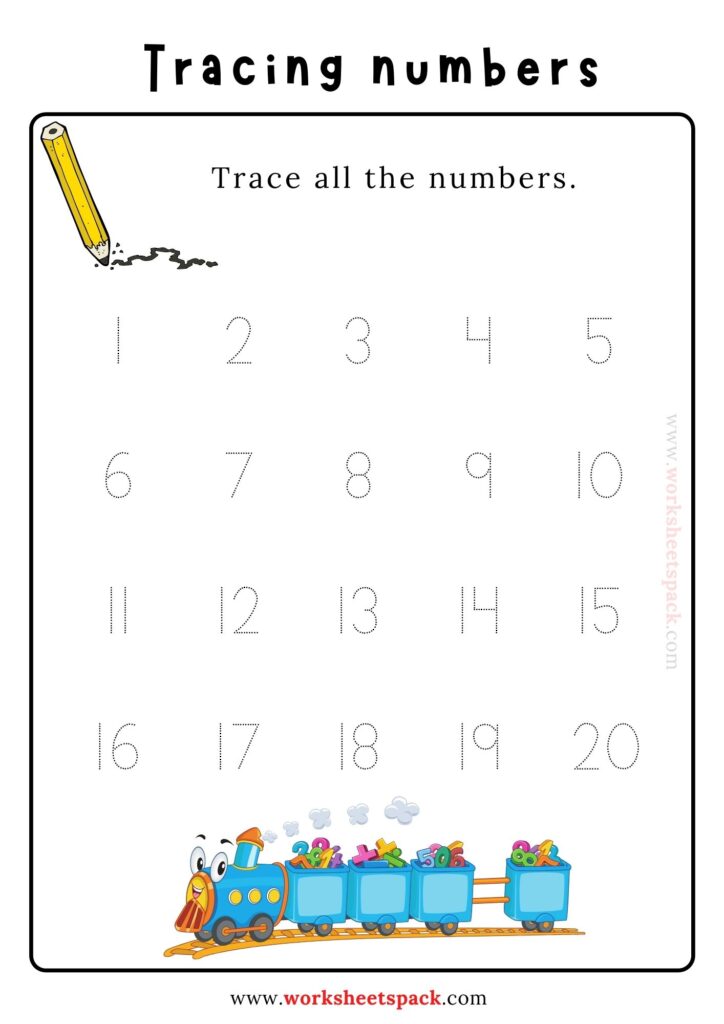
The layout of this specific print layout combines sequential number tracing with bounded visual constraints, creating an intuitive environment for early learners to master both geometry and arithmetic symbols. Each numeral sits inside a dedicated boundary, often called a grid or box, which establishes immediate physical boundaries for hand movements. Traditional open-page tracing often results in oversized numbers that wander across the page, but the inclusion of a confining box teaches children how to scale their writing to fit standard manuscript lines. Furthermore, the dotted lines provide clear starting points, directional arrows, and sequential dot progressions that demystify how a digit is actually constructed from top to bottom and left to right. This systematic approach reinforces the foundational skills explored across broader Tracing Number exercises, moving children past random scribbling into intentional, controlled pencil strokes.
Key Learning Outcomes
Engaging with these bounded numeral sheets cultivates precise stroke order, proper pencil grasp stabilization, and heightened spatial awareness as children learn to anchor their writing within specific visual margins. Learners develop bilateral hand coordination because one hand must actively hold and stabilize the paper while the dominant hand executes controlled, multi-directional lines and curves. Visual-motor integration improves significantly as the brain translates visual cues from the dotted paths into precise motor commands for the fingers, wrist, and forearm. Additionally, repeated exposure to these structured templates builds essential muscle memory, transforming laborious, choppy strokes into fluid, automatic writing habits that reduce hand fatigue during longer classroom tasks. This progressive mastery directly supports the comprehensive capabilities targeted in standard Alphabet And Numbers Tracing curricula.
How to Use This Worksheet
Implementing these printable sheets effectively requires careful attention to the physical environment, writing tools, and the child’s overall posture at the table. Educators and caregivers should begin by ensuring the seating arrangement promotes stability, featuring feet flat on the floor and hips positioned at a comfortable ninety-degree angle to support core control. Introducing varied tactile mediums, such as placing the sheet inside a clear plastic dry-erase sleeve for initial finger tracing before moving to dry-erase markers and traditional pencils, helps reduce initial performance anxiety. It is crucial to observe whether the child approaches each number from the correct top-down starting point, gently intervening to redirect hand paths before incorrect muscle memory solidifies. Integrating these sessions alongside general Fine Motor and Pre-Writing Skills activities ensures the hand muscles remain strong, flexible, and ready for extended writing demands.
Practical Tips for Parents and Teachers
Adults can model correct pencil grips by using short, broken crayons or triangular pencils that naturally encourage an efficient tripod grasp without causing finger cramping. Scaffolding the activity involves starting with large, bold numerals where the adult hand gently guides the child’s hand through the formation, gradually fading support until the learner traces independently. Extending the exercise can be as simple as asking the child to count physical objects—like counting out five blocks—immediately after successfully tracing the number five, thereby anchoring abstract symbols to concrete quantities. According to the American Occupational Therapy Association, incorporating multisensory elements like tracing textured lines or writing numbers in a tray of sand significantly enhances motor learning retention. Keeping practice sessions short, positive, and play-based prevents frustration and maintains high engagement levels throughout the early childhood years.
Age-Appropriate Recommendations
For children ages two through four, who are generally aligned with early developmental milestones outlined by the Centers for Disease Control and Prevention, the primary objective centers on exploring vertical, horizontal, and curved pre-writing strokes rather than perfection. Toddlers and preschoolers benefit from using thicker writing utensils on enlarged box templates, which accommodate developing palmar and digital grasps without demanding excessive fine motor precision. As children enter the five-to-eight age bracket, expectations shift toward meeting formal handwriting benchmarks, such as the Handwriting Without Tears framework, where consistent letter and number sizing, proportional spacing, and baseline adherence become paramount. During these older elementary years, the boxed structure of the worksheet transitions from a basic containment tool into a refinement aid, helping students eliminate oversized digits and achieve uniform, legible handwriting across all academic subjects.
Multisensory approaches significantly enhance motor learning and retention in early writing tasks — American Occupational Therapy Association
Frequently Asked Questions
Finding clear answers regarding early childhood handwriting resources helps adults make the most of printable educational materials at home and in the classroom environment.
Explore More Free Printable Tracing Worksheets
Supporting a young learner through the exciting journey of pre-writing and early numeracy requires a diverse collection of engaging, stress-free practice materials tailored to every developmental stage. Exploring different visual layouts helps maintain enthusiasm and curiosity as children build crucial hand strength, spatial awareness, and cognitive confidence. The entire library of teacher-approved, parent-trusted resources is readily available for exploration anytime at KidTraces.com.
Developmental Milestone & Activity Table
| Development Stage | Recommended Daily Duration | Primary Learning Objective |
|---|---|---|
| Preschool & Pre-K | 10 – 15 Minutes | Pencil grip development & basic pre-stroke lines |
| Kindergarten | 15 – 20 Minutes | Letter/number formation & spatial line awareness |
| Early Elementary (Grade 1–2) | 20 – 30 Minutes | Fluency, sentence construction & neatness |
Images References