Introduction
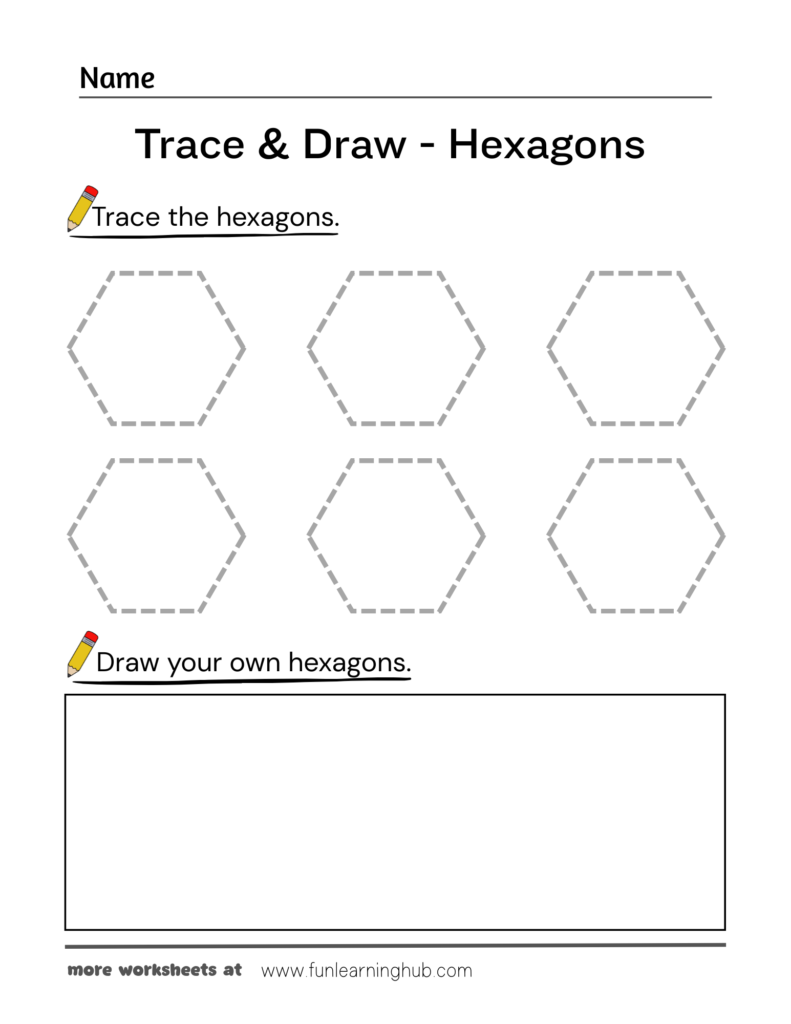
Many children recognize shapes, symbols, and letters long before their fine motor control allows them to form them on paper. According to the American Occupational Therapy Association, foundational fine motor skills—such as hand strength, bilateral coordination, and precise finger dexterity—are essential precursors to functional handwriting and academic success. Bridging the gap between cognitive recognition and physical execution requires targeted practice that does not overwhelm the hand muscles. The free printable hexagon easy tracing worksheet provides a gentle, structured entry point for developing pencil control. It sounds simple, and that is the exact point. Geometric shapes offer predictable trajectories that train the hand to manage corners, angles, and steady directional changes without the complex cognitive load of forming abstract alphabet letters.
💡 Educational Key Takeaways:
- Core Skill: Structured Hexagon Easy Tracing focused on developing pencil grip, stroke control, and early literacy/math confidence.
- Target Scope: Suited for homeschoolers, preschool, kindergarten, and elementary learners.
- Best Recommendation: Practice 10–15 minutes daily with ergonomic writing tools to reinforce muscle memory without hand fatigue.
What This Worksheet Covers
This specific tracing resource focuses entirely on building shape awareness alongside foundational pre-writing strokes. Geometric shapes serve as the structural building blocks for both early mathematics and advanced writing mechanics. By tracing structured outlines, young learners master the controlled hand movements required to navigate sharp turns and straight lines. Practitioners frequently observe that children struggle with corners long before they struggle with straight paths. The six-sided polygon introduces these precise directional shifts in a manageable format, preparing wrists and fingers for the complex demands found in Shape and Line Tracing collections. Each printed page offers clear visual boundaries that encourage visual-motor integration, teaching the brain to guide the hand accurately along a predetermined path.
Key Learning Outcomes
Children engaging with this geometric tracing exercise steadily develop enhanced visual-motor integration by connecting visual cues with precise hand movements. Pencil control improves dramatically as little fingers learn to apply consistent, moderate pressure while navigating both horizontal paths and angled slants. The physical act of tracing repetitive angles builds crucial intrinsic hand strength and refines finger isolation, which are foundational milestones outlined extensively within Fine Motor and Pre-Writing Skills frameworks. Additionally, learners cultivate sustained attention span and visual tracking abilities from top to left to right, skills that directly transfer to early reading and math fluency.
How to Use This Worksheet
Successful implementation begins long before putting a writing utensil to paper. Preparing the physical workspace ensures optimal posture, with feet flat on the floor and elbows resting comfortably at a ninety-degree angle on the table. When introducing the printable sheet, start by having the child trace the shape using an index finger to build a kinesthetic memory of the six distinct corners. Transitioning to a writing tool requires careful observation of the grasp. Shortened crayons or broken golf pencils naturally encourage a functional tripod or quadrupod grasp by discouraging fisted hand postures. Encouraging slow, deliberate movements yields far better muscle memory development than rushing through completion.
Practical Tips for Parents and Teachers
Adults play a vital scaffolding role during early tracing activities by demonstrating proper stroke initiation and directionality. Starting at the top and moving consistently in a clockwise or counter-clockwise direction instills good habits that translate seamlessly when children transition to Alphabet And Numbers Tracing later in their academic journey. For children who tire quickly, sliding the printable page inside a heavy-duty plastic dry-erase sleeve and using a thick marker adds sensory feedback and allows for effortless repetition. Extending the activity might involve asking children to count the sides and corners aloud, reinforcing early math concepts simultaneously with fine motor practice.
Age-Appropriate Recommendations
According to the National Association for the Education of Young Children Developmentally Appropriate Practice guidelines, children aged two to four benefit most from large, gross-motor pre-writing movements, but can begin exploring simple geometric shapes using thick crayons on vertical surfaces. Vertical work naturally promotes wrist extension, which is critical for proper pencil grip. For children aged five to eight, the focus shifts toward precision, pencil control, and cleaner stroke execution within standard horizontal worksheets. During these early elementary years, shape tracing acts as a warm-up exercise that wakes up the intrinsic hand muscles before tackling longer writing sessions.
Foundational fine motor skills, including hand strength and dexterity, are essential precursors to functional handwriting and academic success — American Occupational Therapy Association
Frequently Asked Questions
Finding clear answers regarding early childhood writing development helps adults optimize practice time at home and in the classroom. The following responses address common questions about downloading, physical development, and professional guidelines for shape tracing.
Children aged three to four typically develop the ability to imitate basic shapes like crosses and simple polygons, serving as a developmental bridge to writing letters — Centers for Disease Control and Prevention
Explore More Free Printable Tracing Worksheets
Expanding a child’s collection of practice materials keeps engagement high and boredom at bay. Discover a vast array of resources designed to support every stage of early development by visiting KidTraces.com. Whether exploring seasonal excitement found in Seasonal and Fun Themes or building targeted literacy skills through Dotted Letters For Tracing, consistent and joyful practice paves the way for lifelong academic confidence.
Developmental Milestone & Activity Table
| Development Stage | Recommended Daily Duration | Primary Learning Objective |
|---|---|---|
| Preschool & Pre-K | 10 – 15 Minutes | Pencil grip development & basic pre-stroke lines |
| Kindergarten | 15 – 20 Minutes | Letter/number formation & spatial line awareness |
| Early Elementary (Grade 1–2) | 20 – 30 Minutes | Fluency, sentence construction & neatness |
Images References