Introduction
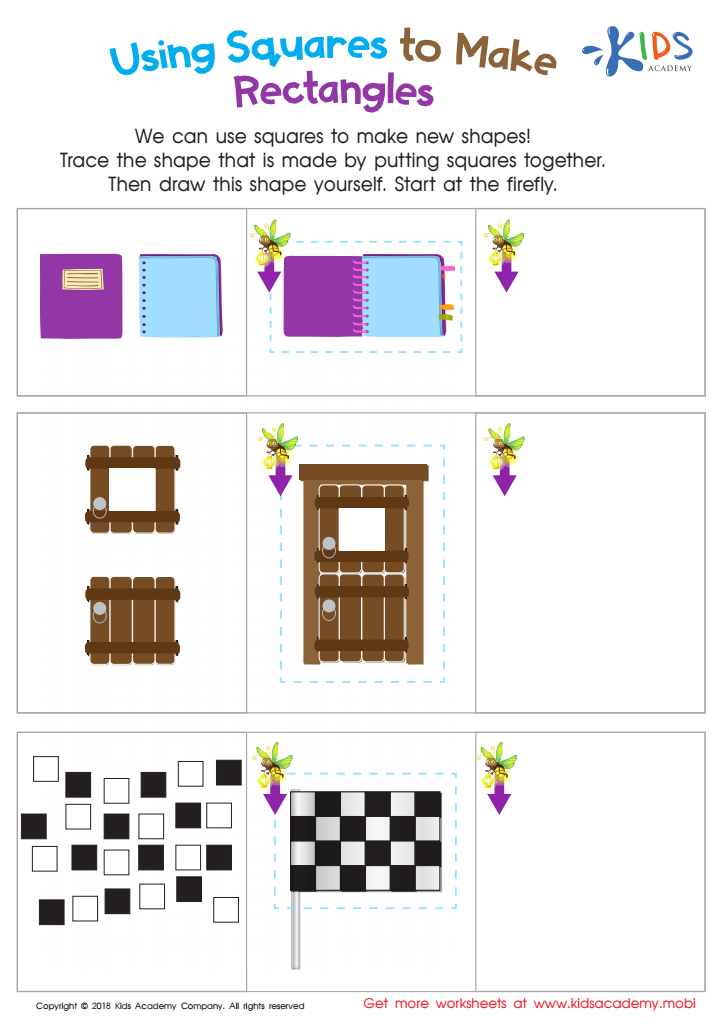
Many young children recognize letters and geometric forms long before their fine motor systems possess the endurance and dexterity required to physically form them on paper. According to the National Association for the Education of Young Children, purposeful art experiences and foundational shape tracing play an essential role in bridging the gap between visual understanding and physical execution. Young learners often struggle with the transition from seeing a shape to drawing it because hand muscles require targeted scaffolding. This free printable pre-k art using rectangle shapes bridges that exact developmental gap by turning fundamental geometry into engaging, controlled tracing practice. It sounds simple, and that is precisely the point. Through structured artistic engagement, children build the precise pencil control needed for future handwriting success.
💡 Technical Key Takeaways:
- Core Focus: Diagnostic schematic and terminal connection layout for Pre-K Art Using Rectangle Shapes.
- Target Scope: Field technicians, automotive DIYers, and residential/commercial electricians.
- Safety Rule: Always disconnect the primary power source/battery terminal and verify zero voltage with a multimeter before touching wires.
What This Worksheet Covers
Geometric shapes form the foundational framework of nearly every letter, number, and drawing a young child will ever create. Mastering the straight lines and sharp ninety-degree corners of a rectangle teaches hands how to pause, pivot, and redirect momentum. This printable shifts the focus away from abstract letter formation and centers it entirely on shape and line tracing, isolating the specific motor demands required for horizontal and vertical stroke control. Children trace, combine, and transform rectangular outlines into recognizable objects and artistic compositions. Here is what makes this worksheet different: instead of drilling isolated lines until fatigue sets in, the activity embeds crucial pre-writing strokes directly into creative art tasks. Exploring these foundational designs naturally supports progress across broader Shape and Line Tracing curricula, laying the physical groundwork for lifelong literacy.
Key Learning Outcomes
Working through these artistic rectangle templates fosters several interconnected developmental milestones simultaneously. First, children refine visual-motor integration by coordinating eye movements with hand actions to keep pencils precisely on the dotted paths. Second, navigating sharp corners demands bilateral coordination, requiring one hand to stabilize the paper while the dominant hand executes controlled directional shifts. Third, repetitive exposure to distinct vertical and horizontal boundaries strengthens intrinsic hand muscles, improving overall grip endurance for extended writing tasks. Finally, integrating these strokes into creative compositions builds spatial awareness, teaching young minds how shapes interact on a two-dimensional plane. These combined gains directly complement foundational milestones found within daily Fine Motor and Pre-Writing Skills programs, ensuring comprehensive readiness for school environments.
How to Use This Worksheet
Successful implementation relies entirely on creating an environment that encourages exploration without inducing hand fatigue or frustration. Adults should introduce the resource during calm moments when focus is high and children are eager to explore creative media. Placing the sheet on a flat, stable surface prevents the paper from sliding, which reduces unnecessary tension in the hand and wrist. Encourage children to trace the outer borders slowly, emphasizing careful corner execution over speed. According to the American Occupational Therapy Association, utilizing vertical surfaces like easels or taped-up wall sheets can further enhance wrist extension and shoulder stability during tracing activities. Once the tracing is complete, invite learners to color, cut, or paint inside the shapes to extend the artistic engagement.
Practical Tips for Parents and Teachers
Supporting a developing grip requires constant observation and gentle, positive guidance throughout the tracing process. Begin by modeling proper pencil placement, ensuring an open web space and relaxed fingers rather than a tight, white-knuckled fist. Scaffolding the activity effectively means starting with thicker writing utensils like crayons or short markers to provide natural resistance and feedback, gradually transitioning to standard pencils as control improves. Avoid taking over when a corner proves difficult; instead, gently guide the child’s hand through the pivot point to build muscle memory. Providing varied artistic prompts keeps motivation high, ensuring that children view shape mastery as a fun creative outlet rather than a tedious classroom chore.
Age-Appropriate Recommendations
Developmental expectations vary significantly across early childhood, requiring tailored approaches based on specific age groups and learning frameworks. Aligned with the NAEYC Developmentally Appropriate Practice guidelines, children ages two to four benefit most from using thick crayons to trace large, simplified rectangle outlines, focusing primarily on gross arm movements and sensory engagement. By ages five through eight, following frameworks like Handwriting Without Tears, children refine their precision, utilizing standard pencils to navigate smaller rectangles with sharp, controlled corner pivots. Younger children explore basic spatial awareness through open-ended art, while older kindergarten and early elementary students utilize these exact geometric shapes to construct detailed drawings, organize writing space, and understand complex letter proportions.
Purposeful art experiences and geometric shape tracing significantly enhance visual-motor integration and pencil control in early childhood. — National Association for the Education of Young Children
Frequently Asked Questions
Answers to common questions regarding downloading, printing, and utilizing this educational resource effectively in homes and classrooms:
Explore More Free Printable Tracing Worksheets
Expanding a child’s early learning journey involves diverse, engaging practice materials tailored to every developmental stage. Exploring the comprehensive resource library at KidTraces.com reveals hundreds of free, high-quality printables designed by educators and specialists. Discover themed activities within Seasonal and Fun Themes, or build targeted foundational skills using Tracing Worksheets created to support every unique learner.
Quick Wiring Specifications & Terminal Guide
| Component / Circuit | Standard Wire Gauge | Recommended Protection |
|---|---|---|
| Control & Trigger Signals | 18 – 20 AWG | 5A – 7.5A Inline Fuse |
| Standard Auxiliary Load | 14 – 16 AWG | 15A – 20A Circuit Breaker |
| Main Power Feed / Supply | 10 – 12 AWG | 30A – 40A Heavy-Duty Relay |
Images References