Introduction
Many children recognize letters, shapes, and symbols long before their fine motor muscles possess the strength and dexterity to form them on paper. According to the American Occupational Therapy Association, foundational hand strength and visual-motor integration must develop before efficient handwriting can emerge naturally. This developmental gap often leads to frustration during early writing instruction. Adults frequently reach for standard worksheets, only to watch young learners grip pencils awkwardly or abandon the task entirely due to a lack of engagement. It sounds simple, and that’s the point. Transforming abstract pencil strokes into a dynamic playground changes the entire learning experience. The pre writing shapes tracing ot car tracks worksheet addresses this exact developmental need by bridging the gap between play and foundational pencil control. Children do not merely draw lines on a static page; they drive imaginary vehicles along carefully engineered highways. This thematic approach reframes tedious drill work into an exciting mission that captivates young minds.
💡 Educational Key Takeaways:
- Core Skill: Structured Pre Writing Shapes Tracing Ot Car Tracks focused on developing pencil grip, stroke control, and early literacy/math confidence.
- Target Scope: Suited for homeschoolers, preschool, kindergarten, and elementary learners.
- Best Recommendation: Practice 10–15 minutes daily with ergonomic writing tools to reinforce muscle memory without hand fatigue.
What This Worksheet Covers
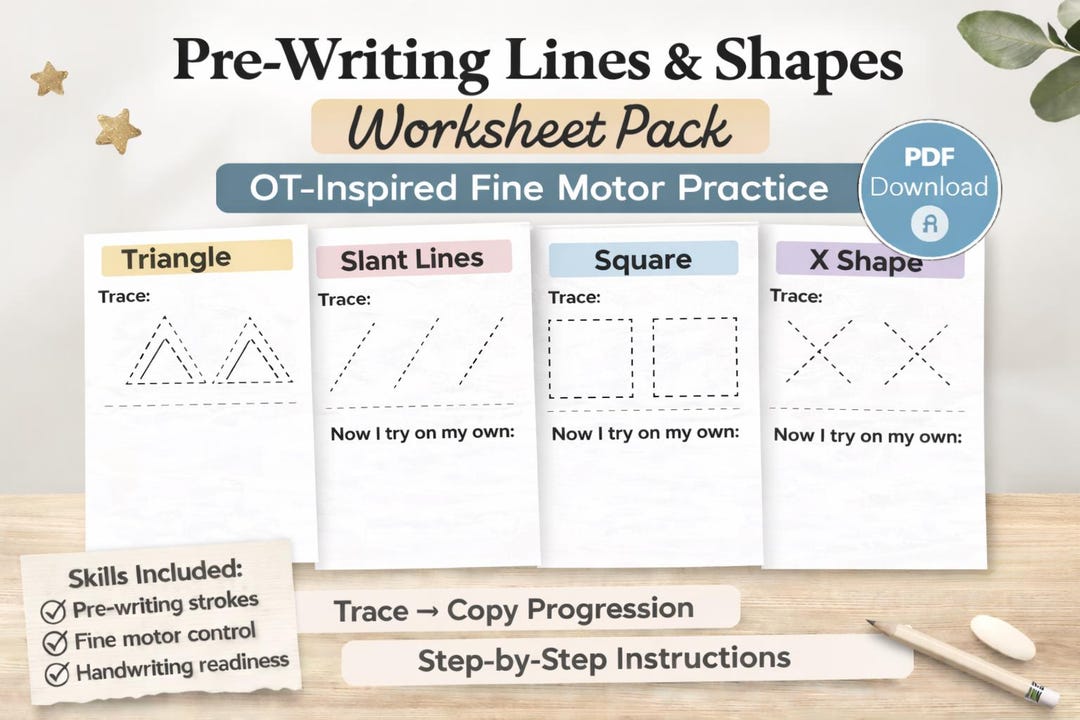
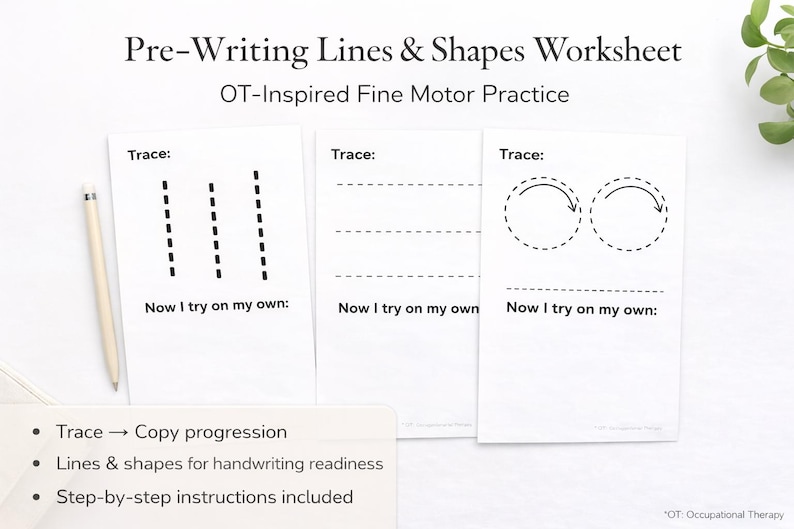
Designed specifically to build crucial pre-writing mechanics, this printable focuses on horizontal, vertical, diagonal, and curved strokes that form the building blocks of both uppercase and lowercase letter formation. Graphic layouts feature winding roads, looping race tracks, and sharp intersection turns that require children to adapt their pencil pressure and directional control continuously. Navigating these paths challenges the intrinsic muscles of the hand, forcing fingers to make subtle adjustments that standard coloring pages rarely require. Furthermore, the visual layout trains the eyes to track smoothly across a page from left to right, establishing essential habits for future reading and writing fluency. Every curve and straightaway targets a specific muscle group, preparing tiny fingers for the complex demands of formal handwriting instruction without the associated burnout.
Key Learning Outcomes
Working through these engaging road layouts helps children master precise pencil control, which serves as the physical foundation for all future academic writing. Learners build critical hand-eye coordination by keeping their writing utensils securely within narrow boundaries, translating visual cues into smooth physical movements. Developing bilateral integration occurs naturally as one hand stabilizes the paper while the dominant hand steers the pencil along the winding tracks. Additionally, children strengthen their understanding of spatial awareness and directional terms such as up, down, curve, and straight as they narrate their driving adventures across the page. According to the National Association for the Education of Young Children, playful and hands-on fine motor practice significantly enhances a child’s readiness for structured kindergarten curricula.
How to Use This Worksheet
Print out the pages on heavy cardstock to ensure durability, especially if eager learners decide to run toy cars across the tracks before reaching for writing utensils. Slipping the printed sheets into heavy-duty clear plastic sleeves and providing dry-erase markers transforms a single-use paper into a reusable center activity that children can practice repeatedly. Encouraging children to first trace the roads with their index fingers helps establish tactile memory of the stroke pathway before introducing a pencil or crayon. Pairing the activity with miniature race cars or finger puppets invites children to act out stories along the lines, making the mechanical act of tracing feel like an interactive game rather than a chore. Consistency matters deeply in motor skill development, so keeping practice sessions short, positive, and frequent yields the best long-term results for developing hands.
Practical Tips for Parents and Teachers
Adults should actively model an efficient tripod grasp before asking children to begin tracing, ensuring fingers rest softly about an inch away from the writing tip. Scaffolding the activity appropriately means allowing thicker crayons or chunky markers for younger toddlers who still rely on a whole-hand palmar grasp, gradually transitioning to standard pencils as finger strength improves. Offering verbal encouragement focused on the effort of staying on the road rather than perfection builds a resilient growth mindset during frustrating moments. Extending the learning outdoors can also reinforce these concepts by drawing giant race tracks with sidewalk chalk and having children physically drive their bodies along the curved paths. Teachers can easily integrate these sheets into morning tubs or occupational therapy stations to provide independent, low-stress practice that reinforces classroom learning objectives.
Age-Appropriate Recommendations
For toddlers aged two to four, the focus should remain heavily on gross motor line exploration, thick writing tools, and finger tracing to build foundational awareness in alignment with the CDC milestones for early childhood development. Children in this younger bracket benefit most from large, sweeping curves and simple straight lines that do not demand excessive wrist stability or intense finger isolation. Moving into the five to eight-year-old range, expectations shift toward refined pencil control, accurate letter and shape sizing, and maintaining a consistent functional grasp throughout an entire worksheet. Older children can tackle complex intersecting tracks and tight loops that challenge their visual attention and demand precise fine motor adjustments. By honoring these distinct developmental stages, educators and parents can provide just the right level of challenge without overwhelming developing hand structures.
Foundational hand strength and visual-motor integration must develop before efficient handwriting can emerge naturally — American Occupational Therapy Association
Frequently Asked Questions
Answers to common questions about implementing these printable resources effectively at home or inside the classroom.
Explore More Free Printable Tracing Worksheets
Supporting a child through early literacy and motor milestones requires a diverse toolkit of engaging, developmentally appropriate resources. Beyond vehicle-themed pathways, learners often thrive when exploring Shape and Line Tracing activities that build fundamental pencil strokes. As dexterity improves, expanding into Fine Motor and Pre-Writing Skills helps solidify hand strength and coordination. For older children ready to tackle letter formation, discovering specialized Alphabet And Numbers Tracing printables ensures a smooth transition into academic writing. Every child learns at their own unique pace, and having access to a robust collection makes differentiation simple and stress-free. Caregivers and educators are warmly invited to explore the complete library of learning materials available at KidTraces.com to find inspiration for every stage of development.
Developmental Milestone & Activity Table
| Development Stage | Recommended Daily Duration | Primary Learning Objective |
|---|---|---|
| Preschool & Pre-K | 10 – 15 Minutes | Pencil grip development & basic pre-stroke lines |
| Kindergarten | 15 – 20 Minutes | Letter/number formation & spatial line awareness |
| Early Elementary (Grade 1–2) | 20 – 30 Minutes | Fluency, sentence construction & neatness |
Images References