Introduction
Many children recognize complex visual symbols long before tiny hand muscles possess the endurance to replicate them on paper. According to the American Occupational Therapy Association, foundational fine motor control relies on the coordinated development of intrinsic hand strength, visual-motor integration, and stable postural support. Translating this developmental readiness into pencil control requires bridging visual perception with physical execution. The free printable diamond shape objects for kids provides a purposeful, engaging pathway to master this geometric challenge. Observers in kindergarten classrooms often notice that children stumble over acute angles because curves feel naturally easier than sharp corners. Here’s what makes this worksheet different: it breaks down diagonal line production into manageable, visually appealing tracing steps. Supporting these early geometry and pre-writing milestones ensures that young learners build the confidence needed for future academic success.
💡 Technical Key Takeaways:
- Core Focus: Diagnostic schematic and terminal connection layout for Diamond Shape Objects For Kids.
- Target Scope: Field technicians, automotive DIYers, and residential/commercial electricians.
- Safety Rule: Always disconnect the primary power source/battery terminal and verify zero voltage with a multimeter before touching wires.
What This Worksheet Covers
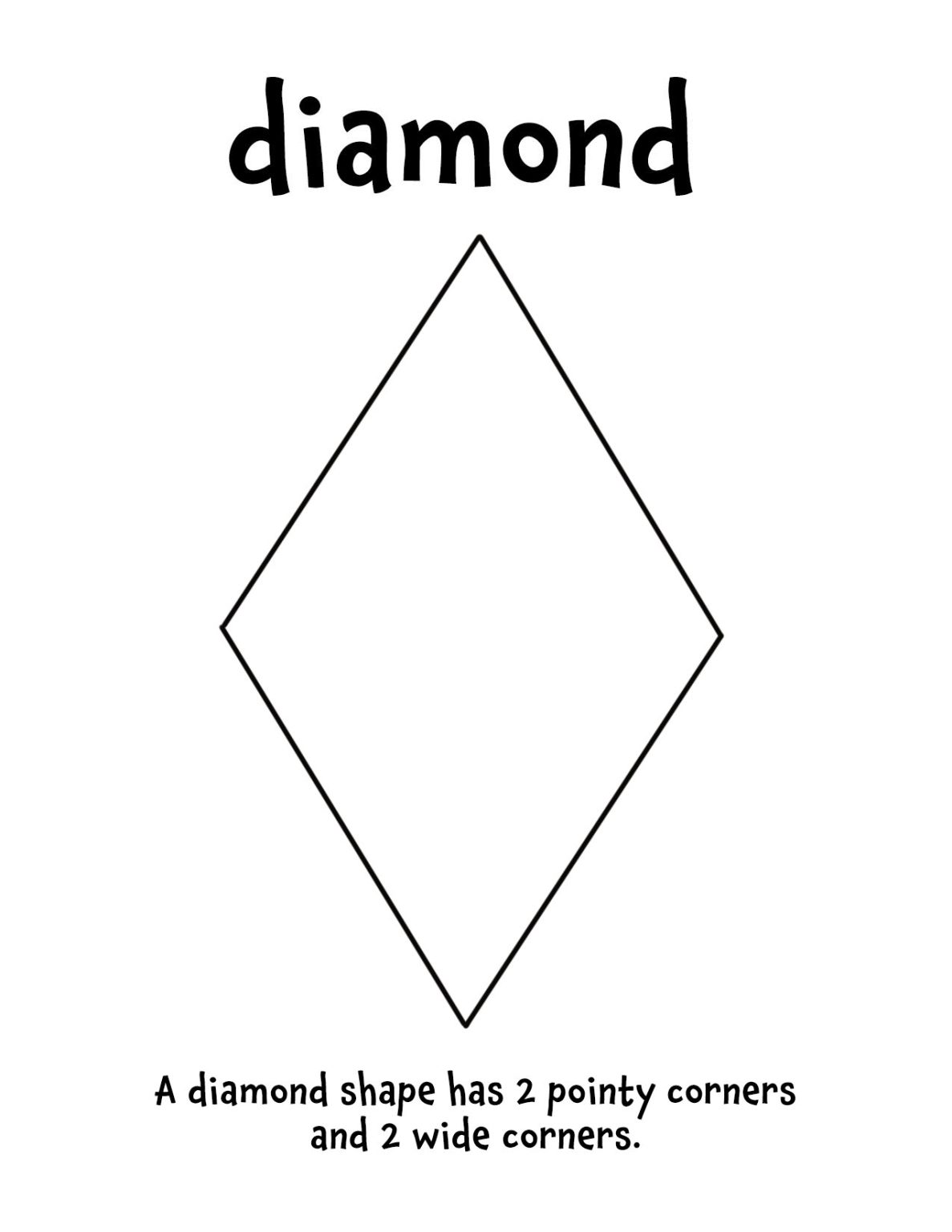
Mastering the diamond shape demands sophisticated visual-spatial awareness and bilateral hand coordination. Unlike basic circles or vertical lines, a diamond requires the pencil to change direction sharply at four distinct vertices while maintaining smooth, controlled diagonal strokes. This specific resource focuses on familiar diamond shape objects for kids, transforming abstract geometry into recognizable everyday items like kites, signs, and windows. Tracing these familiar objects gently introduces children to oblique lines, which serve as the foundational strokes for forming uppercase letters such as A, V, W, and X. Educators frequently observe that when children connect lines to form recognizable pictures rather than floating geometric shapes, engagement levels rise significantly. It sounds simple, and that’s the point. Grounding geometry in recognizable real-world contexts bridges the gap between abstract math concepts and concrete visual art. Children learn to anticipate changes in direction, monitor pencil pressure, and adjust their grip as the writing tool travels up and down the slanted page. For more related activities, check out our Oval Shape Trace.
Key Learning Outcomes
Working consistently with these targeted shape tracing sheets fosters robust bilateral integration as one hand stabilizes the paper while the dominant hand executes controlled strokes. According to the National Association for the Education of Young Children, active engagement in drawing and geometric exploration during the early years directly predicts later spatial reasoning and mathematical proficiency. As learners trace the slanted outlines of kites and rhombus-framed windows, they refine their visual-motor integration, teaching the brain to translate visual cues into precise hand movements. Furthermore, the practice strengthens intrinsic hand muscles, particularly the lumbricals and interossei, which are essential for maintaining a functional three-finger pencil grasp. Children also develop crucial directional awareness by learning to start at the top vertex, glide down the left edge, pivot sharply at the bottom corner, and angle back up to close the shape. This repetitive, structured motion instills patience, impulse control, and sustained attention to detail, preparing young minds and fingers for formal writing instruction.
How to Use This Worksheet
Facilitating successful tracing experiences involves more than simply handing a child a pencil and a sheet of paper. Preparation begins with environmental setup, ensuring the table matches the child’s height so feet rest flat on the floor, promoting core stability. Adults can introduce the worksheet by pointing out real-world diamond shape objects for kids around the room, establishing a concrete connection before any marks are made. Encouraging a functional tripod grasp prevents early hand fatigue, though modified grasps should be accepted gracefully during the initial developmental phases. It helps to guide the child’s hand physically through the first few strokes to let muscle memory register the sharp corner transitions. Once the initial physical modeling occurs, step back to allow independent exploration, offering verbal encouragement that focuses on effort rather than absolute perfection.
Practical Tips for Parents and Teachers
Scaffolding these fine motor exercises ensures that children remain motivated rather than frustrated by challenging diagonal lines. Start by using thick crayons or short stubby pencils, which naturally encourage a proper grasp by limiting the space available for an adult-like fist grip. For children who struggle with the sudden directional shifts at the corners, place a small visual dot or a bright sticker at each vertex to serve as a literal stopping and turning point. If pencil control remains shaky, slide the worksheet inside a heavy-duty plastic dry-erase sleeve and let the child trace with a whiteboard marker, lowering the stakes of making a permanent “mistake.” Teachers and parents can also integrate sensory elements by having children trace the diamond outlines in a tray of colored salt or sand before moving to paper. Providing plenty of positive reinforcement for maintaining contact between the pencil tip and the dotted lines transforms a rigorous handwriting drill into an enjoyable, rewarding activity.
Age-Appropriate Recommendations
Aligning expectations with developmental stages ensures that children experience success rather than frustration when tackling geometric tracing tasks. For toddlers and young preschoolers aged two to four, the focus aligns closely with the Head Start Early Learning Outcomes Framework by emphasizing gross motor stability, basic wrist rotation, and simple imitation of vertical and horizontal lines. At this stage, expecting precise diamond formation is developmentally premature; instead, toddlers benefit from finger-tracing large textured diamond cutouts or coloring oversized shape outlines. For children aged five to eight, who fall under early elementary standards such as Common Core ELA standard L.K.1.a regarding print and writing mechanics, the objectives shift toward precision, pencil control, and accurate letter formation. Older children can independently navigate multi-step worksheets, combining shape tracing with cutting practice along the diagonal borders to build bilateral hand coordination.
Foundational fine motor control relies on intrinsic hand strength, visual-motor integration, and stable postural support. — American Occupational Therapy Association
Frequently Asked Questions
Finding quick answers to common implementation questions helps caregivers maximize the benefits of these printable resources.
Active engagement in drawing and geometric exploration during the early years directly predicts later spatial reasoning and mathematical proficiency. — National Association for the Education of Young Children
Explore More Free Printable Tracing Worksheets
Expanding a child’s fine motor journey involves exploring a wide variety of engaging practice materials tailored to different developmental stages. Discover targeted resources for alphabet learning through Alphabet And Numbers Tracing or build early pre-writing strength with Fine Motor and Pre-Writing Skills. Educators seeking specialized letter practice will love the options found in Dotted Letters For Tracing, while geometric exploration continues seamlessly via Shape and Line Tracing. To find seasonal motivation, explore Seasonal and Fun Themes, or browse the broader collections of Tracing Worksheets, Tracing Number, Word and Name Tracing, and general resources at General Kidtraces. The entire library available at KidTraces.com offers endless opportunities to support growing hands and curious minds every single day.
Quick Wiring Specifications & Terminal Guide
| Component / Circuit | Standard Wire Gauge | Recommended Protection |
|---|---|---|
| Control & Trigger Signals | 18 – 20 AWG | 5A – 7.5A Inline Fuse |
| Standard Auxiliary Load | 14 – 16 AWG | 15A – 20A Circuit Breaker |
| Main Power Feed / Supply | 10 – 12 AWG | 30A – 40A Heavy-Duty Relay |
Images References