Introduction
Many young children recognize letters and geometric shapes long before their fine motor skills are strong enough to form them consistently on paper. According to the American Occupational Therapy Association, foundational fine motor control and bilateral coordination are essential prerequisites for functional handwriting and classroom success. It sounds simple, and that is the point. Young learners often possess brilliant ideas, but translating those thoughts into physical strokes requires targeted muscle activation and spatial awareness. Here’s what makes this worksheet different: it bridges the gap between visual recognition and physical execution by breaking down complex forms into manageable, structured paths. Utilizing a free tracing square shape resource provides an accessible entry point for children who are learning how to anchor their hands, control writing utensils, and navigate corners on a page.
💡 Educational Key Takeaways:
- Core Skill: Structured Free Tracing Square Shape focused on developing pencil grip, stroke control, and early literacy/math confidence.
- Target Scope: Suited for homeschoolers, preschool, kindergarten, and elementary learners.
- Best Recommendation: Practice 10–15 minutes daily with ergonomic writing tools to reinforce muscle memory without hand fatigue.
What This Worksheet Covers
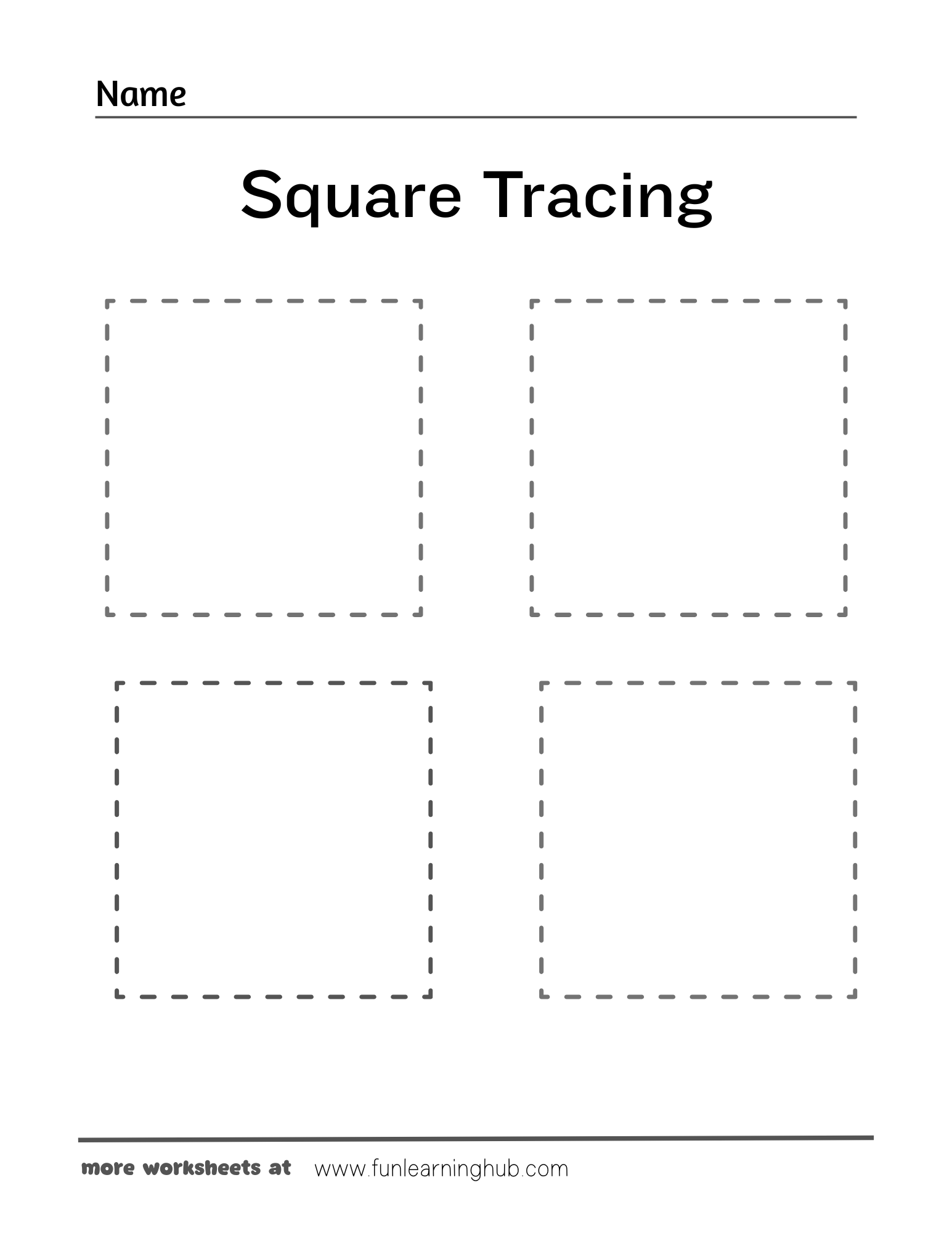
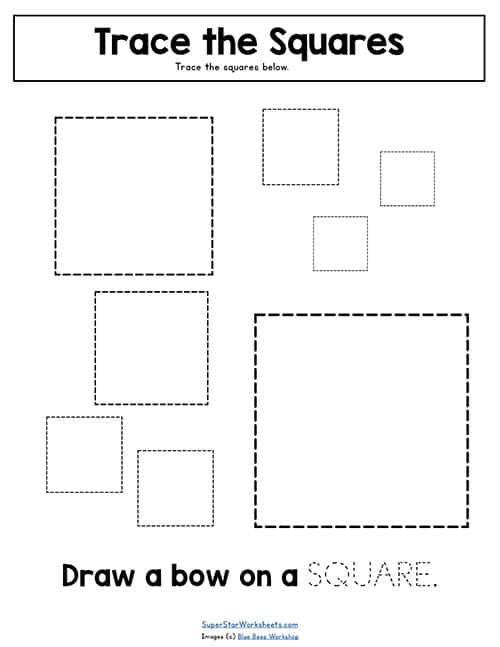
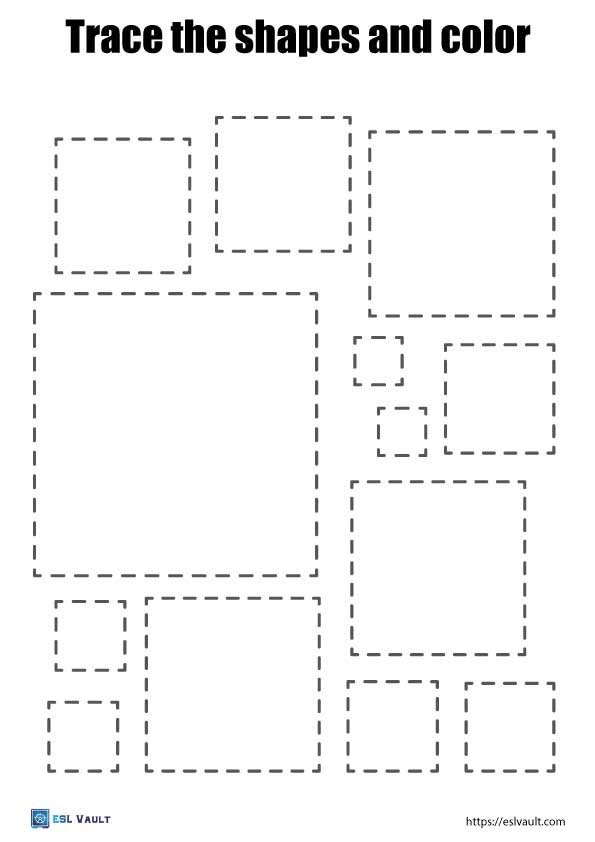
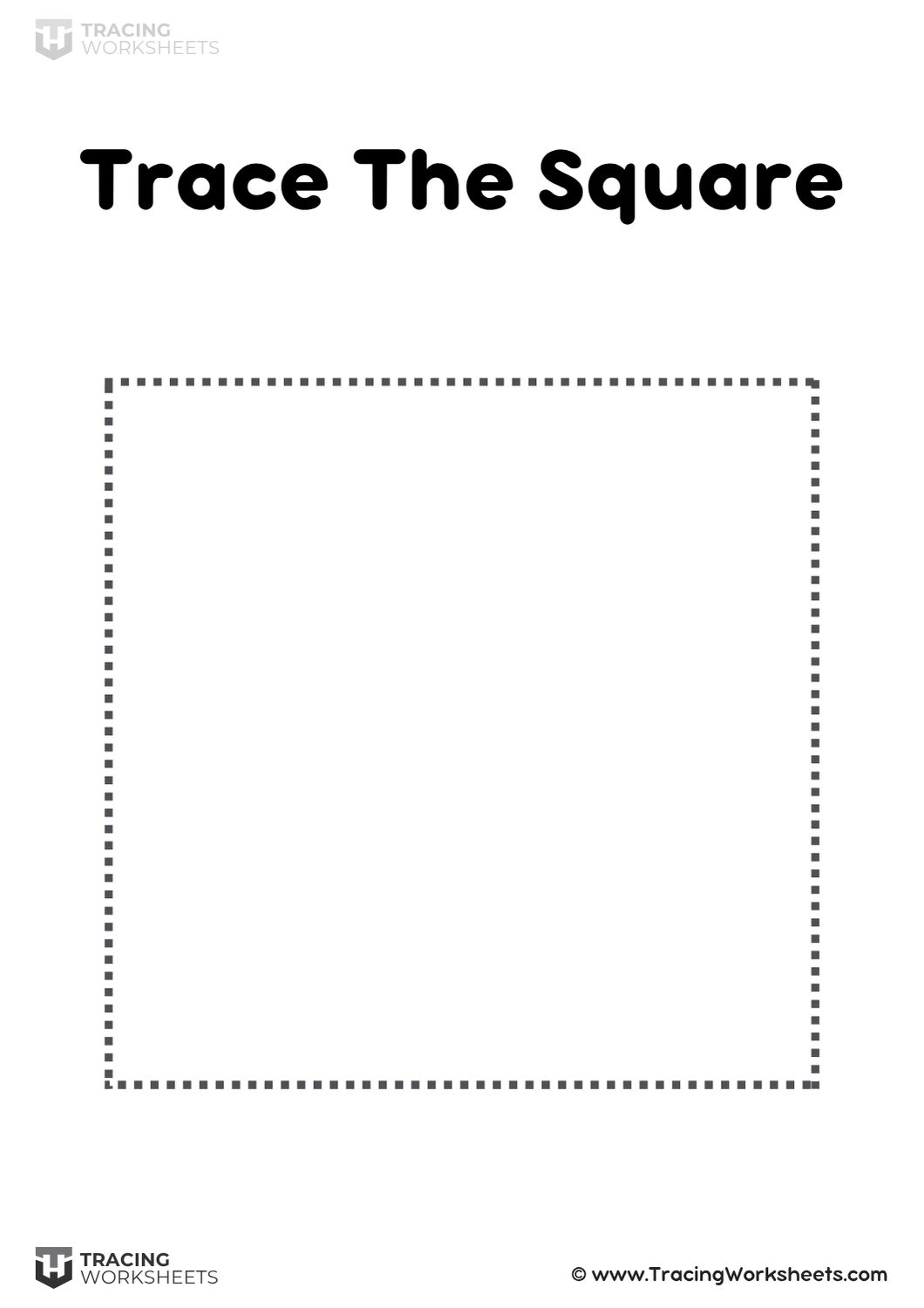
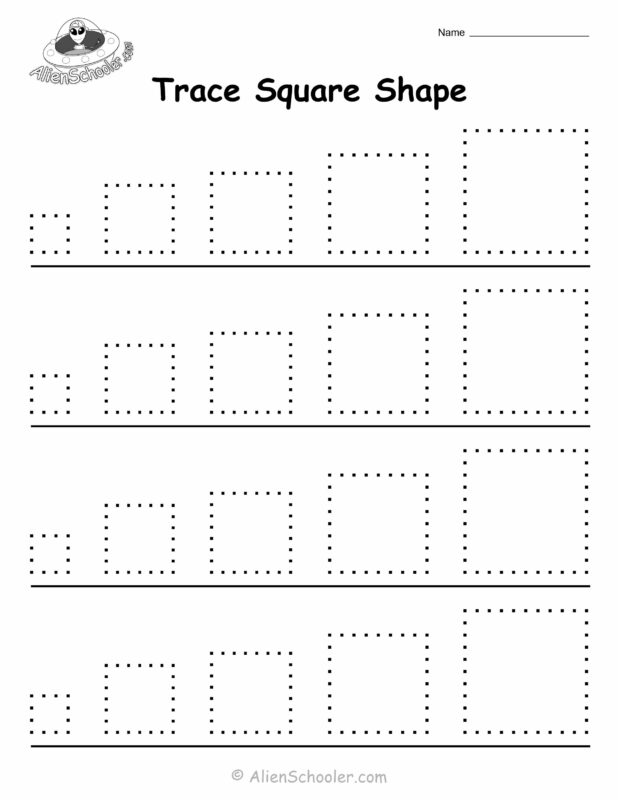
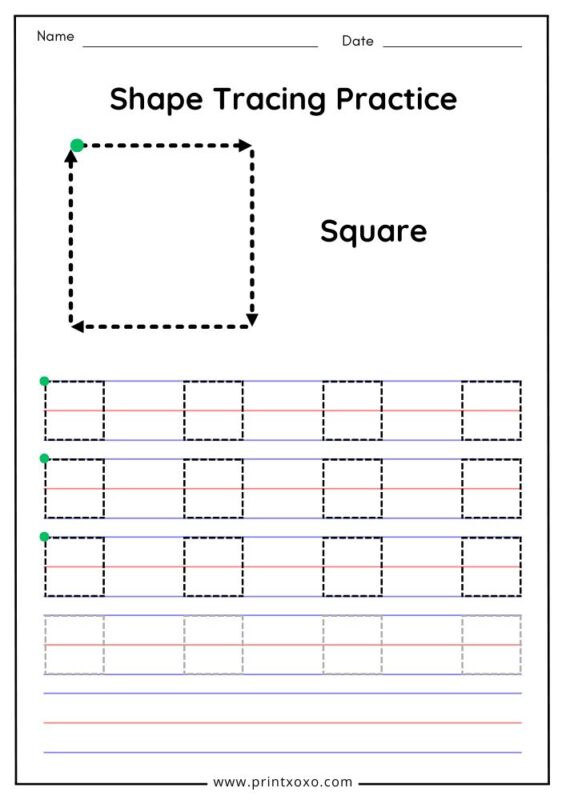
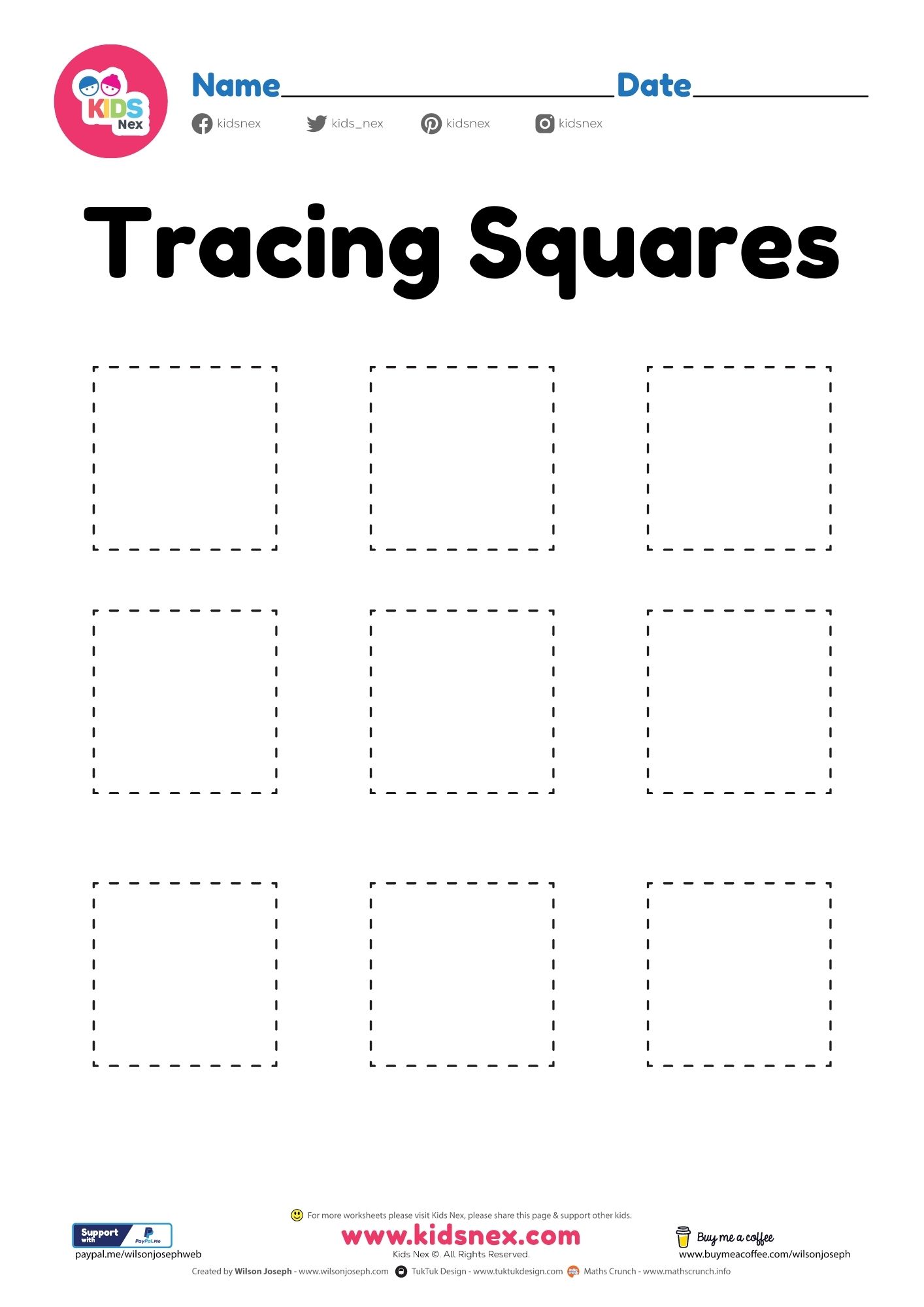
Mastering a square is not just about drawing a box; it is about learning how to stop, pivot, and change direction while maintaining continuous pencil contact. This printable focuses heavily on essential pre-writing strokes, directional control, and visual-motor integration. Children often struggle with the sharp ninety-degree angles required in closed geometric shapes, making guided practice invaluable for building motor memory. Furthermore, exploring shape and line tracing lays the groundwork for later academic tasks, including uppercase letter formation like the letters E, F, H, and L. When working through these exercises, learners develop crucial spatial awareness, understanding boundaries, margins, and paper orientation. For more related activities, check out our Tracing Shapes Instrument.
Key Learning Outcomes
Working through these guided paths promotes enhanced bilateral coordination, requiring one hand to stabilize the paper while the dominant hand executes the tracing movement. Children systematically strengthen the intrinsic muscles of the hand, fingers, and wrist, which directly translates to improved pencil grip endurance. Visual attention and tracking improve significantly as eyes learn to anticipate corners and guide the hand accordingly. Additionally, learners cultivate foundational stroke control, mastering the ability to start, stop, and pivot with precision. These combined outcomes foster increased confidence, independence, and readiness for more complex writing tasks across daily routines.
How to Use This Worksheet
Success with early writing tools depends heavily on posture, environment, and initial setup before the pencil ever touches the page. Positioning the child with feet flat on the floor and hips at a ninety-degree angle establishes the core stability necessary for delicate hand movements. Securing the paper with painter’s tape prevents frustrating sliding, allowing the non-dominant hand to assist with stabilization. Encouraging a functional grasp—such as a tripod or quadripod grip—reduces hand fatigue and promotes smooth, controlled lines. Practitioners should observe closely to ensure the wrist remains neutral rather than hooked awkwardly over the top of the tracing path.
Practical Tips for Parents and Teachers
Scaffolding instruction effectively means meeting the child at the current developmental stage and gradually removing support. For absolute beginners, starting with a finger trace over the thick outlines helps internalize the directional path before introducing a writing utensil. Modeling proper stroke sequence aloud—such as saying “down, turn, down, turn”—gives auditory cues that reinforce the physical movement. According to the National Association for the Education of Young Children, active scaffolding during sensory-rich fine motor tasks significantly enhances a child’s spatial reasoning and persistence. Extending the activity can be as simple as having the child trace the square using a damp cotton swab on a salt tray before returning to paper.
Age-Appropriate Recommendations
For toddlers and preschoolers aged two to four, the focus centers entirely on gross motor integration, thick crayon exploration, and large-scale pre-writing lines aligned with the CDC developmental milestones for early motor control. At this stage, perfection is discouraged; messy, enthusiastic lines build the muscle tone required for future precision. Children ages five to eight transition toward refined pencil control, proper stroke sequencing, and tighter spatial boundaries, matching foundational expectations outlined in Handwriting Without Tears frameworks. Older kindergarten and early elementary students benefit from timing themselves playfully or using finer markers to challenge their newly acquired wrist and finger stability.
Foundational fine motor control and bilateral coordination are essential prerequisites for functional handwriting and classroom success. — American Occupational Therapy Association
Frequently Asked Questions
Common inquiries regarding printing setup, developmental readiness, and tracing techniques are addressed below to support caregivers and educators.
Young children master horizontal and vertical lines before attempting intersecting lines and diagonal shapes like triangles or diamonds. — National Center for Learning Disabilities
Explore More Free Printable Tracing Worksheets
Expanding a child’s fine motor toolkit requires access to a diverse array of engaging, developmentally appropriate resources that grow alongside their abilities. Beyond geometric shapes, learners thrive when exploring specialized categories like Shape and Line Tracing to build foundational hand control. Educators seeking to enhance pre-writing strength will find wonderful resources within Fine Motor and Pre-Writing Skills. As children progress toward literacy, incorporating Alphabet And Numbers Tracing bridges shape recognition with early writing. Browse the full library of curated materials anytime by visiting KidTraces.com to support every stage of development.
Developmental Milestone & Activity Table
| Development Stage | Recommended Daily Duration | Primary Learning Objective |
|---|---|---|
| Preschool & Pre-K | 10 – 15 Minutes | Pencil grip development & basic pre-stroke lines |
| Kindergarten | 15 – 20 Minutes | Letter/number formation & spatial line awareness |
| Early Elementary (Grade 1–2) | 20 – 30 Minutes | Fluency, sentence construction & neatness |
Images References