Introduction
Many children recognize letters, symbols, and complete shapes long before their fine motor control and hand strength are developed enough to form them independently. According to the American Occupational Therapy Association, foundational fine motor skills—such as intrinsic hand muscle strength and bilateral coordination—are essential precursors to functional handwriting and pencil control in young learners. Bridging that cognitive and physical gap requires intentional practice with foundational geometry and pre-writing strokes. The tracing shapes instrument bridges that exact gap by translating visual awareness into precise physical motion. Children frequently stare at a printed square or circle with a clear idea of what it is, yet struggle to translate that mental image through a pencil onto paper. Mastering these foundational geometric lines builds the precise wrist stability and visual-motor integration needed for future academic success. Using structured printables turns abstract visual concepts into tangible muscle memory.
💡 Educational Key Takeaways:
- Core Skill: Structured Tracing Shapes Instrument focused on developing pencil grip, stroke control, and early literacy/math confidence.
- Target Scope: Suited for homeschoolers, preschool, kindergarten, and elementary learners.
- Best Recommendation: Practice 10–15 minutes daily with ergonomic writing tools to reinforce muscle memory without hand fatigue.
What This Worksheet Covers
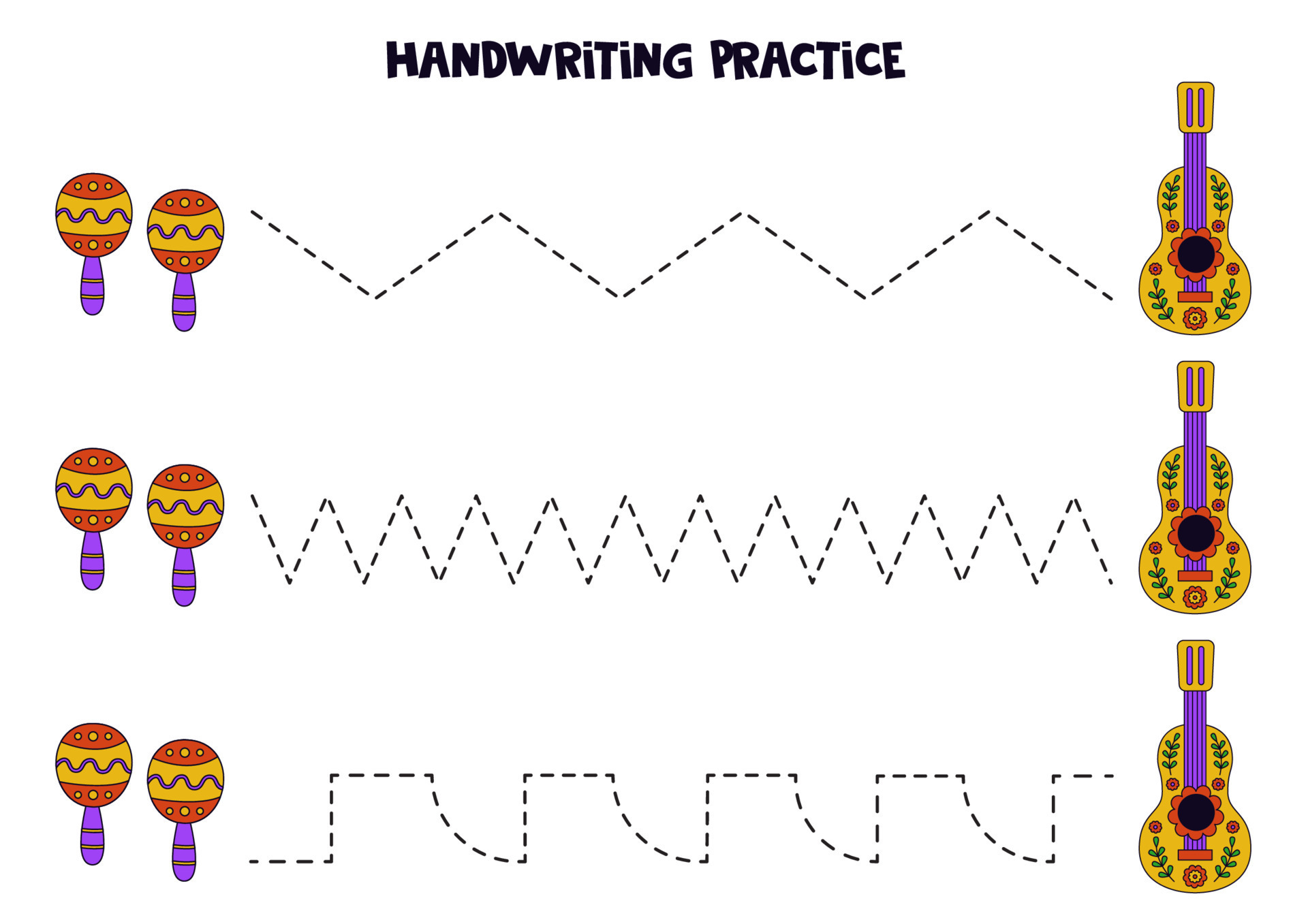
The tracing shapes instrument focuses on foundational geometric paths that serve as the building blocks for both early writing and advanced spatial reasoning. Circles, triangles, squares, and rectangles appear in deliberate sizing gradients to challenge hand-eye coordination at different skill levels. It sounds simple, and that’s the point. Stripping away complex letter formations allows the brain to focus entirely on maintaining continuous pencil contact, regulating pressure, and executing smooth curves and sharp angles. Children encounter dotted paths, directional arrows, and clear starting points designed to guide the pencil without creating frustration. Continuous lines teach fluid motion, while segmented shapes require controlled stops, lifts, and repositioning. Every stroke reinforces the neurological pathways connecting the visual cortex to the distal muscles of the hand and fingers.
Key Learning Outcomes
Working through these targeted geometric exercises yields measurable growth across multiple developmental domains. First, learners strengthen the intrinsic muscles of the hand, which improves overall pencil grasp endurance during extended writing tasks. Second, the activity refines visual-motor integration, teaching the hand to follow the exact trajectory dictated by the eye. Third, spatial awareness expands as children navigate corners, intersections, and closed loops on a two-dimensional plane. Fourth, directional control improves significantly as participants practice moving from top to bottom and left to right. Finally, attention span and task persistence grow naturally as children successfully close shapes and complete the full page of designated paths.
How to Use This Worksheet
Effective implementation relies on meeting the child at the current developmental level rather than forcing rigid, premature expectations. Begin by reviewing the available Shape and Line Tracing activities to find the exact complexity that matches the current motor profile of the learner. Place the paper on a flat, stable surface, and encourage an upright posture with feet flat on the floor to promote core stability. Encourage a functional tripod grasp, but allow for adaptive grasps if the hand structure is still maturing. It is helpful to watch for common pitfalls, such as pressing down with excessive force or hovering the hand in an unsupported manner. Keep practice sessions brief and positive, prioritizing quality of movement over the sheer quantity of completed sheets.
Practical Tips for Parents and Teachers
Scaffolding instruction makes a tremendous difference in how a child responds to structured pre-writing tools. Modeling the stroke first in the air or directly on the paper provides a clear visual demonstration of directionality and speed. According to the National Association for the Education of Young Children, young children learn best through active engagement and scaffolded adult support that gradually transfers independence back to the learner. Guide the child’s hand gently through the first few shapes if the physical motion feels entirely foreign, then gradually fade that physical assistance. For learners who need broader developmental support, exploring resources via Fine Motor and Pre-Writing Skills helps establish baseline hand strength before returning to geometric sheets. Extend the learning experience by having children trace three-dimensional objects with their fingers or draw shapes in sensory bins filled with salt or sand.
Age-Appropriate Recommendations
Matching the tool to the developmental stage ensures optimal progress without causing frustration or burnout. For toddlers and preschoolers ages two through four, aligned with typical CDC developmental milestones, the focus should rest on vertical lines, horizontal lines, and simple circles using thick crayons or markers. Children in this younger bracket are still developing bilateral integration and are just beginning to stabilize their core while working at a table. For older children ages five through eight, aligned with Kindergarten and early elementary standards, the focus shifts toward precise triangles, diamonds, and multi-step geometric patterns executed with standard pencils. During these primary school years, children refine their pencil grip, increase writing stamina, and gain the fine motor precision necessary for complex letter formations. To expand practice across broader early literacy domains, incorporate resources found under Tracing Worksheets to maintain continuous engagement.
Foundational fine motor skills and visual-motor integration directly predict early academic achievement and legible handwriting performance in school-aged children. — American Occupational Therapy Association
Frequently Asked Questions
Navigating early childhood writing tools often brings up practical questions for educators and caregivers alike. Clear guidance helps maximize the utility of every printable resource.
Explore More Free Printable Tracing Worksheets
Supporting a young learner through the foundational stages of writing requires a diverse toolkit of engaging, developmentally appropriate printables. Exploring the broader library available at KidTraces.com provides endless opportunities to reinforce pencil control across various themes and subjects. Whether transitioning into letter formation or expanding spatial awareness, consistent and joyful practice remains the cornerstone of lifelong literacy success.
Developmental Milestone & Activity Table
| Development Stage | Recommended Daily Duration | Primary Learning Objective |
|---|---|---|
| Preschool & Pre-K | 10 – 15 Minutes | Pencil grip development & basic pre-stroke lines |
| Kindergarten | 15 – 20 Minutes | Letter/number formation & spatial line awareness |
| Early Elementary (Grade 1–2) | 20 – 30 Minutes | Fluency, sentence construction & neatness |
Images References