Introduction
Many young children recognize letters and geometric forms long before their fine motor systems possess the endurance and dexterity required to form them consistently on paper. According to the American Occupational Therapy Association, foundational fine motor control and visual-motor integration are essential precursors to functional academic writing. Bridging this gap requires engaging, thematic materials that transform mechanical pencil strokes into purposeful play. The free printable construction workers tracing shapes offers a targeted solution, blending heavy-duty excavation themes with structural geometry to capture attention and build vital hand strength. It sounds simple, and that’s the point: engaging a child’s natural fascination with building sites turns resistance into enthusiastic participation.
💡 Educational Key Takeaways:
- Core Skill: Structured Free Printable Construction Workers Tracing Shapes focused on developing pencil grip, stroke control, and early literacy/math confidence.
- Target Scope: Suited for homeschoolers, preschool, kindergarten, and elementary learners.
- Best Recommendation: Practice 10–15 minutes daily with ergonomic writing tools to reinforce muscle memory without hand fatigue.
What This Worksheet Covers
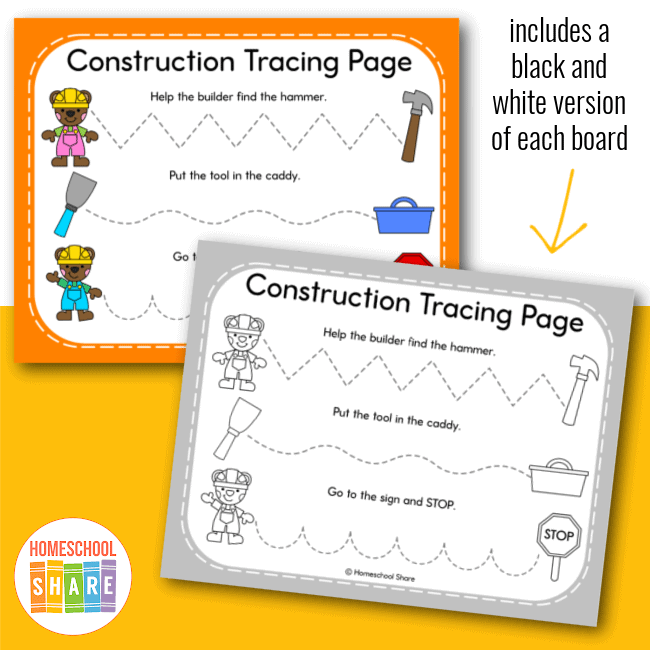
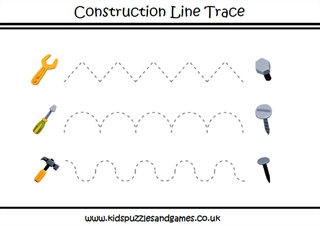
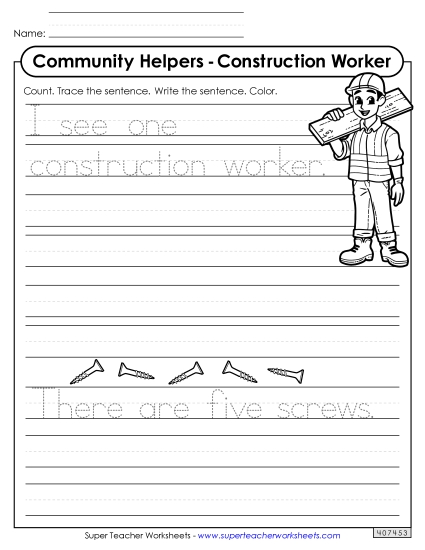
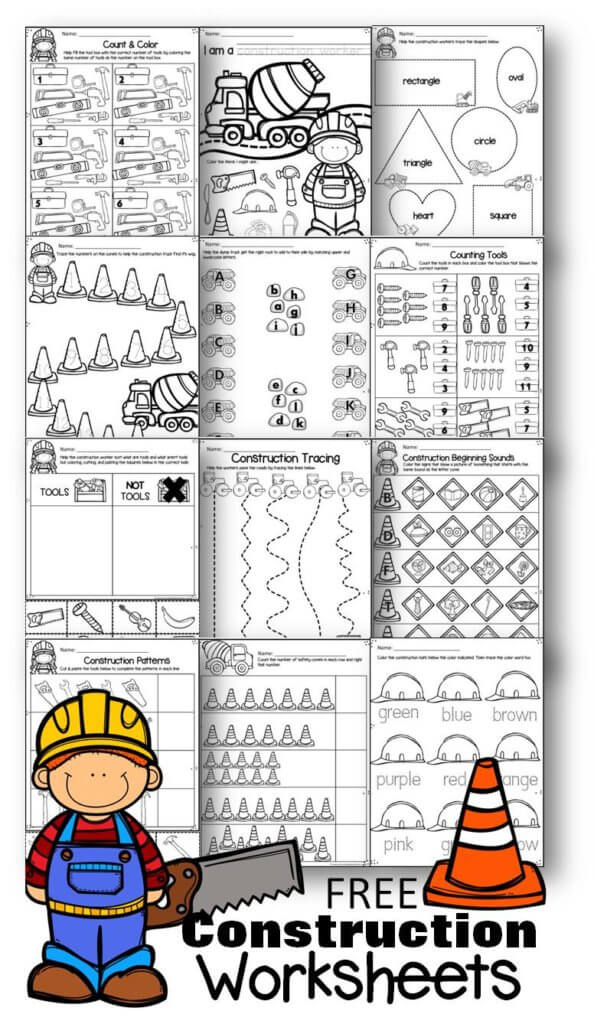
This specific printable targets foundational pre-writing strokes, spatial awareness, and visual-motor control through an engaging worksite theme. Children guide pencils, crayons, or markers past dump trucks, hard hats, and blueprints, transforming abstract shapes into tangible construction elements. Here is what makes this worksheet different: instead of repetitive, isolated drills on blank paper, every dotted line represents a structural beam, a road, or a perimeter wall. Children practice drawing vertical lines, horizontal lines, intersecting crosses, circles, and triangles. These geometric foundations form the exact architectural framework required for future letter and numeral formation. Exploring this resource naturally complements broader early math and spatial concepts, setting the stage for future geometry success. For more related resources, educators and parents often pair these sheets with activities found within the Shape and Line Tracing category to reinforce foundational pencil control.
Key Learning Outcomes
Working through these construction-themed pages yields measurable improvements in multiple developmental domains. First, children refine bilateral coordination, holding the paper steady with the non-dominant hand while the dominant hand executes controlled strokes. Second, the repetitive curving and intersecting actions build intrinsic muscle tone within the hand, specifically targeting the lumbricals and interossei muscles. Third, visual-tracking skills sharpen as young learners anticipate directional changes at corners and intersections. Finally, cognitive processing improves as children translate visual models of shapes into physical motor plans, reinforcing left-to-right progression and spatial boundaries.
How to Use This Worksheet
Successful implementation relies on matching the medium to the current developmental stage of the child. Beginners benefit from sliding the printed page inside a heavy-duty clear dry-erase pocket and using chunky dry-erase markers, which offer immediate sensory feedback and forgiveness for accidental slips. Advanced learners can use standard golf pencils, short crayons, or colored markers to encourage a natural tripod grasp. According to Reading Rockets, playful, low-pressure writing practice significantly boosts early literacy engagement and confidence in emergent learners. Adults should encourage children to trace slowly, focusing on continuous line contact rather than speed. To expand learning beyond the page, pair these printables with physical block building or kinetic sand excavation to connect tactile experiences with 2D geometry.
Practical Tips for Parents and Teachers
Establishing proper habits early prevents fatigue and hand cramping during longer academic tasks. Begin by modeling the correct pencil grip explicitly, demonstrating how the thumb, index, and middle fingers form a stable dynamic tripod. Scaffold the activity by physically guiding a hand-over-hand movement for the first few shapes if frustration arises, gradually fading assistance until the child works independently. Adjust the challenge by offering different writing tools; shorter crayons naturally encourage finger flexion over fist grasping. Celebrate small victories, such as maintaining contact with a dotted corner, to maintain high intrinsic motivation throughout the session. When expanding a thematic unit, educators frequently integrate materials from the Seasonal and Fun Themes archive to keep novelty high.
Age-Appropriate Recommendations
Developmental readiness dictates how children interact with geometric and pre-writing activities. For children ages two to four, alignment with the National Association for the Education of Young Children Developmentally Appropriate Practice (NAEYC DAP) emphasizes sensory exploration and large muscle movements, making thick markers and simple vertical or horizontal lines ideal. Children ages five to eight transition toward precision and pencil control, aligning with kindergarten readiness benchmarks where mastery of closed shapes like triangles and rectangles becomes expected. During these later preschool and early elementary years, introducing structured practice through the Fine Motor and Pre-Writing Skills section helps consolidate these essential hand-eye coordination milestones.
Foundational fine motor control and visual-motor integration are essential precursors to functional academic writing. — American Occupational Therapy Association
Frequently Asked Questions
Navigating printing options, developmental expectations, and resource selection ensures the best possible experience for young learners.
Explore More Free Printable Tracing Worksheets
Supporting a diverse classroom or a homeschool environment requires an extensive library of adaptable, engaging materials. Beyond construction themes, children thrive on variety when building crucial hand strength and pencil control. Exploring the full collection available at KidTraces.com provides access to hundreds of thoughtfully designed pages, ensuring every child finds a motif that sparks joy. Whether focusing on foundational strokes or preparing for formal handwriting, consistent and playful practice makes all the difference. Discover more targeted practice options by browsing the comprehensive Tracing Worksheets collection today.
Developmental Milestone & Activity Table
| Development Stage | Recommended Daily Duration | Primary Learning Objective |
|---|---|---|
| Preschool & Pre-K | 10 – 15 Minutes | Pencil grip development & basic pre-stroke lines |
| Kindergarten | 15 – 20 Minutes | Letter/number formation & spatial line awareness |
| Early Elementary (Grade 1–2) | 20 – 30 Minutes | Fluency, sentence construction & neatness |
Images References