Introduction
Many children recognize numerals and letters long before their fine motor coordination and hand strength are truly ready to form them on paper. According to the National Association for the Education of Young Children, early writing development relies heavily on playful, purposeful engagement with print rather than rote repetition. Bridging the gap between cognitive understanding and physical execution requires tools that capture interest while gently building hand control. The free printable numbers to trace with animals provides an engaging solution by pairing early mathematical concepts with delightful creature themes, transforming a sometimes frustrating pencil drill into an enjoyable game. Exploring these foundational skills supports long-term academic confidence across various subjects. Discover additional resources within the Tracing Number section to expand early math practice.
💡 Technical Key Takeaways:
- Core Focus: Diagnostic schematic and terminal connection layout for Numbers To Trace With Animals.
- Target Scope: Field technicians, automotive DIYers, and residential/commercial electricians.
- Safety Rule: Always disconnect the primary power source/battery terminal and verify zero voltage with a multimeter before touching wires.
What This Worksheet Covers
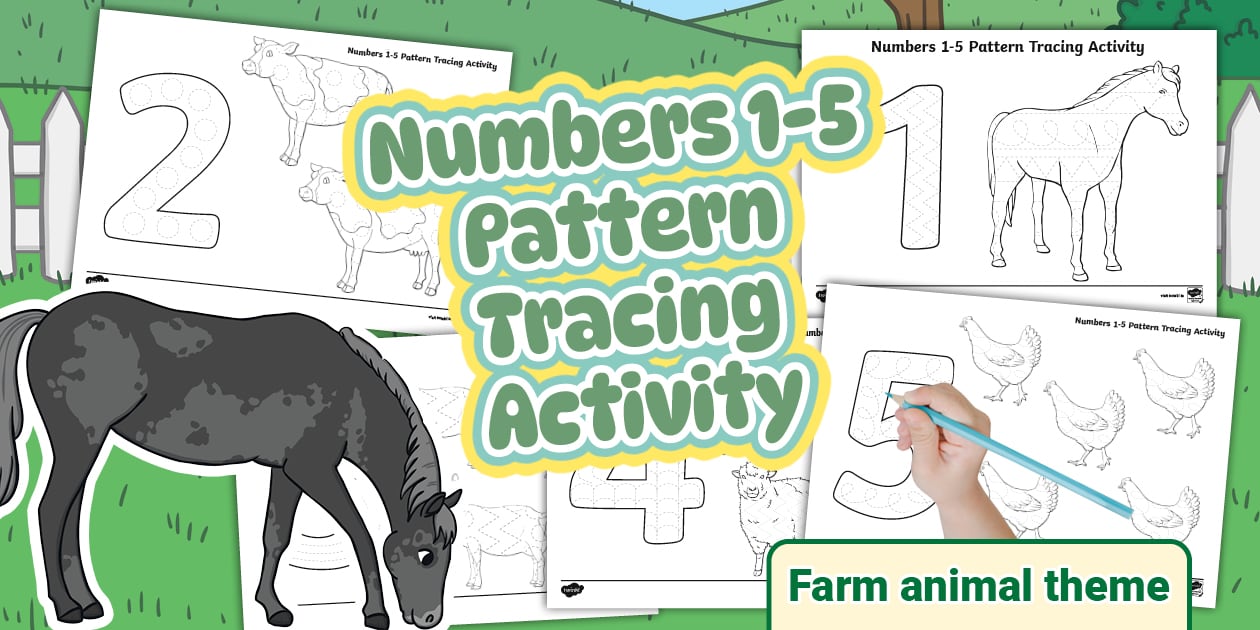
This specialized tracing material focuses on numeral formation, correct stroke order, and spatial awareness through guided dotted lines. Each number from zero to nine is paired with a corresponding animal illustration, giving learners a visual anchor and a concrete quantity to count. The design emphasizes directional starting points, ensuring that children do not develop awkward pencil habits that prove difficult to break later in school. Directionality and stroke sequence are foundational elements of legible handwriting, making this resource an important step beyond basic coloring sheets. Practitioners often observe that pairing numbers with familiar animals significantly improves memory retention for stroke patterns. For broader foundational work, browsing the Fine Motor and Pre-Writing Skills category offers complementary exercises that build necessary hand muscles.
Key Learning Outcomes
Engaging with these themed tracing pages fosters several critical developmental milestones in young learners. Children refine their pencil control by navigating curves, loops, and straight lines while tracing each numeral. Counting the accompanying animals bridges early numeracy with fine motor practice, reinforcing the connection between written symbols and actual quantities. According to Reading Rockets, multisensory approaches to literacy and numeracy build stronger neural pathways for academic retention. Learners also develop bilateral coordination as one hand stabilizes the paper while the dominant hand executes the precise tracing movements. Finally, successfully completing each line builds intrinsic motivation and self-efficacy, encouraging a positive attitude toward structured academic tasks.
How to Use This Worksheet
Effective implementation begins with establishing a comfortable, ergonomic workspace where feet rest flat on the floor and the paper rests at a slight upward angle. Adults can introduce the sheet by asking the child to count the animals aloud before picking up a writing utensil, anchoring the numeral in real-world meaning. Tracing can start with thick crayons or short markers to encourage a natural tripod or quadrupod grip, transitioning to standard pencils as finger strength improves. It sounds simple, and that’s the point: keeping sessions short, positive, and focused prevents hand fatigue and frustration. When children lose interest, pausing the activity protects their enthusiasm for future writing sessions.
Practical Tips for Parents and Teachers
Adults play a vital coaching role by modeling correct grip and demonstrating starting points directly on a separate sheet of paper. Scaffolding the activity helps prevent overwhelm; an adult might guide the child’s hand gently through the first stroke before letting the learner finish independently. Extending the exercise can involve having children find physical objects around the room that match the animal count on the current page. Using sensory trays, such as tracing the numbers in a shallow layer of sand or salt before putting pencil to paper, adds valuable tactile feedback. For more themed practice that keeps learners motivated through changing seasons, the Seasonal and Fun Themes collection provides wonderful variety.
Age-Appropriate Recommendations
According to the CDC developmental milestones, children typically begin showing interest in tracing lines and imitating vertical strokes around age three. For toddlers and preschoolers aged two to four, the primary goal is exploring pre-writing strokes and building hand strength rather than achieving perfect numeral formation. Handwriting Without Tears guidelines suggest emphasizing proper grip, posture, and large movements during these early years. By ages five to eight, children transition into refined pencil control, accurate stroke sequencing, and consistent sizing aligned with early elementary expectations. Tailoring expectations to these developmental windows ensures that practice remains encouraging and developmentally sound.
Young children develop foundational hand strength and pencil control more effectively through engaging, short-duration tracing activities that combine visual motifs with purposeful motor tasks. — Early Childhood Developmental Research
Frequently Asked Questions
Finding clear answers regarding early childhood printable resources helps caregivers implement learning activities smoothly and effectively.
Explore More Free Printable Tracing Worksheets
Supporting a child’s journey toward confident writing involves offering a diverse selection of engaging, low-stress practice materials. The complete library at KidTraces.com offers wonderful tools designed by educators and specialists to nurture hand strength, pencil control, and early literacy. Exploring different categories ensures that learning remains fresh, exciting, and tailored to individual developmental needs.
Quick Wiring Specifications & Terminal Guide
| Component / Circuit | Standard Wire Gauge | Recommended Protection |
|---|---|---|
| Control & Trigger Signals | 18 – 20 AWG | 5A – 7.5A Inline Fuse |
| Standard Auxiliary Load | 14 – 16 AWG | 15A – 20A Circuit Breaker |
| Main Power Feed / Supply | 10 – 12 AWG | 30A – 40A Heavy-Duty Relay |
Images References