Introduction
Many children recognize numerals long before their fine motor control allows them to form those same digits on paper. According to the National Association for the Education of Young Children (NAEYC), developmentally appropriate practice relies on hands-on experiences that bridge the gap between cognitive understanding and physical execution. Young learners often possess the intellectual readiness to count far beyond ten, yet their hand muscles still require deliberate scaffolding to control a pencil smoothly. Mastering double-digit numbers introduces a complex visual-motor challenge, requiring children to combine two separate numeral formations into a cohesive numerical value. This free printable numbers eleven to twenty tracing sheet provides structured, gentle practice to help learners build confidence, consistency, and spatial awareness as they transition from basic counting into early mathematical notation.
💡 Educational Key Takeaways:
- Core Skill: Structured Numbers Eleven To Twenty Tracing focused on developing pencil grip, stroke control, and early literacy/math confidence.
- Target Scope: Suited for homeschoolers, preschool, kindergarten, and elementary learners.
- Best Recommendation: Practice 10–15 minutes daily with ergonomic writing tools to reinforce muscle memory without hand fatigue.
What This Worksheet Covers
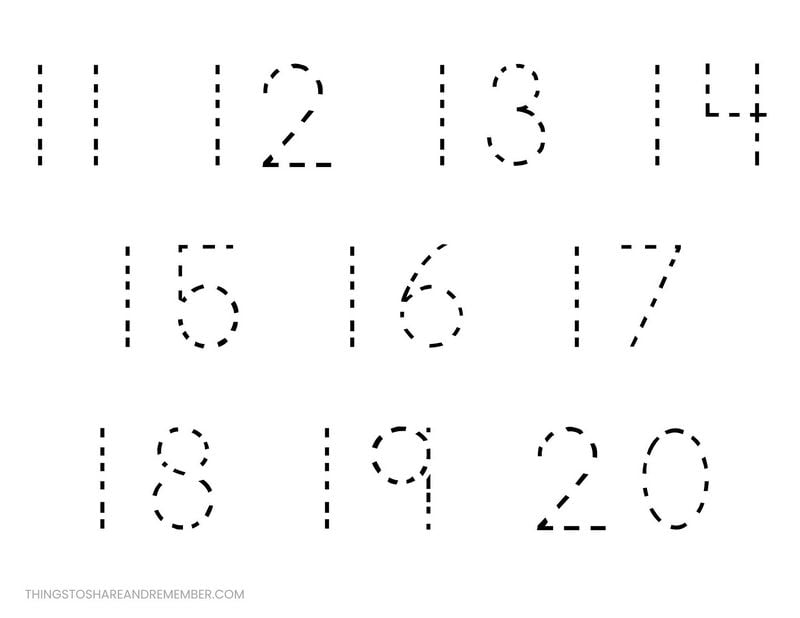
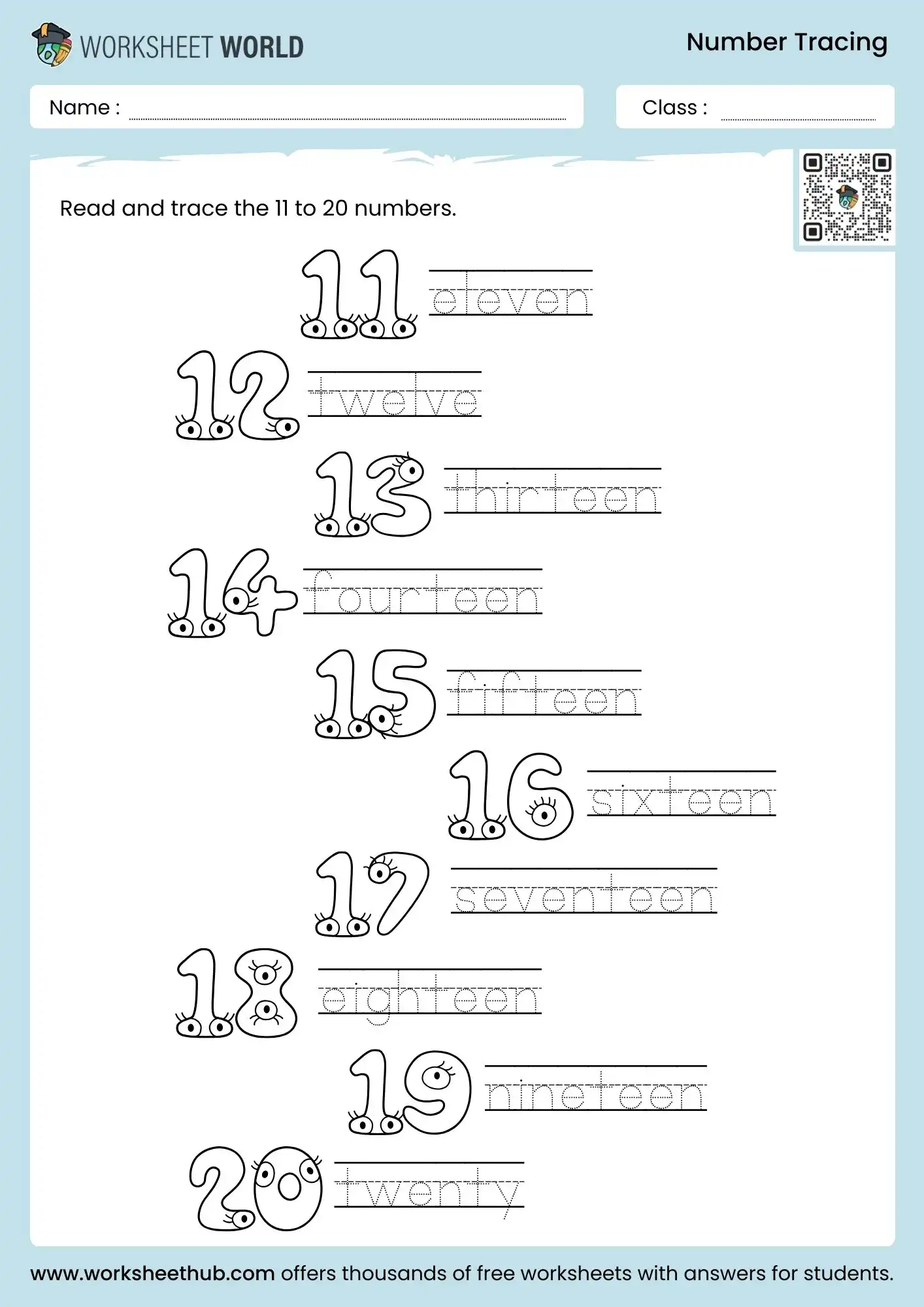
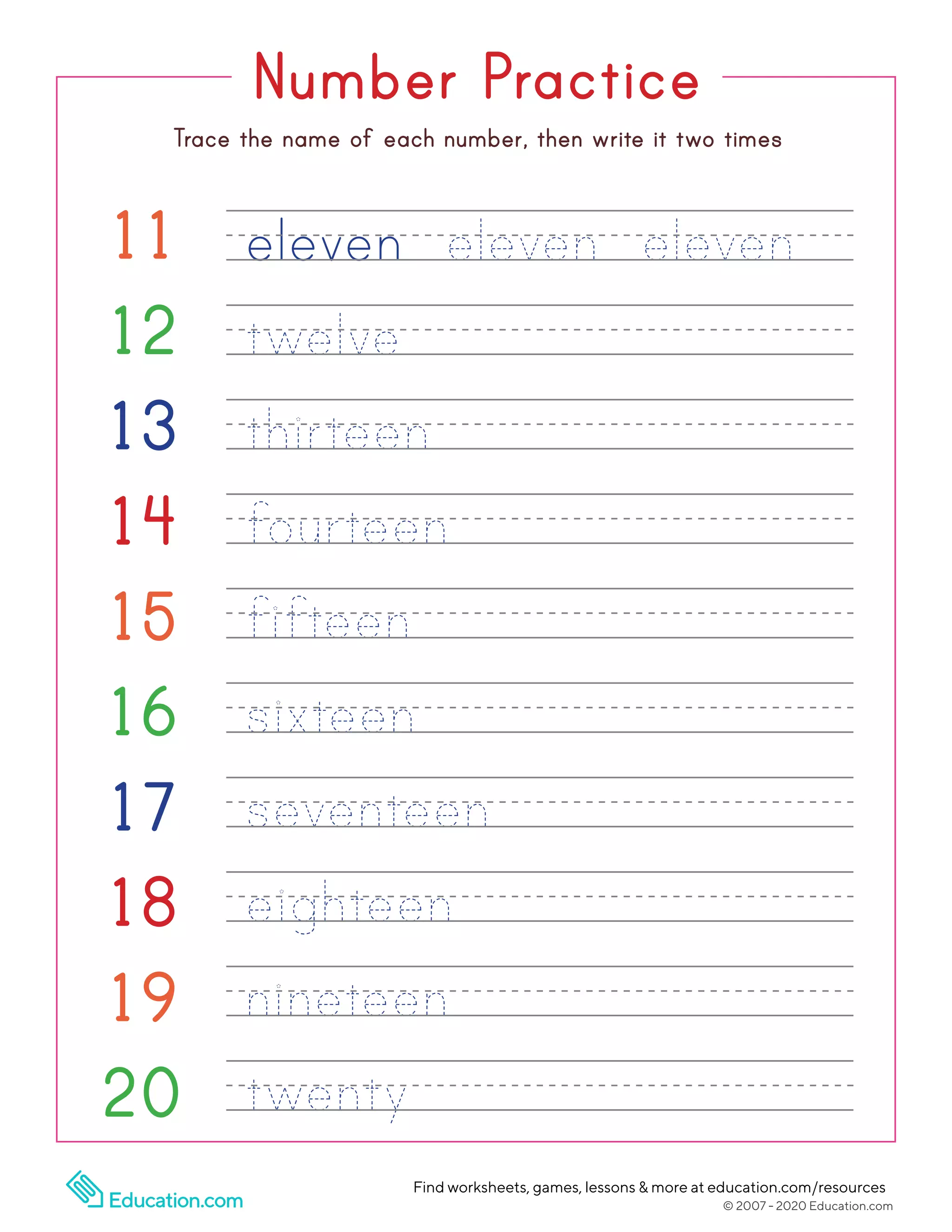
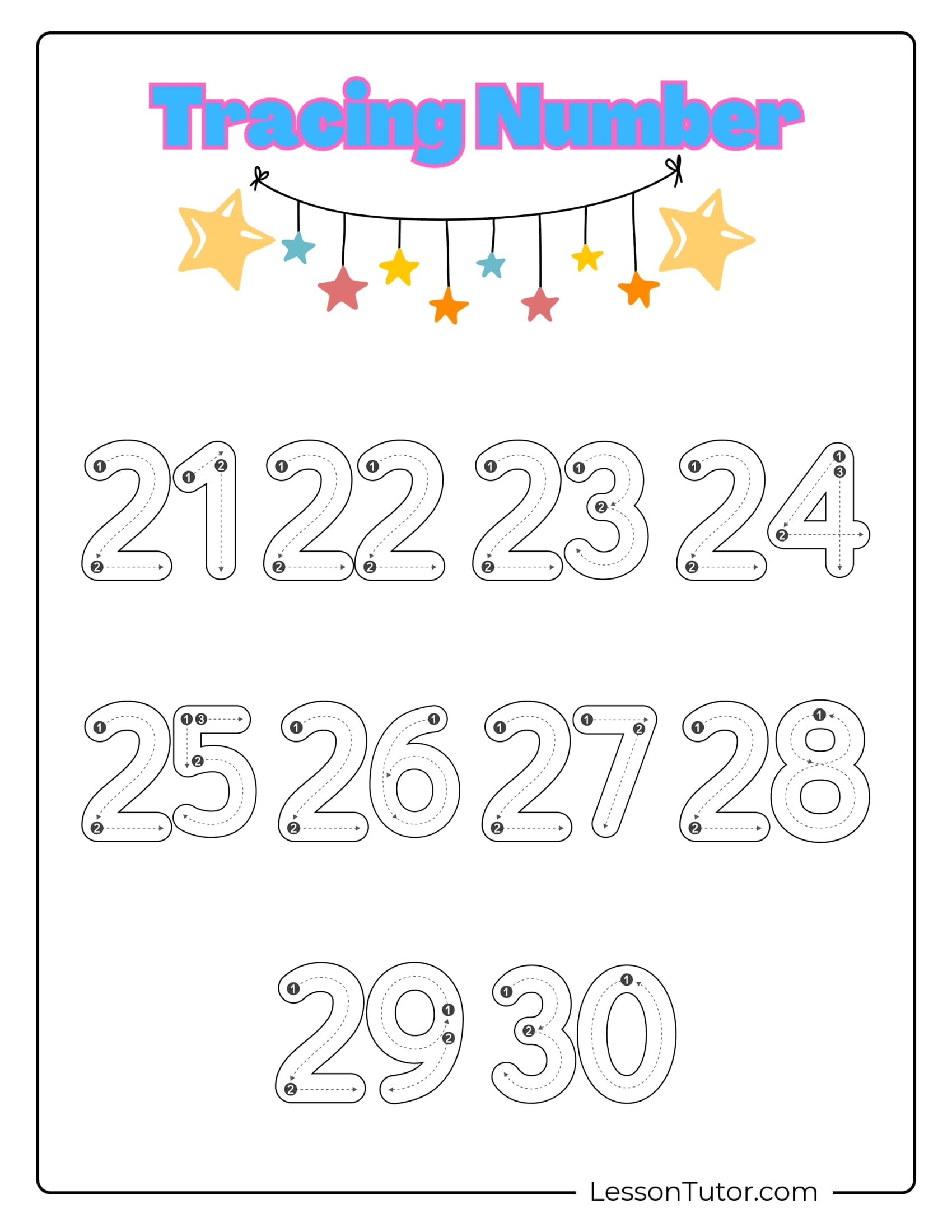
Double-digit numbers demand precise stroke order, consistent sizing, and proper spacing on the page, unlike single digits that allow for more leniency. The numbers eleven to twenty tracing resource guides children through the specific directional paths required to form teen numbers correctly, paying close attention to the placement of the leading numeral one alongside its companion digit. It sounds simple, and that’s the point, but mastering this progression prevents common reversal habits like writing twelve as a backward twenty-one. Here’s what makes this worksheet different: it breaks down each composite number into clear starting points, directional arrows, and gradually fading dotted lines that encourage independent pencil control rather than mindless tracing. For more related activities, check out our Traceable Numbers 11 To 20 Free.
Key Learning Outcomes
Working through these guided numeral pathways develops foundational mathematical fluency alongside essential physical dexterity. Children refine their stroke order and directional control, ensuring that vertical lines drop straight down and curves flow smoothly without jagged interruptions. The layout reinforces correct spatial orientation on the line, teaching young writers how to position two distinct digits close together without crowding or overlapping. Furthermore, consistent practice strengthens the intrinsic muscles of the hand, improving overall endurance for longer writing tasks. Ultimately, the sheet connects the abstract concept of quantity with the concrete physical motion of writing, cementing early math skills through kinesthetic repetition.
How to Use This Worksheet
Successful engagement with tracing materials depends heavily on creating a comfortable, low-pressure workspace that supports physical alignment and focus. Begin by ensuring the child sits with feet flat on the floor and elbows resting comfortably at a ninety-degree angle on the table. It is often helpful to start with a finger-tracing warm-up over the larger dotted examples before introducing a writing tool, allowing the brain to map the physical trajectory of the stroke without the added friction of pencil lead. Educators and caregivers can supplement these sheets with multisensory elements, such as having children form the numbers in salt trays or playdough before sitting down with the printed page. Allowing breaks when hand fatigue sets in ensures that tracing remains an enjoyable, rewarding activity rather than a frustrating chore.
Practical Tips for Parents and Teachers
Guiding pencil grip requires a gentle, observant approach that honors individual developmental timelines. According to the American Occupational Therapy Association (AOTA), supporting an efficient grasp—such as a tripod or quadripod hold—reduces hand strain and promotes long-term handwriting legibility. Adults should model proper grip during shared writing moments, gently correcting awkward thumb wraps without discouraging the child’s enthusiasm. Scaffolding the activity means starting with fully guided dotted lines and slowly extending independence as the child gains mastery over specific number sets like thirteen through sixteen. Celebrating small victories, such as a well-formed zero in the number twenty or a perfectly straight numeral one, reinforces positive associations with writing practice.
Age-Appropriate Recommendations
Tailoring expectations to developmental stages ensures that learning stays grounded in reality. For younger children around ages four and five, foundational work aligns closely with preschool motor milestones, where tracing large, bold formations helps build gross and fine motor coordination. As children progress into kindergarten and early primary grades, usually ages five to eight, they engage more directly with structured academic goals, such as Common Core standard K.CC.A.3, which focuses on writing numbers from zero to twenty to represent a number of objects. During this older stage, the focus shifts naturally from simple gross-motor stroke replication toward precision, uniformity, and proper sizing within standard writing lines.
Foundational motor skills, including pencil grasp and bilateral coordination, strongly predict early academic success and writing legibility in primary school classrooms. — American Occupational Therapy Association (AOTA)
Frequently Asked Questions
Navigating early childhood writing resources involves understanding both printing logistics and developmental milestones. The answers below address common questions regarding implementation and the physical science behind early writing instruction.
Explore More Free Printable Tracing Worksheets
Expanding a child’s writing toolkit involves exploring a wide variety of engaging, skill-building resources tailored to every stage of early development. Whether preparing for kindergarten handwriting expectations or looking for fun seasonal challenges, children benefit immensely from diverse tracing practice. Parents, teachers, and homeschoolers can browse the complete collection of free resources across multiple categories by visiting KidTraces.com to find everything from Alphabet And Numbers Tracing and Dotted Letters For Tracing to Fine Motor and Pre-Writing Skills. Additional options include Shape and Line Tracing, Word and Name Tracing, Tracing Number, Seasonal and Fun Themes, and Tracing Worksheets, all designed to support confident, capable young writers.
Developmental Milestone & Activity Table
| Development Stage | Recommended Daily Duration | Primary Learning Objective |
|---|---|---|
| Preschool & Pre-K | 10 – 15 Minutes | Pencil grip development & basic pre-stroke lines |
| Kindergarten | 15 – 20 Minutes | Letter/number formation & spatial line awareness |
| Early Elementary (Grade 1–2) | 20 – 30 Minutes | Fluency, sentence construction & neatness |
Images References