Introduction
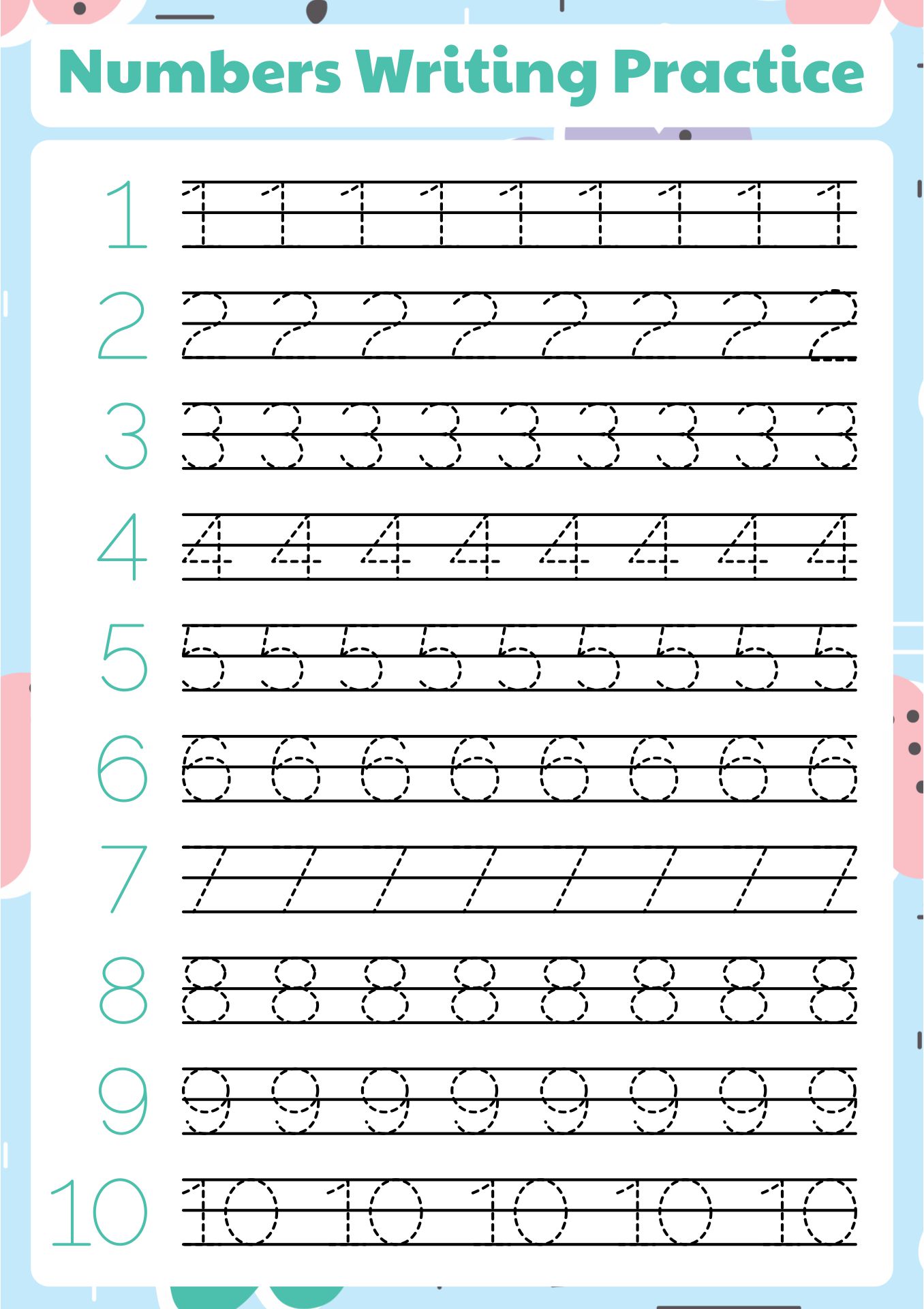
Many children recognize numerals long before their developing hands possess the intrinsic muscle strength required to form them cleanly on paper. According to the American Occupational Therapy Association, foundational fine motor control and visual-motor integration are essential precursors for successful handwriting and numeral formation. Bridging this gap requires targeted, developmentally appropriate practice that respects physical maturation alongside cognitive readiness. It sounds simple, and that is precisely the point. The free printable numbers 1-10 writing worksheets provide structured guidance to help young learners master correct stroke order, directional awareness, and pencil control without overwhelming frustration. Early writing experiences shape a child’s confidence, setting the stage for lifelong academic success through engaging, repetitive motor patterns.
💡 Educational Key Takeaways:
- Core Skill: Structured Numbers 1-10 Writing Worksheets focused on developing pencil grip, stroke control, and early literacy/math confidence.
- Target Scope: Suited for homeschoolers, preschool, kindergarten, and elementary learners.
- Best Recommendation: Practice 10–15 minutes daily with ergonomic writing tools to reinforce muscle memory without hand fatigue.
What This Worksheet Covers
Numeral formation involves a complex sequence of visual perception, spatial memory, and precise motor output. These dedicated numerical tracing pages break down each digit from one to ten into manageable visual cues, featuring clear starting points, directional arrows, and distinct tracing paths. Children frequently reverse digits like three, five, and seven during early developmental windows because spatial relationships are still solidifying in the brain. Here is what makes this resource different: it relies on sequential dot patterns and guided lines that naturally discourage bottom-up or right-to-left stroke habits. By isolating each digit, learners can focus entirely on the physical mechanics of the pencil rather than trying to invent a motor plan from scratch. Additional practice resources can be found by browsing the Tracing Number section.
Key Learning Outcomes
Engaging consistently with structured numeral tracing builds several critical foundational competencies. Children develop reliable motor memory for each digit, ensuring that writing numbers eventually becomes an automatic, subconscious process rather than an exhausting cognitive puzzle. Visual-motor integration improves as tiny fingers learn to coordinate what the eyes perceive with the precise movement of a writing utensil across a page. Spatial awareness is naturally reinforced because each digit must fit securely within designated boundaries or follow a specific grid line. Furthermore, consistent practice strengthens the intrinsic muscles of the hand, increases endurance for writing tasks, and fosters patience as children refine their fine motor precision over repeated attempts. Related skill development is also supported within the broader collection of Tracing Worksheets.
How to Use This Worksheet
Successful implementation relies on creating an inviting, pressure-free environment where physical comfort comes first. Begin by ensuring the child sits with feet flat on the floor and hips at a ninety-degree angle, which provides the core stability necessary for distal hand control. Introduce the sheet by verbally talking through the stroke sequence before the pencil ever touches the paper, often called sky-writing or finger-tracing. Observe how the child grasps the writing tool, gently guiding the fingers into a functional tripod grasp if an awkward fist or thumb-wrap appears. Short, frequent sessions lasting five to ten minutes yield far better results than long, exhausting blocks of forced practice. Educators can discover even more targeted foundational exercises within the Fine Motor and Pre-Writing Skills category.
Practical Tips for Parents and Teachers
Adults play a vital role in scaffolding these early writing experiences to match individual ability levels. Model correct formation in real-time so the learner can watch the fluid motion of the hand start from the top and flow downward. Slide the printed page inside a heavy-duty clear dry-erase sleeve and hand the child a fine-tip marker to lower the psychological barrier of making permanent mistakes. According to the National Association for the Education of Young Children, open-ended encouragement and process-focused praise significantly enhance a child’s intrinsic motivation and perseverance when facing challenging tasks. Scaffold the experience by starting with larger numbers or finger-tracing raised textures before moving down to standard pencil-and-paper tracing. When extra engagement is necessary, incorporating seasonal variants from the Seasonal and Fun Themes collection keeps enthusiasm high.
Age-Appropriate Recommendations
Matching expectations to developmental stages prevents unnecessary frustration and burnout. For younger toddlers and preschoolers around ages two to four, the focus aligns closely with the CDC milestones for early motor development, emphasizing large pre-writing strokes, finger isolation, and simple sensory exploration of shapes. At this stage, demanding tight numeral control is developmentally inappropriate. For kindergarten and early elementary children ages five to eight, the framework shifts toward formal handwriting instruction, proper pencil grip endurance, and automaticity in numeral formation. Worksheets should be selected based on where the child sits along this continuum, ensuring that goals remain achievable, confidence stays high, and the physical hand is never pushed beyond its current level of muscular endurance.
Foundational fine motor control and visual-motor integration are essential precursors for successful handwriting and numeral formation. — American Occupational Therapy Association
Frequently Asked Questions
Explore More Free Printable Tracing Worksheets
Supporting a young learner’s journey through early literacy and pre-writing requires a diverse array of fresh, engaging materials. Adults looking for comprehensive resources will find a supportive home across the entire collection available at KidTraces.com. Whether expanding into alphabet mastery or strengthening foundational hand movements, every tool is designed to make learning joyful and accessible.
Developmental Milestone & Activity Table
| Development Stage | Recommended Daily Duration | Primary Learning Objective |
|---|---|---|
| Preschool & Pre-K | 10 – 15 Minutes | Pencil grip development & basic pre-stroke lines |
| Kindergarten | 15 – 20 Minutes | Letter/number formation & spatial line awareness |
| Early Elementary (Grade 1–2) | 20 – 30 Minutes | Fluency, sentence construction & neatness |
Images References