Introduction
Many children recognize numerals long before their fine motor control allows them to form those digits with a pencil. According to the National Association for the Education of Young Children, young children learn best through active, hands-on experiences that connect foundational motor skills with meaningful cognitive concepts. Mastering early numeral formation requires patience, steady muscle development, and consistent guidance rather than rushed repetition. Entering the world of early math and pre-writing can feel intimidating for small hands just learning how to grasp a writing tool. That is where targeted tracing practice transforms frustration into quiet confidence. The free printable tracing numbers 1-5 offers a structured, gentle pathway for young learners to understand stroke order, spatial awareness, and pencil control. Grounded in developmentally appropriate practices, this resource bridges the gap between visual recognition and physical execution.
💡 Educational Key Takeaways:
- Core Skill: Structured Tracing Numbers 1-5 focused on developing pencil grip, stroke control, and early literacy/math confidence.
- Target Scope: Suited for homeschoolers, preschool, kindergarten, and elementary learners.
- Best Recommendation: Practice 10–15 minutes daily with ergonomic writing tools to reinforce muscle memory without hand fatigue.
What This Worksheet Covers
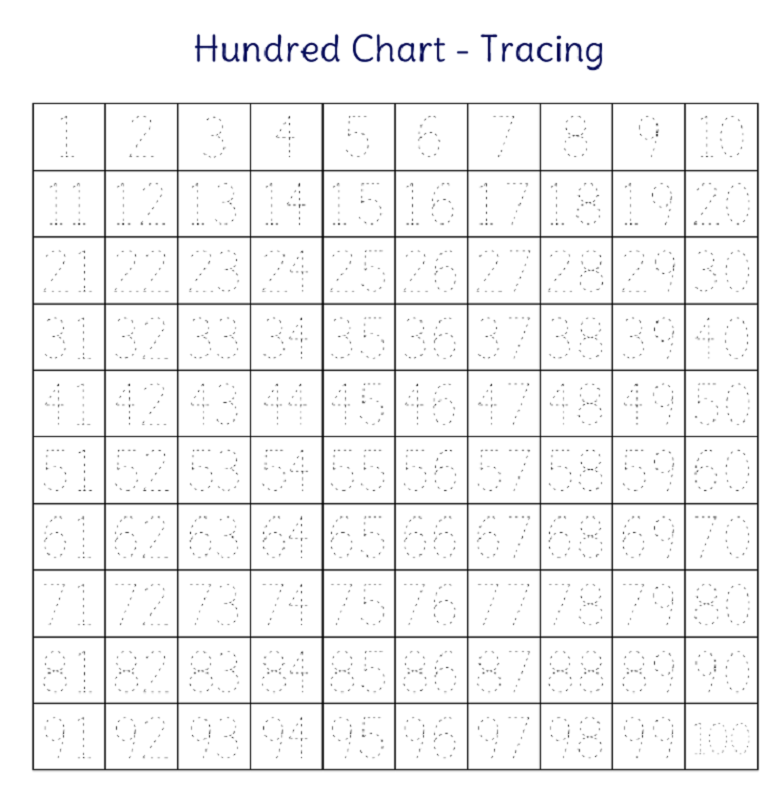
Early mathematical literacy begins with understanding that symbols represent quantities. This specific printable focuses entirely on the foundational digits one through five, ensuring learners do not become overwhelmed by an entire page of numbers. Each numeral features directional arrows, clear starting points, and carefully spaced dotted lines designed to guide the hand naturally across the page. Hand-eye coordination develops gradually as children navigate the distinct curves of the number two, the intersecting lines of the number four, and the continuous loop of the number five. According to the American Occupational Therapy Association, mastering foundational pre-writing strokes requires deliberate practice with visual cues to build spatial organization in the developing brain. By isolating these first five digits, the layout supports focused attention spans and reduces visual clutter. It sounds simple, and that is the point. Clean lines and ample whitespace allow young minds to concentrate purely on the physical movement required to replicate each shape. For more related activities, check out our Tracing Letters And Numbers Printable Free.
Key Learning Outcomes
Engaging with these foundational digits fosters several critical developmental milestones essential for early school readiness. Learners build essential muscle memory by repeating correct stroke sequences for each numeral, which drastically reduces the likelihood of future letter and number reversals. Visual-motor integration strengthens as tiny eyes track movement across the page while small hands attempt to keep pencils precisely on the dotted paths. Spatial awareness improves naturally because children learn to respect boundaries, understand top-to-bottom orientation, and manage left-to-right progression. Furthermore, this practice nurtures a deep sense of self-regulation and focus as learners complete a structured task from start to finish. Exploring related foundational exercises through Tracing Number resources ensures children receive ample variety while reinforcing these exact mathematical and motor concepts.
How to Use This Worksheet
Successful implementation relies on creating an inviting environment free from pressure and physical strain. Positioning the paper correctly makes a remarkable difference in comfort and control. Slanting the page slightly to match the natural angle of the child’s forearm promotes a healthier wrist posture during extended writing sessions. Encouraging short, focused bursts of practice rather than long, fatiguing drill sessions keeps enthusiasm high and prevents hand cramping. Adults can invite learners to trace the digits first with a clean index finger to experience the physical motion before introducing a pencil or crayon. Laminating the sheet or sliding it inside a clear plastic sleeve transforms it into a reusable wipe-clean activity, perfect for dry-erase markers or playful dough-rolling tasks.
Practical Tips for Parents and Teachers
Guiding pencil grip requires gentle observation and supportive adjustments rather than rigid correction. A functional tripod grasp allows for fluid finger movement, though closed fists or clumsy digital grasps are entirely normal for toddlers and younger preschoolers still building intrinsic hand strength. Adults should model the correct stroke order explicitly by air-writing the numeral while verbalizing the motion, such as straight down and then across for the number four. Scaffolding the activity means initially hand-over-hand assistance for the trickiest curves, gradually fading physical support until the learner handles the pencil entirely independently. Extending the learning beyond the paper can involve asking children to sculpt the numbers out of playdough or trace them in a shallow tray filled with sand or salt, integrating tactile sensory input with visual and motor practice.
Age-Appropriate Recommendations
Developmental expectations vary significantly across early childhood, making framework alignment essential for success. According to the CDC milestones, toddlers between ages two and three typically explore scribbling and imitating vertical and horizontal strokes, making early finger-tracing and tactile numeral exposure ideal. By ages four and five, children align with the expectations of the Common Core ELA standard RF.K.1.d by demonstrating increasing control when forming recognizable letters and numerals with appropriate directional guidance. For primary learners aged six to eight, these printable pages serve as an effective remediation tool to correct ingrained reversal habits, refine pencil pressure, or build fluency in digit formation. Meeting children precisely where their individual motor skills lie ensures positive emotional associations with writing tasks.
Young children develop foundational motor control and spatial organization most effectively through tactile, guided tracing practice that pairs visual cues with consistent movement patterns — American Occupational Therapy Association
Frequently Asked Questions
Answers to common questions regarding implementation and developmental benefits provide clarity for caregivers and educators navigating early writing instruction.
How do I download and print these tracing pages?
Simply click the download button on the resource page to save the PDF file to any device, then print directly using standard letter paper.
How does tracing support fine motor development?
Tracing builds intrinsic hand strength, improves finger dexterity, and trains the brain to coordinate visual information with precise physical hand movements.
What does the American Occupational Therapy Association say about pre-writing?
The American Occupational Therapy Association emphasizes that foundational pre-writing strokes and guided tracing activities are essential for developing spatial organization and hand control.
Explore More Free Printable Tracing Worksheets
Supporting a well-rounded fine motor curriculum requires access to diverse, engaging practice materials that grow alongside the child. Exploring the complete library available at KidTraces.com reveals a rich variety of resources designed for every stage of early development. Whether looking to reinforce pencil control through Shape and Line Tracing activities or preparing little hands for handwriting excellence with Fine Motor and Pre-Writing Skills practice sheets, every tool is crafted with care. Discover seasonal excitement with Seasonal and Fun Themes or build early literacy confidence using Alphabet And Numbers Tracing pages. Consistent, joyful practice lays the groundwork for a lifetime of confident writing and mathematical fluency.
Developmental Milestone & Activity Table
| Development Stage | Recommended Daily Duration | Primary Learning Objective |
|---|---|---|
| Preschool & Pre-K | 10 – 15 Minutes | Pencil grip development & basic pre-stroke lines |
| Kindergarten | 15 – 20 Minutes | Letter/number formation & spatial line awareness |
| Early Elementary (Grade 1–2) | 20 – 30 Minutes | Fluency, sentence construction & neatness |
Images References