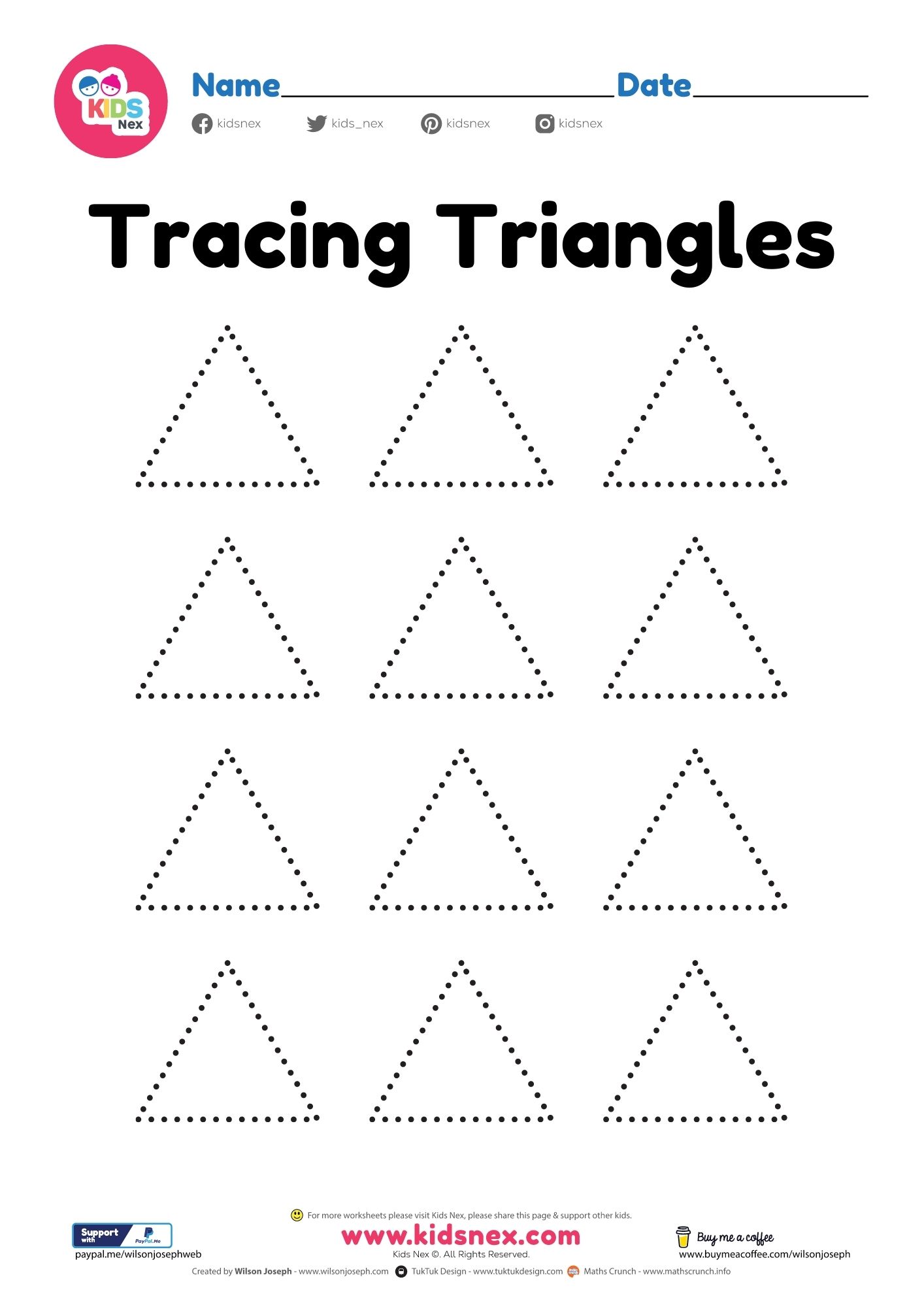
Introduction
Many children recognize geometric shapes and symbols long before their fine motor muscles possess the endurance to form them smoothly on paper. According to the American Occupational Therapy Association, foundational fine motor control is built through purposeful manipulation of tools and consistent practice with fundamental shapes. Bridging that developmental gap requires tools that invite children into the mechanics of writing without frustration. The free download kindergarden trace the square worksheets offer a targeted approach to mastering closed geometric forms. Mastering the square serves as a crucial building block for future letter formation, spatial awareness, and pencil control. Exploring early geometry through tactile pencil strokes transforms abstract concepts into concrete physical memory for young learners.
💡 Educational Key Takeaways:
- Core Skill: Structured Free Download Kindergarden Trace The Square Worksheets focused on developing pencil grip, stroke control, and early literacy/math confidence.
- Target Scope: Suited for homeschoolers, preschool, kindergarten, and elementary learners.
- Best Recommendation: Practice 10–15 minutes daily with ergonomic writing tools to reinforce muscle memory without hand fatigue.
What This Worksheet Covers
Geometric shape tracing provides the essential motor scaffolding required for mastering letters like square-based capitals such as E, F, H, L, T, and Z. Tracing squares introduces the concept of sharp 90-degree corners, which demand deliberate deceleration, spatial planning, and directional changes that rounder shapes simply do not require. Children learn to manage continuous lines, maintain pencil pressure across multiple directional shifts, and coordinate bilateral hand movements. Furthermore, these pages encourage visual-motor integration by asking the eyes to guide the hand around distinct corners. Educators often find that children who struggle with fluid writing strokes benefit immensely from targeted shape practice found within Shape and Line Tracing collections. It sounds simple, and that is the point: stripping away complex letter symbolism lets children focus entirely on pencil grip, wrist stability, and line control.
Key Learning Outcomes
Working consistently with these geometric printables yields measurable improvements in foundational writing readiness. Children develop enhanced visual-spatial awareness by navigating distinct boundaries, learning where a line begins and where a corner demands a hard pivot. Hand-eye coordination strengthens significantly as developing eyes track pencil tips across intersecting vertical and horizontal paths. Fine motor control improves through sustained pincer grasp activation and regulated downward pressure on the writing utensil. Additionally, learners build crucial sustained attention spans by completing structured, goal-oriented tracing tasks from top to bottom and left to right.
How to Use This Worksheet
Introducing these printables effectively requires preparing both the environment and the physical readiness of the child. Begin by observing natural hand posture and ensuring the writing surface sits at a comfortable height where feet rest flat on the floor. Present the activity during calm morning windows when hand fatigue remains low and focus stays high. Allow children to trace the shapes initially with an index finger before introducing crayons, short pencils, or markers to build sensory awareness of the path. For children who need extra tactile feedback, placing the paper over a textured board or a slightly raised surface transforms standard tracing into a multi-sensory experience.
Practical Tips for Parents and Teachers
Adult support shapes the long-term writing habits children carry into primary school years. Model a functional tripod grasp explicitly, and use short writing tools like broken crayons to naturally encourage optimal finger positioning. Scaffold the activity by guiding a hand gently through the first corner if the concept of a 90-degree turn feels foreign. Extend the learning naturally by challenging children to find real-world squares in the classroom or living room immediately after finishing the worksheet. According to the National Association for the Education of Young Children, active, play-integrated skill practice yields much better retention than repetitive desk drills.
Age-Appropriate Recommendations
Aligning expectations with developmental stages ensures that tracing remains an encouraging, joyful experience rather than a frustrating chore. For two to four-year-olds, the focus rests entirely on gross motor stability, large shoulder movements, and simply keeping a crayon on a thick dotted path, aligning with foundational CDC developmental milestones for early motor control. By ages five to eight, kindergarteners and early elementary students refine their precision under frameworks like Common Common Core ELA standard CCSS.ELA-LITERACY.L.K.1.a, printing letters and shapes with controlled, deliberate strokes. Integrating resources from Fine Motor and Pre-Writing Skills helps tailor the difficulty level precisely to each child’s current muscle development and grasp maturity.
Fine motor control and visual-spatial integration developed through geometric shape tracing directly predict later handwriting fluency and mathematical symbol formation in early elementary school. — American Occupational Therapy Association
Frequently Asked Questions
Addressing common questions helps adults maximize the educational value of these printable resources at home and in the classroom environment.
How do I print these worksheets correctly? — Simply click the download link, save the PDF to a device, and print on standard letter paper using actual size settings for accurate scaling.
Why is tracing squares important for pre-writing? — Tracing squares teaches hand-eye coordination, pencil control, and corner-pivoting skills required for uppercase letters and numbers.
What does the American Occupational Therapy Association say about pre-writing? — The American Occupational Therapy Association emphasizes that mastering basic shapes through tactile exploration builds the finger strength and control essential for writing.
Explore More Free Printable Tracing Worksheets
Supporting a well-rounded pre-writing curriculum involves offering variety to maintain high engagement and enthusiasm. Discover an extensive library of supplementary materials designed to foster early literacy and motor mastery across diverse subjects and themes. Whether exploring early letter formation with Dotted Letters For Tracing or adding seasonal excitement through Seasonal and Fun Themes, every child finds resources tailored to their unique pace. Explore the complete collection of learning materials available to parents, teachers, and homeschoolers at KidTraces.com to support confident, capable writers every step of the way.
Developmental Milestone & Activity Table
| Development Stage | Recommended Daily Duration | Primary Learning Objective |
|---|---|---|
| Preschool & Pre-K | 10 – 15 Minutes | Pencil grip development & basic pre-stroke lines |
| Kindergarten | 15 – 20 Minutes | Letter/number formation & spatial line awareness |
| Early Elementary (Grade 1–2) | 20 – 30 Minutes | Fluency, sentence construction & neatness |
Images References