Introduction
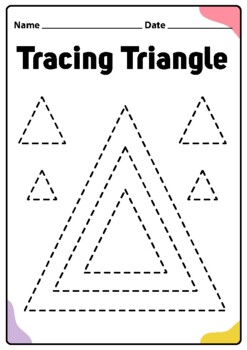
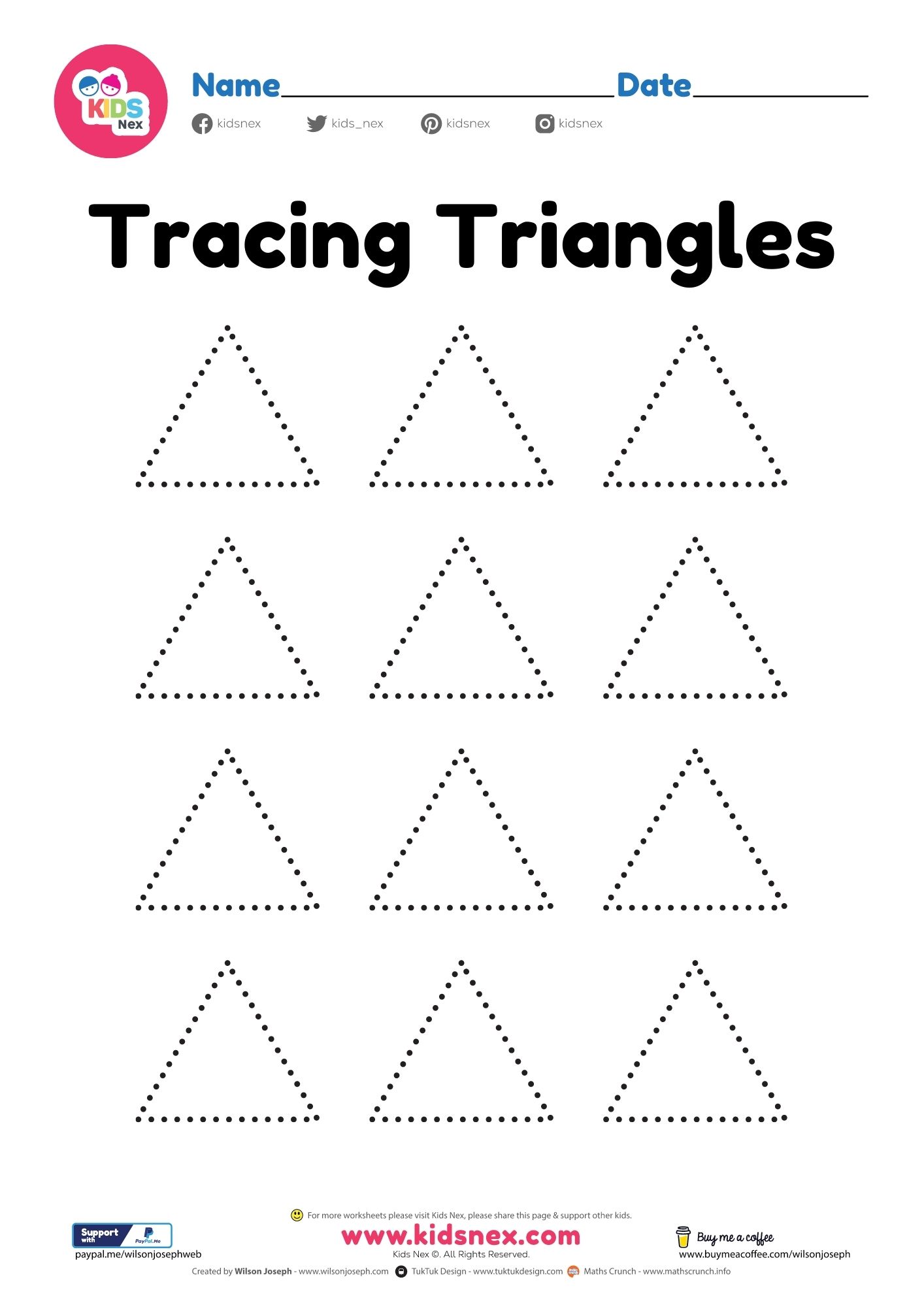
Many children recognize complex shapes and letters long before their fine motor control and intrinsic hand muscles can physically form them on paper. According to the American Occupational Therapy Association, foundational fine motor skills—including coordinated finger movements and manual dexterity—are critical predictors of a child’s academic success and self-care independence. Watching a young learner grip a pencil with a clenched fist or struggle to steer a straight line reveals the exact neurological and physical gap between visual understanding and execution. Bridging that gap requires intentional, scaffolded practice that moves far beyond random doodling. It sounds simple, and that’s the point. The dotted triangle for tracing provides a clean, geometric pathway that guides the hand, wrist, and eyes through distinct directional changes without the overwhelming visual clutter found on traditional worksheets. Here’s what makes this worksheet different: triangles introduce sharp 60-degree angles that demand precise visual-motor integration, forcing the hand to pause, pivot, and redirect momentum in a way that circles and gentle curves simply cannot replicate.
💡 Educational Key Takeaways:
- Core Skill: Structured Dotted Triangle For Tracing focused on developing pencil grip, stroke control, and early literacy/math confidence.
- Target Scope: Suited for homeschoolers, preschool, kindergarten, and elementary learners.
- Best Recommendation: Practice 10–15 minutes daily with ergonomic writing tools to reinforce muscle memory without hand fatigue.
What This Worksheet Covers
Mastering geometric shapes serves as a crucial building block for early writing development. When children trace a triangle, they practice executing precise diagonal strokes paired with a single horizontal base line. These specific directional movements mimic the exact stroke patterns required later to form capital letters such as A, V, M, and W, as well as numerals like 4. Focusing on closed shapes helps build foundational bilateral coordination, requiring one hand to stabilize the paper while the dominant hand maneuvers the writing utensil. Furthermore, working with distinct corners trains the visual-motor system to anticipate spatial boundaries, helping learners understand where lines begin and end. This targeted practice strengthens the small muscles of the hand while teaching visual tracking from top to bottom and left to right. Such geometric control forms the bedrock of broader visual-spatial skills detailed extensively within Shape and Line Tracing resources.
Key Learning Outcomes
Working through a structured shape page yields measurable gains in hand-eye coordination and pencil control. Children naturally refine their pencil grasp as they navigate the three distinct corners of the shape, transitioning from a heavy, immature fist grasp toward a more functional tripod grip. Visual-spatial awareness expands significantly as learners manage spatial orientation and learn to keep their pencil tips precisely on the dotted guides. According to the National Association for the Education of Young Children, active engagement in meaningful, hands-on visual-motor activities supports overall cognitive and physical development in early childhood. Learners also develop sustained attention span and task persistence by following a multi-step stroke sequence from the top apex down to the baseline. These developmental milestones directly support the progression seen in more advanced Fine Motor and Pre-Writing Skills programs.
How to Use This Worksheet
Successful implementation relies on preparation that honors the physical limits of young hand joints. Before handing over a standard pencil, consider taping the paper securely to the desk or slant board to prevent frustrating slips that disrupt fine motor rhythm. Encouraging upright posture with feet flat on the floor provides the core stability necessary for distal hand control. Adults should observe how the child approaches the three distinct corners, noting whether the hand stops intentionally or flies past the vertex due to excessive momentum. Starting with thick markers or crayons offers high visual feedback and sensory resistance, making it easier for toddlers to see their progress before moving on to standard #2 pencils. For learners who need broader developmental variety, supplementary exercises are readily available across Tracing Worksheets.
Practical Tips for Parents and Teachers
Scaffolding the tracing experience prevents frustration and builds authentic writing confidence over time. Begin by modeling the correct starting point at the top apex of the triangle, using verbal cues like “slant down, slide across, and climb back up” to anchor the motion in auditory memory. If a child fatigues quickly or applies too much pressure, try breaking the exercise into smaller steps by letting them trace only one side of the triangle per sitting. Avoid holding the child’s hand forcefully through the motion; instead, gently guide the elbow or tap the paper at each corner to prompt the necessary directional change. Celebrating small victories, such as successfully rounding a sharp corner or keeping the pencil on the dots for a single side, keeps intrinsic motivation high. Providing regular, short bursts of practice yields far better neural mapping than long, exhausting sessions.
Age-Appropriate Recommendations
Developmental expectations must align strictly with the physical capabilities of each age bracket. For toddlers and preschoolers aged two to four, the focus aligns with the Centers for Disease Control and Prevention developmental milestones for fine motor growth, which emphasize drawing simple vertical and horizontal lines or imitating basic shapes. At this stage, children should use thick crayons or short stubby pencils that naturally encourage finger flexion. For kindergarteners and early elementary students aged five to eight, the expectations shift toward accurate spatial alignment, proportional sizing, and pencil control governed by frameworks like Handwriting Without Tears. Older children should independently manage starting points, maintain a fluid tripod grasp, and execute sharp angular corners with minimal hesitation, preparing them seamlessly for transitions into formal letter and number formation.
Foundational fine motor skills, including coordinated finger movements and manual dexterity, are critical predictors of a child’s academic success and self-care independence. — American Occupational Therapy Association
Frequently Asked Questions
How do I download and print the dotted triangle worksheet?
Click the download link on this page to save the PDF file directly to your device, then print it out using standard letter-sized paper at 100% scale.
How does tracing triangles support pre-writing development?
Tracing geometric shapes builds hand strength, directional control, and visual-motor coordination, teaching the hand how to pause, pivot, and execute diagonal lines.
What does the American Occupational Therapy Association say about fine motor practice?
The American Occupational Therapy Association emphasizes that targeted fine motor activities are essential for developing the manual dexterity required for handwriting and independent daily tasks.
Explore More Free Printable Tracing Worksheets
Expanding a child’s writing toolkit requires a rich variety of engaging, developmentally appropriate practice materials. Educators, parents, and therapists can discover a comprehensive collection of resources designed to support every phase of early literacy at KidTraces.com. Whether focusing on foundational strokes or preparing for complex letter formation, the library provides targeted printables to nurture confident, capable writers. Explore thematic printables via Seasonal and Fun Themes to keep young learners motivated throughout the year.
Developmental Milestone & Activity Table
| Development Stage | Recommended Daily Duration | Primary Learning Objective |
|---|---|---|
| Preschool & Pre-K | 10 – 15 Minutes | Pencil grip development & basic pre-stroke lines |
| Kindergarten | 15 – 20 Minutes | Letter/number formation & spatial line awareness |
| Early Elementary (Grade 1–2) | 20 – 30 Minutes | Fluency, sentence construction & neatness |
Images References