Developing fine motor skills is essential for young children as it lays the groundwork for many future academic and life skills. Mastery in this area supports handwriting proficiency, artistic expression, and the ability to perform everyday tasks with greater ease and precision. Introducing structured practice through activities like tracing can significantly improve a child’s hand-eye coordination and dexterity. Explore more in our Alphabet And Numbers Tracing collection.
💡 Educational Key Takeaways:
- Core Skill: Structured Free Tracing Letters for Fine Motor Skills: Printables focused on developing pencil grip, stroke control, and early literacy/math confidence.
- Target Scope: Suited for homeschoolers, preschool, kindergarten, and elementary learners.
- Best Recommendation: Practice 10–15 minutes daily with ergonomic writing tools to reinforce muscle memory without hand fatigue.
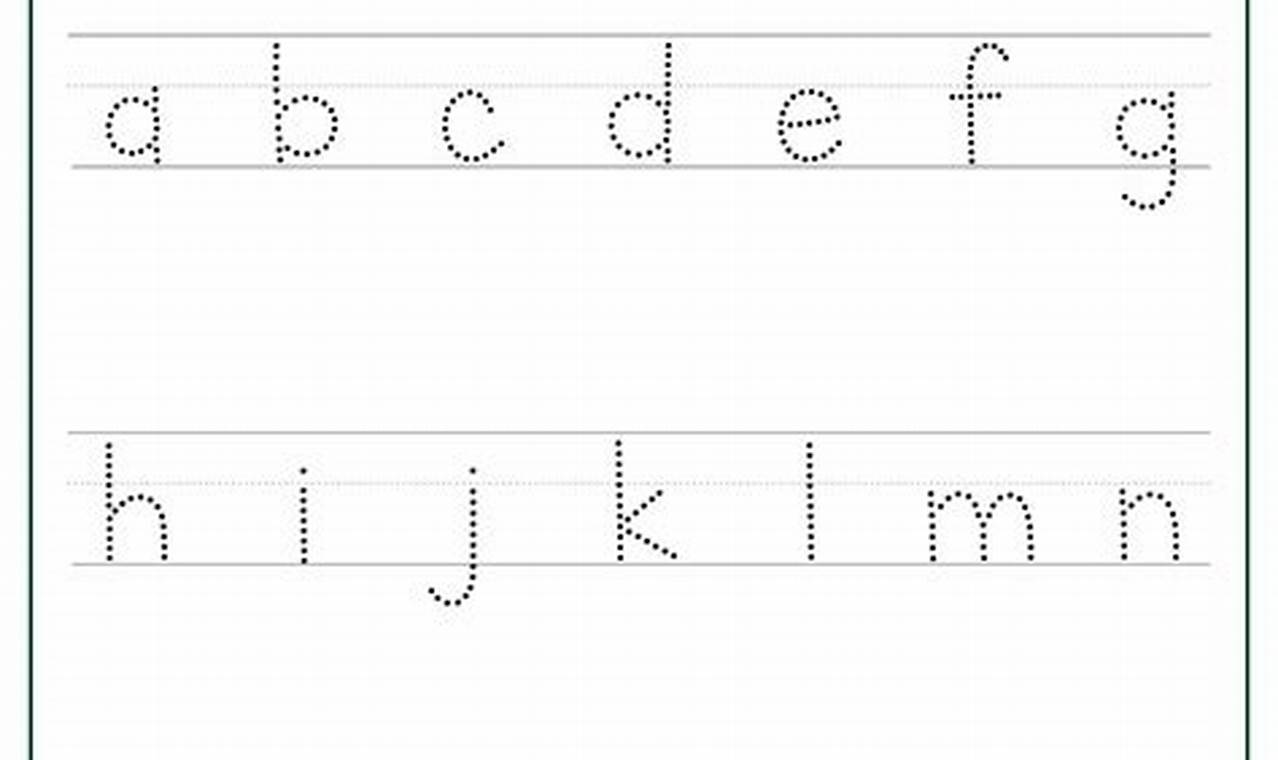
The “Tracing Letters for Fine Motor Skills” worksheet offers several key learning benefits. Primarily, it improves letter recognition by visually associating each letter’s shape with its corresponding sound. The act of tracing enhances hand control, enabling children to develop the necessary muscle strength and coordination for writing. This practice also reinforces pattern following, a fundamental skill for reading, writing, and mathematical understanding. For more related activities, check out our Writing Letters Printable Worksheets.
This worksheet is specifically designed to help children practice tracing letters of the alphabet. It includes both uppercase and lowercase letters, presented with bold, easy-to-follow guidelines. Ample space is provided next to each letter for independent practice, allowing children to apply what they have learned. The clean and uncluttered design minimizes distractions, focusing attention on the essential task of letter formation. Discover more free resources across our collection library.
To use the “Tracing Letters for Fine Motor Skills” worksheet effectively, begin by ensuring the child has a comfortable grip on a thick pencil or crayon. Start by having the child trace each letter slowly and carefully, following the directional arrows provided. Encourage the child to maintain consistent pressure and stay within the lines. Break the task into manageable chunks, focusing on a few letters at a time, to prevent fatigue and maintain engagement. Adults can assist by providing gentle guidance and positive reinforcement, praising effort and progress.
For continued development of fine motor skills and letter recognition, complementary resources are highly recommended. Explore other alphabet-themed worksheets available on Kidtraces.com, such as letter matching games or handwriting practice sheets. Incorporate educational activities like playing with building blocks, using play dough to form letters, or reading alphabet books aloud. These varied approaches help solidify learning and make the process enjoyable.
The “Tracing Letters for Fine Motor Skills” worksheet provides a valuable tool for supporting early literacy and motor skill development. By providing structured practice and positive reinforcement, children can build confidence and proficiency in letter formation. Download the worksheet today from Kidtraces.com and discover a wealth of additional free resources designed to promote continuous learning and skill enhancement.
Developmental Milestone & Activity Table
| Development Stage | Recommended Daily Duration | Primary Learning Objective |
|---|---|---|
| Preschool & Pre-K | 10 – 15 Minutes | Pencil grip development & basic pre-stroke lines |
| Kindergarten | 15 – 20 Minutes | Letter/number formation & spatial line awareness |
| Early Elementary (Grade 1–2) | 20 – 30 Minutes | Fluency, sentence construction & neatness |
