Introduction
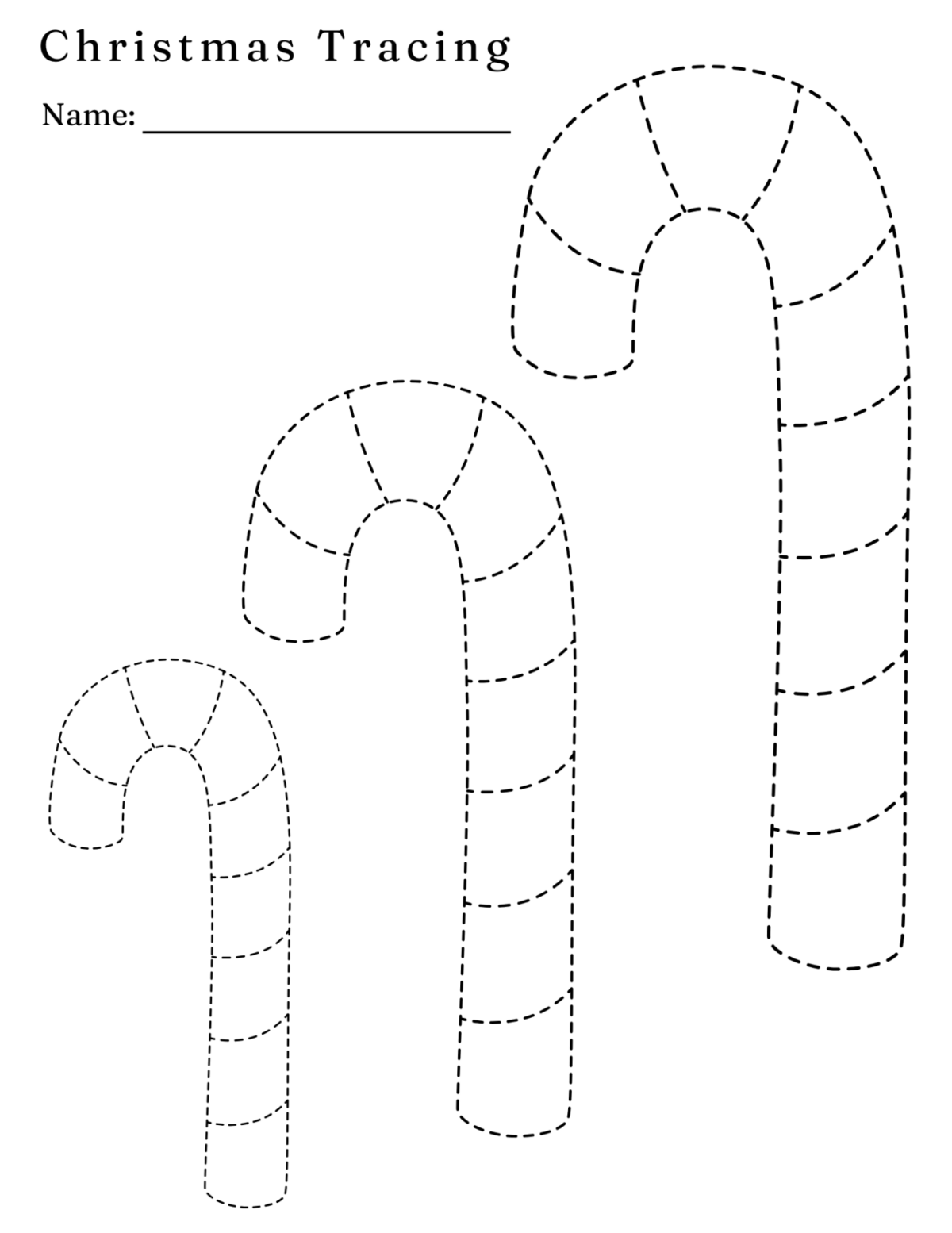
Many children recognize letters, shapes, and holiday symbols long before their fine motor control allows them to form those same patterns on paper. According to the American Occupational Therapy Association, foundational hand strength and visual-motor integration must develop collaboratively to make handwriting tasks successful and frustration-free. Working with seasonal motifs bridges the gap between cognitive understanding and physical execution. The tracing candy cane worksheet harnesses the natural excitement of the holiday season to encourage purposeful pencil control. It sounds simple, and that is the exact point. Fun, thematic designs lower the affective filter, turning repetitive hand-eye coordination drills into an engaging, festive art project.
💡 Educational Key Takeaways:
- Core Skill: Structured Tracing Candy Cane focused on developing pencil grip, stroke control, and early literacy/math confidence.
- Target Scope: Suited for homeschoolers, preschool, kindergarten, and elementary learners.
- Best Recommendation: Practice 10–15 minutes daily with ergonomic writing tools to reinforce muscle memory without hand fatigue.
What This Worksheet Covers
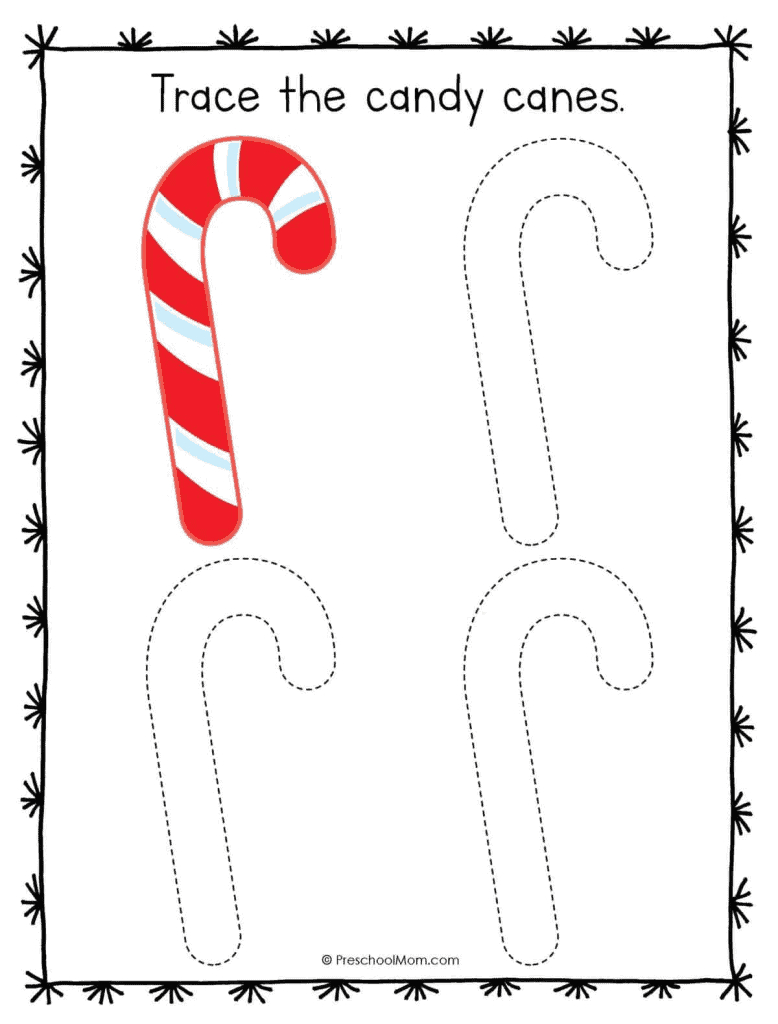
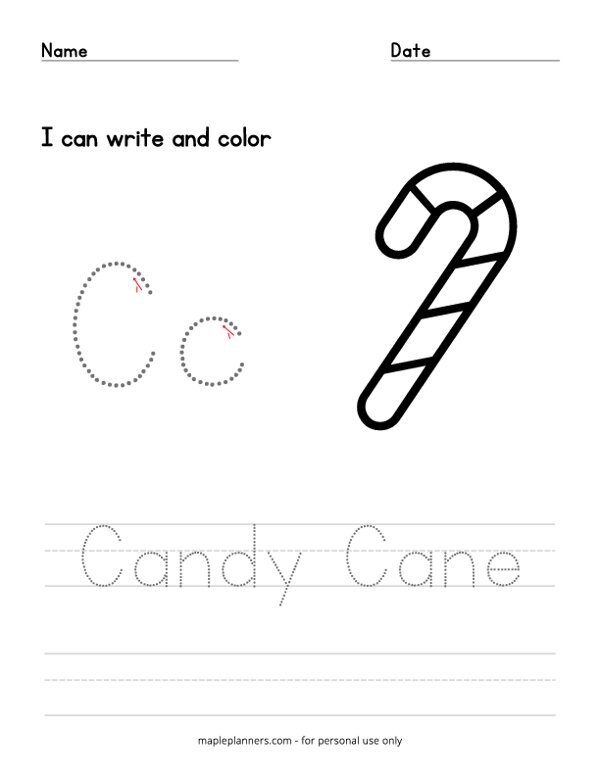
This resource focuses on directional control, curve navigation, and continuous stroke practice. The distinctive hook shape of a festive peppermint stick challenges developing hands to transition smoothly from a vertical line into a rounded loop. Such curves require coordinated shifts in wrist rotation and finger adjustments, which differs fundamentally from tracing straight horizontal or vertical paths. Mastering this specific trajectory builds the muscle memory necessary for forming curved letters such as c, e, a, and g. Furthermore, the striped patterns embedded inside the design encourage children to regulate their pacing, alternating between controlled stops and fluid motions. Every stroke reinforces bilateral coordination, teaching the non-dominant hand how to stabilize the paper while the dominant hand executes the tracing path.
Key Learning Outcomes
Targeted skill acquisition happens when children interact with purposeful design layouts. Visual tracking improves as eyes follow the contours of the peppermint treat from top to bottom. Pencil pressure modulation becomes second nature as young learners discover how to keep their marks steady along the dotted guide paths. Motor planning pathways strengthen, allowing the brain to send precise commands to the hand regarding speed, direction, and stopping points. Spatial awareness increases because the design forces the pencil to navigate confined boundaries without straying off the designated route.
How to Use This Worksheet
Integrating this activity into a daily routine requires careful attention to the environment and the child’s physical readiness. Setting up a stable workspace with an appropriately sized chair and table sets the foundation for healthy posture. Placing the sheet flat or on a slight vertical slant encourages a natural wrist extension, which protects delicate hand joints from fatigue. Adults can introduce the page by discussing the shape, perhaps running a finger along the dotted lines first to give the brain a tactile preview of the movement. Allowing children to use varied writing instruments—ranging from chunky crayons to thin markers—keeps motivation high while challenging different levels of grip strength.
Practical Tips for Parents and Teachers
Here is what makes this worksheet different: it adapts seamlessly to different developmental tiers through simple modifications. Adults should model a mature tripod grasp before starting, demonstrating how the thumb, index, and middle fingers work as a dynamic team rather than a clenched fist. Scaffolding the activity means letting children trace with their index fingers first if pencils feel too intimidating. Extending the challenge involves asking older children to draw a second, parallel line freehand right next to the traced outline. Praising the effort rather than the perfection keeps anxiety low, ensuring that muscle memory builds through relaxed, repeatable success.
Age-Appropriate Recommendations
Toddlers and preschoolers aged two to four benefit most from using thick crayons or short stubby pencils on enlarged versions of the sheet, aligning with the National Association for the Education of Young Children Developmentally Appropriate Practice guidelines for sensory-rich exploratory art. At this stage, perfection matters far less than the sheer exposure to holding a writing tool and making marks on demand. Kindergartens and early primary students aged five to eight can tackle the standard layout using standard pencils, focusing intensely on precise starts, stops, and smooth curve execution. According to the Centers for Disease Control and Prevention developmental milestones, children in this older bracket are refining their hand dominance and building the endurance needed for longer writing sessions, making precise holiday tracing a wonderful tool for stamina building.
Foundational hand strength and visual-motor integration must develop collaboratively to make handwriting tasks successful. — American Occupational Therapy Association
Frequently Asked Questions
Navigating printing requirements, developmental readiness, and educational standards ensures that adults get the maximum benefit out of every resource. Reviewing targeted answers below clarifies common questions regarding implementation.
Explore More Free Printable Tracing Worksheets
Expanding a child’s collection of motor-building pages helps maintain enthusiasm throughout the entire school year. For alphabet and numeral practice, explore the curated collection available via Alphabet And Numbers Tracing. To focus on specific letter formations with dedicated guides, browse the options found under Dotted Letters For Tracing. Building fundamental hand strength is effortless with resources categorized within Fine Motor and Pre-Writing Skills. Discover endless seasonal variations by visiting Seasonal and Fun Themes. Every educator and parent can find a vast library of tools designed to support handwriting readiness at KidTraces.com.
Developmental Milestone & Activity Table
| Development Stage | Recommended Daily Duration | Primary Learning Objective |
|---|---|---|
| Preschool & Pre-K | 10 – 15 Minutes | Pencil grip development & basic pre-stroke lines |
| Kindergarten | 15 – 20 Minutes | Letter/number formation & spatial line awareness |
| Early Elementary (Grade 1–2) | 20 – 30 Minutes | Fluency, sentence construction & neatness |
Images References