Introduction
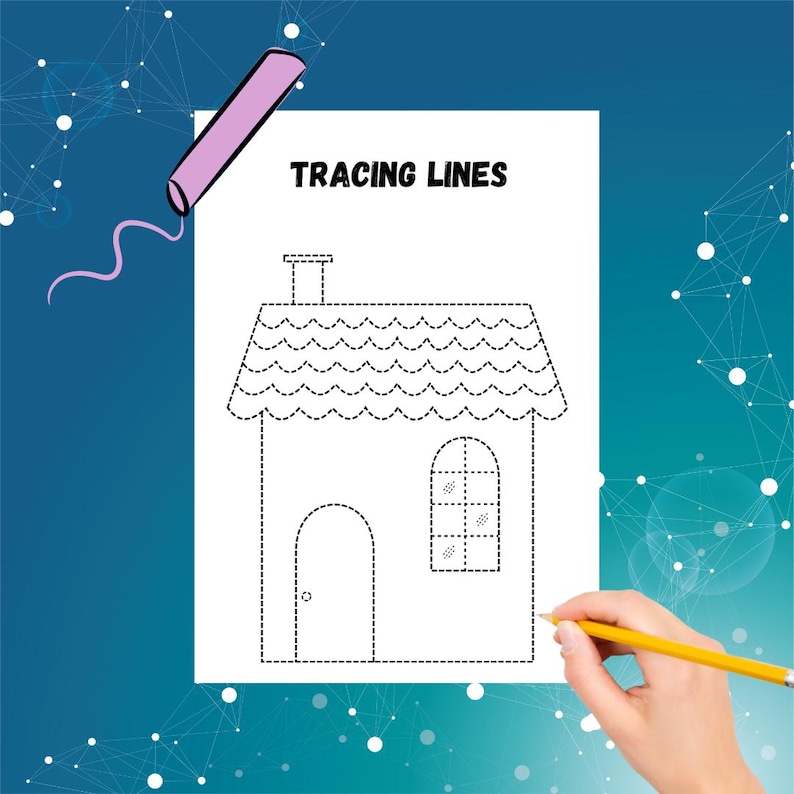
Pencil in hand, a young child stares intently at a page, determined to bridge the gap between imagination and paper. Many children recognize letters and shapes long before their fine motor coordination and hand strength are fully equipped to form them consistently. According to the American Occupational Therapy Association, foundational fine motor skills—including finger dexterity, bilateral coordination, and adequate grasp patterns—are essential prerequisites for functional handwriting and classroom success. That functional bridge is precisely where targeted visual-motor tools shine. The free printable line tracing house offers a purposeful, engaging pathway for developing these critical mechanics without the pressure of traditional handwriting drills. It sounds simple, and that’s the point.
💡 Educational Key Takeaways:
- Core Skill: Structured Line Tracing House focused on developing pencil grip, stroke control, and early literacy/math confidence.
- Target Scope: Suited for homeschoolers, preschool, kindergarten, and elementary learners.
- Best Recommendation: Practice 10–15 minutes daily with ergonomic writing tools to reinforce muscle memory without hand fatigue.
What This Worksheet Covers
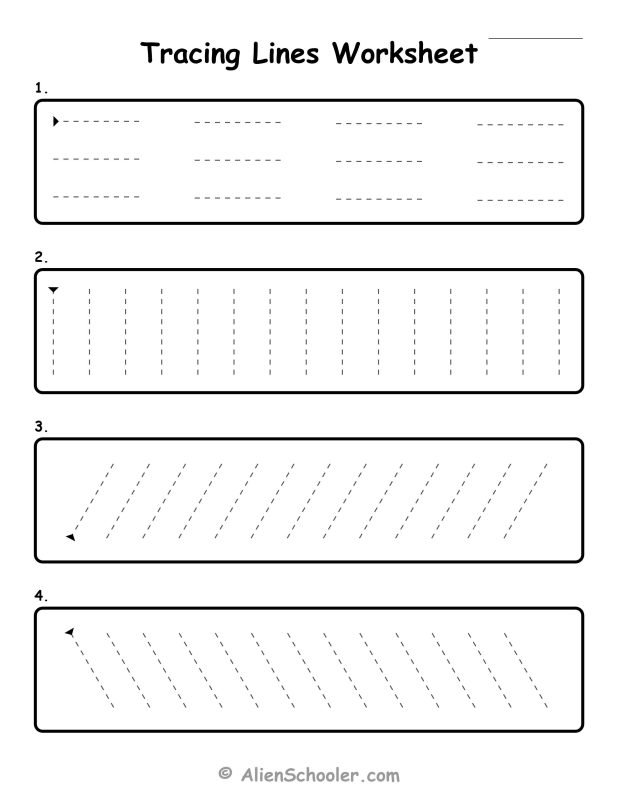
Structured pre-writing tasks build the foundational muscle memory required for future academic tasks. This particular printable utilizes a familiar architectural theme—a house complete with a triangular roof, square walls, a rectangular door, and decorative windows—to guide pencil control. The layout moves a child through a sequence of horizontal, vertical, diagonal, and curved strokes. Horizontal lines stabilize wrist movement, vertical lines require proximal shoulder and elbow control, and diagonals challenge visual-perceptual planning. Children trace the structural outlines and interior details, reinforcing spatial awareness and visual-motor integration in a single, cohesive exercise.
Key Learning Outcomes
Targeted execution of these lines yields measurable developmental gains across multiple domains. Visual-motor integration improves as hand movements match visual inputs on the page. Pencil pressure regulation stabilizes, helping children move away from a tight, fatiguing fist grasp toward a mature tripod or quadrupod grip. Bilateral coordination strengthens because one hand actively stabilizes the paper while the dominant hand executes the tracing strokes. Additionally, visual-spatial attention increases as children learn to stay within narrow boundaries and negotiate corners, building foundational accuracy necessary for mastering complex concepts found in Shape and Line Tracing.
How to Use This Worksheet
Setting the stage for success involves more than simply handing over a marker and a sheet of paper. Optimal positioning matters greatly for developing muscles. Children should sit with feet flat on the floor, hips and knees bent at ninety-degree angles, and forearms resting comfortably on the table surface. The paper can be slanted slightly to match the natural arc of the child’s forearm. Encouraging an upright posture prevents upper body fatigue, allowing for greater concentration and cleaner stroke execution during practice sessions.
Practical Tips for Parents and Teachers
Scaffolding the experience ensures frustration stays low and confidence stays high. Adults can model correct stroke initiation by placing a finger or a thick-handled crayon at the starting point of the roof, verbally cueing the downward diagonal motion. According to Reading Rockets, multisensory pre-writing approaches—such as tracing textured lines with a finger before using a pencil—significantly improve letter and shape retention in early learners. If standard pencils cause hand fatigue, try breaking crayons into short pieces to naturally encourage a functional grasp. For children needing additional foundational support, exploring resources within Fine Motor and Pre-Writing Skills provides complementary activities to build intrinsic hand strength.
Age-Appropriate Recommendations
Developmental expectations shift significantly across early childhood. For toddlers and preschoolers ages two to four, the focus aligns with the National Association for the Education of Young Children Developmentally Appropriate Practice guidelines, emphasizing gross directional control, large continuous strokes, and sensory exploration using thick writing tools. Children in this age bracket benefit from tracing larger roof lines and simple vertical structures without worrying about staying within microscopic boundaries. For older preschoolers and kindergarteners ages five to eight, the expectations shift toward precision, directional accuracy, corner-turning control, and transitioning toward standard writing utensils, aligning closely with foundational handwriting readiness benchmarks.
Fine motor competence and visual-motor integration are among the strongest predictors of early academic productivity and kindergarten readiness. — American Occupational Therapy Association
Frequently Asked Questions
Addressing common questions helps adults maximize the benefits of each tracing session. Clear guidance ensures smooth implementation at home and in the classroom.
Structured pre-writing templates provide the spatial boundaries and motor planning practice necessary for letter formation and literacy acquisition. — National Association for the Education of Young Children
Explore More Free Printable Tracing Worksheets
Building a robust foundation for writing requires a varied diet of engaging, purposeful practice materials. Children thrive when given fresh visual contexts to master the same underlying motor patterns. Beyond architectural motifs, learners can explore themed pathways, structural loops, and directional tracks that keep motivation high and boredom low. Educators, parents, and therapists can easily build a comprehensive, progressive pre-writing curriculum by visiting the complete library of resources available at KidTraces.com to support every stage of early development.
Developmental Milestone & Activity Table
| Development Stage | Recommended Daily Duration | Primary Learning Objective |
|---|---|---|
| Preschool & Pre-K | 10 – 15 Minutes | Pencil grip development & basic pre-stroke lines |
| Kindergarten | 15 – 20 Minutes | Letter/number formation & spatial line awareness |
| Early Elementary (Grade 1–2) | 20 – 30 Minutes | Fluency, sentence construction & neatness |
Images References