Introduction
Watch any group of preschoolers hold a crayon, and a fascinating developmental gap quickly emerges. Many children recognize letters, shapes, and symbols long before their developing hand muscles possess the endurance and dexterity required to accurately form them on paper. According to the American Occupational Therapy Association, foundational fine motor skills, including hand strength and visual-motor integration, are critical prerequisites for successful handwriting and classroom participation. Educators and therapists constantly observe this mismatch between cognitive readiness and physical capability. Children desperately want to write, yet their small hands fatigue rapidly under improper grips or unrefined pencil control. Bridging this gap requires systematic practice that strengthens intrinsic hand muscles without causing frustration. This exact need is why free printable line and shape tracing sheets remain a staple in early childhood classrooms and home learning spaces. It sounds simple, and that is precisely the point. By breaking writing down into its foundational components—vertical lines, horizontal strokes, diagonal slashes, and closed curves—young learners build the exact motor memory needed for future letter and numeral formation. Exploring developmental tools like shape and line tracing provides a structured, low-pressure entry point for children mastering pencil control. The journey toward fluent handwriting starts long before forming the first letter of the alphabet, beginning instead with smooth, controlled strokes that teach the hand how to navigate a blank page with confidence.
💡 Educational Key Takeaways:
- Core Skill: Structured Line And Shape Tracing focused on developing pencil grip, stroke control, and early literacy/math confidence.
- Target Scope: Suited for homeschoolers, preschool, kindergarten, and elementary learners.
- Best Recommendation: Practice 10–15 minutes daily with ergonomic writing tools to reinforce muscle memory without hand fatigue.
What This Worksheet Covers
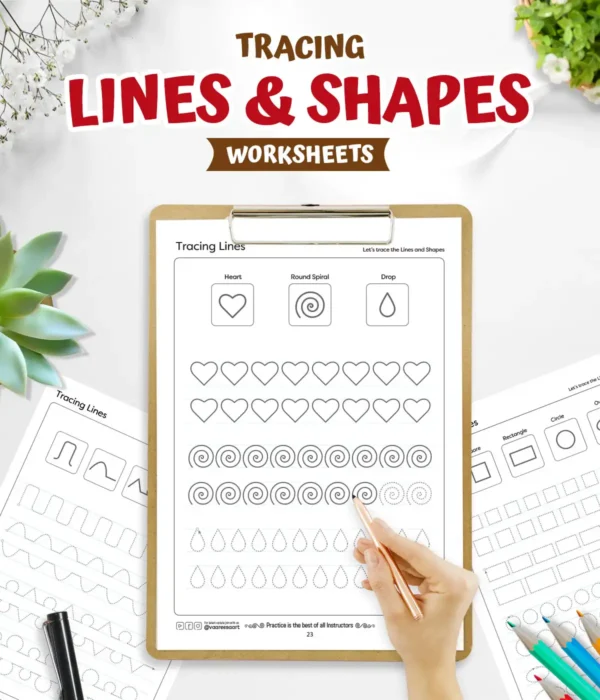
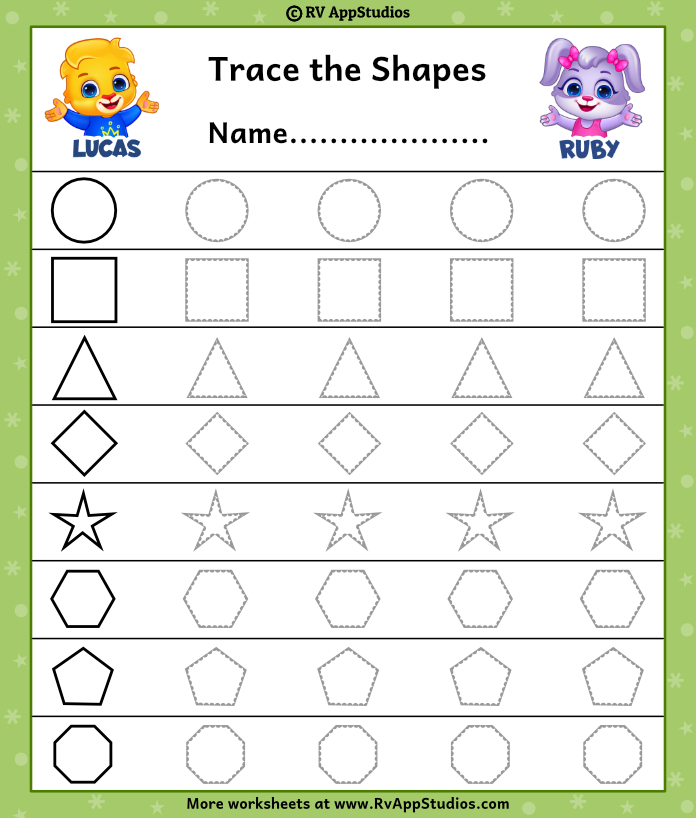
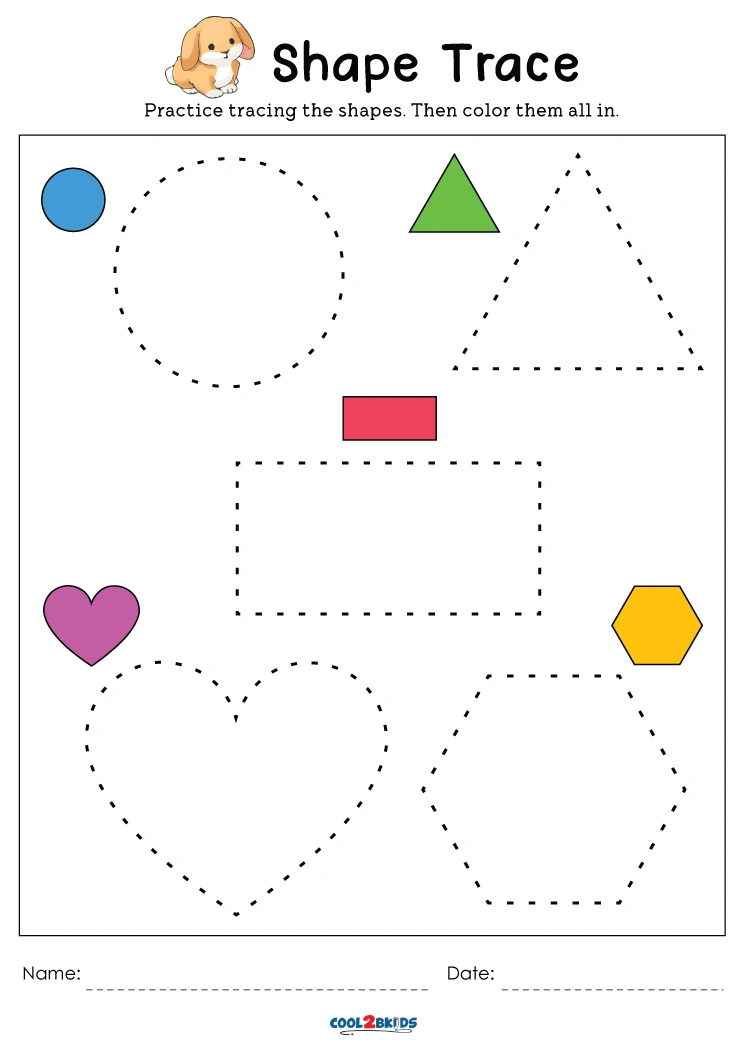
Mastering pencil control requires more than just holding a writing utensil; it demands precise coordination between the eyes and the hand. This targeted printable focuses on the foundational stroke patterns that precede all letter and number writing, moving progressively from simple linear paths to more complex geometric formations. Children encounter horizontal and vertical lines, intersecting paths, wavy ocean currents, zig-zags, and basic shapes such as circles, squares, and triangles. Each stroke is intentionally designed to isolate specific wrist movements and finger adjustments. According to Reading Rockets, early visual-motor activities that emphasize tracking and controlled hand movements significantly support later literacy development by training the brain to recognize subtle differences in line orientation and spatial arrangement. Here is what makes this worksheet different: rather than overwhelming the child with dense text or tiny alphabet letters, it isolates the exact biomechanical movements required for pencil manipulation. Young learners practice stopping, starting, changing direction, and maintaining consistent pencil pressure across the page. These physical skills translate directly into cleaner, more legible writing later on, laying groundwork that is just as vital as letter recognition itself. For children ready to expand their practice beyond basic geometry, incorporating related exercises from Fine Motor and Pre-Writing Skills helps reinforce hand strength and endurance through engaging, developmentally appropriate challenges.
Key Learning Outcomes
Working through these guided pathways yields substantial developmental gains for young learners. Children significantly improve their visual-motor integration, learning to coordinate what the eyes perceive with the exact physical movements of the hand. Pencil control and stroke precision sharpen notably as fingers learn to execute deliberate stops, starts, and directional changes without relying entirely on gross arm movements. Hand and finger strength increases organically through sustained pencil manipulation, supporting the development of a functional tripod or quadripod grasp. Spatial awareness also expands rapidly, teaching learners how to stay within boundaries, navigate corners, and maintain a consistent left-to-right progression across the page. Finally, these exercises cultivate invaluable task persistence and frustration tolerance, transforming what might feel like tedious handwriting drills into an engaging, confidence-building exercise.
How to Use This Worksheet
Maximizing the benefits of any tracing activity requires intentional adult facilitation and a thoughtful approach to the learning environment. Pushing children too quickly into pencil-and-paper tasks often leads to awkward grips and hand cramping. Instead, adults can introduce these sheets using multi-sensory warm-ups, such as drawing lines in shaving cream, tracing textured sandpaper cards, or forming shapes with playdough before touching a marker to paper. Setting up an ergonomic workspace is equally important. Ensure the chair and table allow the child’s feet to rest flat on the floor and the hips to bend at a ninety-degree angle, which provides the core stability necessary for distal hand control. Positioning the paper at a slight slant matching the angle of the child’s forearm naturally encourages a more efficient wrist position. For added versatility, slide the printed sheets inside heavy-duty clear plastic sleeves and use dry-erase markers. This simple adjustment transforms a single-use worksheet into a reusable resource, reducing pressure and allowing children to wipe away mistakes and try again without hesitation.
Practical Tips for Parents and Teachers
Adults guiding these sessions should focus on modeling proper grip mechanics rather than obsessing over rigid perfection. If a child slips off a dotted line, frame the moment as a fun driving game rather than a failure, encouraging them to steer their pencil back on track. Scaffolding the activity makes a tremendous difference for learners who tire easily; adults can gently guide the child’s hand for the first few repetitions before fading support and allowing independent practice. Extending the learning is just as simple. Ask children to identify real-world objects in the room that match the shapes they are tracing, connecting abstract lines on a page to their immediate physical environment. Varying the writing tools—swapping standard pencils for chunky crayons, scented markers, or colored pencils—maintains high motivation and provides different levels of sensory feedback and resistance against the paper.
Age-Appropriate Expectations
Developmental readiness for writing varies dramatically across the early childhood years. Aligned with the National Association for the Education of Young Children (NAEYC) Developmentally Appropriate Practice framework, expectations must match the physical and neurological maturity of the child. For two- and three-year-olds, tracing activities should focus primarily on gross motor lines, circular scribbles, and vertical strokes using thick writing tools, as intrinsic hand muscles are still developing and bilateral coordination is just emerging. Four- and five-year-olds typically demonstrate the stability required for controlled horizontal lines, cross shapes, and simple diagonal paths, frequently transitioning into a functional three-finger grasp. By ages six through eight, children refine these pre-writing strokes into precise letter and numeral formations, aligning with early elementary standards where spatial awareness and line discipline become paramount. Respecting these natural developmental timelines ensures that tracing remains an empowering experience rather than a source of physical stress.
Systematic pre-writing stroke practice significantly enhances visual-motor integration and pencil control in early childhood — American Occupational Therapy Association
Frequently Asked Questions
Explore More Free Printable Tracing Worksheets
Supporting a young writer’s journey involves offering a diverse array of engaging, scaffolded practice materials over time. Once a child masters basic lines and geometric shapes, expanding into letter formation, numerical sequences, and themed activities helps maintain enthusiasm and skill progression. Parents, teachers, and caregivers can explore the full library of curated resources available at KidTraces.com to find additional materials tailored to every developmental milestone. Whether a learner is currently working on foundational strokes, exploring Alphabet And Numbers Tracing, or seeking seasonal engagement through Seasonal and Fun Themes, consistent and joyful practice remains the ultimate key to lifelong writing success. Print today and watch those fine motor skills flourish!
Developmental Milestone & Activity Table
| Development Stage | Recommended Daily Duration | Primary Learning Objective |
|---|---|---|
| Preschool & Pre-K | 10 – 15 Minutes | Pencil grip development & basic pre-stroke lines |
| Kindergarten | 15 – 20 Minutes | Letter/number formation & spatial line awareness |
| Early Elementary (Grade 1–2) | 20 – 30 Minutes | Fluency, sentence construction & neatness |
Images References