Introduction
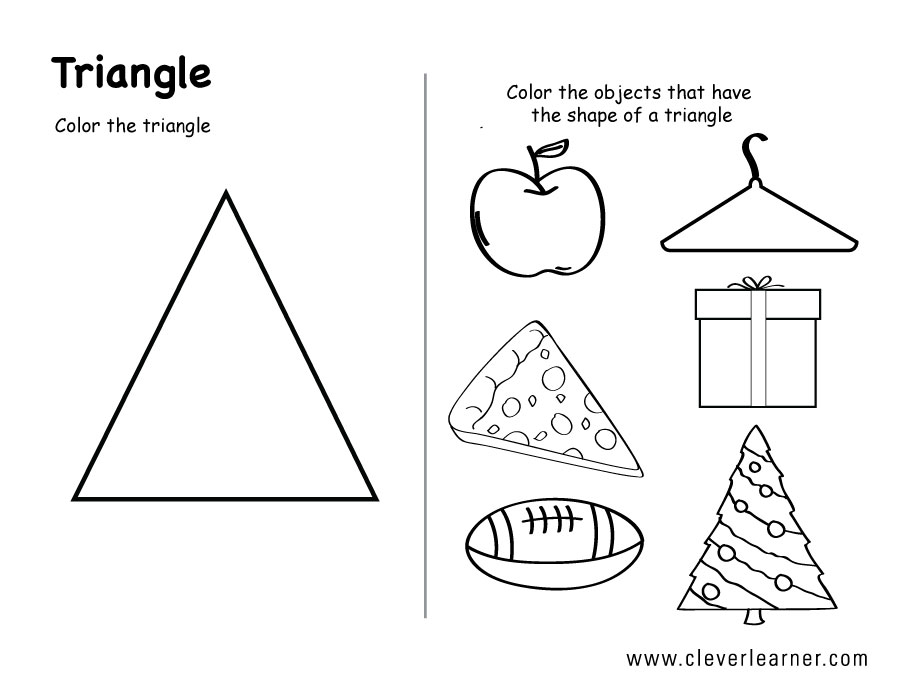
Many children recognize letters, numbers, and geometric forms long before their fine motor control and hand strength are developed enough to form them consistently on paper. According to the American Occupational Therapy Association, foundational fine motor skills—including bilateral coordination, intrinsic hand muscle strength, and visual-motor integration—are vital prerequisites for successful academic performance and functional independence. Transforming abstract geometric concepts into controlled physical movements requires targeted, scaffolded practice. It sounds simple, and that is the exact point of the drawing for kids triangle shape printable, which bridges the gap between cognitive shape recognition and precise pencil control. Children often look at a triangle and understand its three-sided nature instantly, yet guiding a pencil along those sharp, intersecting angles demands a complex orchestration of visual-motor planning, spatial awareness, and sustained postural stability. Educational settings frequently rely on these specific pre-writing geometry sheets to transition young learners from loose, uninhibited scribbling to controlled, deliberate line formation.
💡 Technical Key Takeaways:
- Core Focus: Diagnostic schematic and terminal connection layout for Drawing For Kids Triangle Shape.
- Target Scope: Field technicians, automotive DIYers, and residential/commercial electricians.
- Safety Rule: Always disconnect the primary power source/battery terminal and verify zero voltage with a multimeter before touching wires.
What This Worksheet Covers
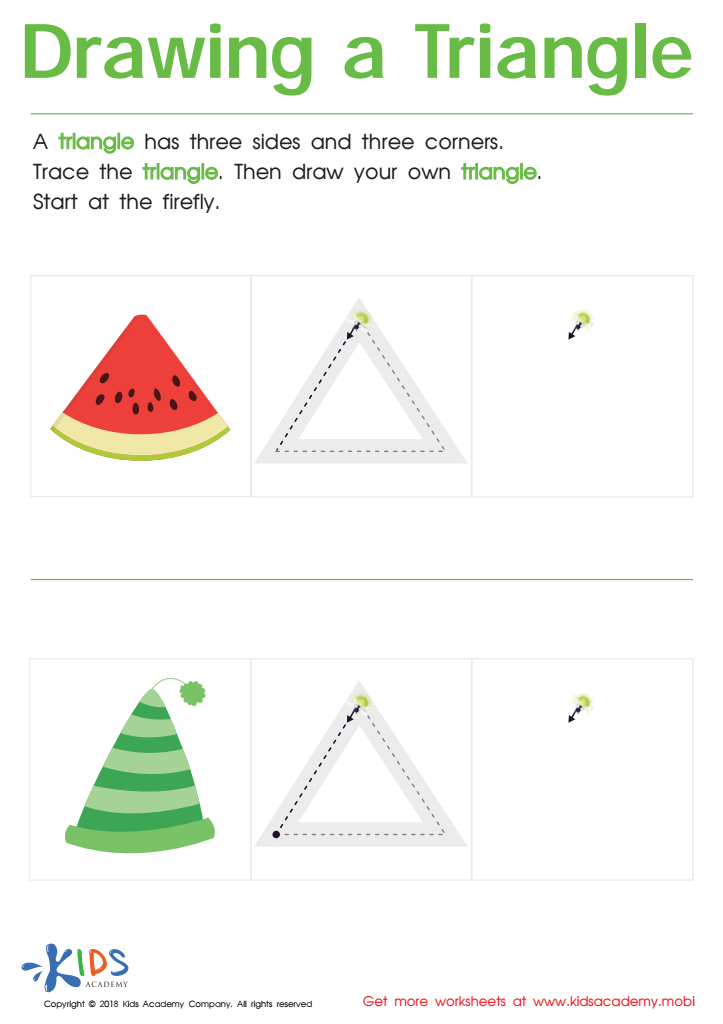
Shape tracing sheets specifically target the foundational strokes required for both early geometry and future alphabet mastery. The triangle format demands an uncommon combination of diagonal lines, sharp vertex redirection, and a strictly horizontal base line. Many young learners naturally struggle with diagonal lines because the human arm tends to favor vertical and horizontal sweeps during early scribbling phases. This printable guides the hand through downward slants, upward ascents, and flat horizontal closures, mirroring the exact strokes needed to write uppercase letters like A, V, M, and W. Furthermore, the resource offers graduated tracing lines, moving from heavily dotted paths to independent tracking dots, allowing educators to gauge how much visual scaffolding an individual child actually requires. For more related activities, check out our Draw Perfect Squares And Cubes Worksheet.
Key Learning Outcomes
Working through this geometric tracing resource builds crucial visual-motor integration by teaching the eyes to anticipate directional changes before the hand executes them. Learners simultaneously develop directional awareness, mastering top-to-bottom and left-to-right progressions as they navigate the three distinct corners of the shape. Pencil control improves dramatically through this exercise, requiring children to apply consistent downward pressure while executing sudden changes in trajectory rather than lifting the writing utensil prematurely. Additionally, the activity strengthens spatial vocabulary, helping children internalize descriptive terms such as slant, corner, vertex, parallel, and baseline through direct physical engagement with the page.
How to Use This Worksheet
Successful implementation begins by ensuring the physical environment supports proper posture and alignment before any marks are made on the paper. According to the National Association for the Education of Young Children, active learning environments should prioritize developmental readiness and hands-on engagement over rote repetition. Place the paper on a flat surface where the child’s feet can rest flat on the floor, promoting core stability that directly influences distal hand control. Encourage the dominant hand to hold a short stubby crayon or a broken piece of chalk rather than a full-length standard pencil, as shorter writing tools naturally encourage a functional grasp by eliminating excess finger extension.
Practical Tips for Parents and Teachers
Scaffolding instruction effectively means demonstrating the stroke sequence in the air before touching pencil to paper, using descriptive verbal prompts like “slant down, slant up, slide across.” If a child demonstrates frustration at the sharp bottom corners, adults can gently guide the child’s hand through the pivot point or place a small physical tactile cue, such as a raised sticker, at the vertex to signal where the hand must pause and change direction. Extend the learning beyond the flat page by having children trace three-dimensional triangle objects, build triangles using craft sticks or play dough snakes, or trace shapes drawn in shaving cream to reinforce muscle memory through multi-sensory channels. Avoid rushing the completion of the page; focus entirely on smooth, continuous line quality and proper directional start points rather than speed or visual perfection.
Age-Appropriate Recommendations
For younger children ages two through four, shape exploration aligns closely with the CDC developmental milestones regarding early pre-writing and copying simple geometric patterns. At this stage, use larger, oversized versions of the triangle sheet alongside thick primary writing tools, accepting approximations as long as the child attempts the diagonal strokes. For older children ages five through eight, integrate the sheet into structured handwriting and geometry lessons, expecting precise corner intersections and minimal lifting of the pencil. Educators working with older primary students can utilize specialized resources found within the Shape and Line Tracing category to refine pencil pressure and spatial accuracy. Children who require broader fine motor remediation can also benefit immensely from parallel practice found in the Fine Motor and Pre-Writing Skills collection, ensuring the small intrinsic muscles of the hand are adequately prepared for complex daily academic tasks.
Foundational fine motor skills, bilateral coordination, and visual-motor integration are vital prerequisites for successful academic performance. — American Occupational Therapy Association
Frequently Asked Questions
Explore More Free Printable Tracing Worksheets
Supporting a young learner through developmental milestones requires a diverse array of engaging, scaffolded resources that grow alongside the child. Educators, parents, and therapists can discover an expansive selection of practice materials spanning numerous subjects by browsing the complete library hosted at KidTraces.com. Whether the goal is refining pencil control through Alphabet And Numbers Tracing or adding seasonal engagement via the Seasonal and Fun Themes section, every tool is designed to foster confidence and independent learning. Continuous access to well-structured, developmentally sound printables ensures every child builds a strong, joyful foundation for lifelong literacy and motor competence.
Quick Wiring Specifications & Terminal Guide
| Component / Circuit | Standard Wire Gauge | Recommended Protection |
|---|---|---|
| Control & Trigger Signals | 18 – 20 AWG | 5A – 7.5A Inline Fuse |
| Standard Auxiliary Load | 14 – 16 AWG | 15A – 20A Circuit Breaker |
| Main Power Feed / Supply | 10 – 12 AWG | 30A – 40A Heavy-Duty Relay |
Images References