Introduction
Many children recognize letters, shapes, and numbers long before their fine motor skills can actually form them on paper. According to the American Occupational Therapy Association, foundational hand strength and pencil control must develop systematically before children can master legible, sustained handwriting. This developmental gap often frustrates eager learners who want to write words but lack the physical endurance in their tiny hands. Bridge this gap using targeted pre-writing practice that builds intrinsic muscle tone without overwhelming the learner. It sounds simple, and that’s the point. The free printable circles to help handwriting provide a low-stress pathway to mastering essential hand movements. Children naturally gravitate toward circular motions, making circular templates an ideal entry point for structured pencil control. Integrating these foundational shapes into daily routines fosters hand-eye coordination, bilateral integration, and spatial awareness long before formal spelling begins.
💡 Educational Key Takeaways:
- Core Skill: Structured Circles To Help Handwriting focused on developing pencil grip, stroke control, and early literacy/math confidence.
- Target Scope: Suited for homeschoolers, preschool, kindergarten, and elementary learners.
- Best Recommendation: Practice 10–15 minutes daily with ergonomic writing tools to reinforce muscle memory without hand fatigue.
What This Worksheet Covers
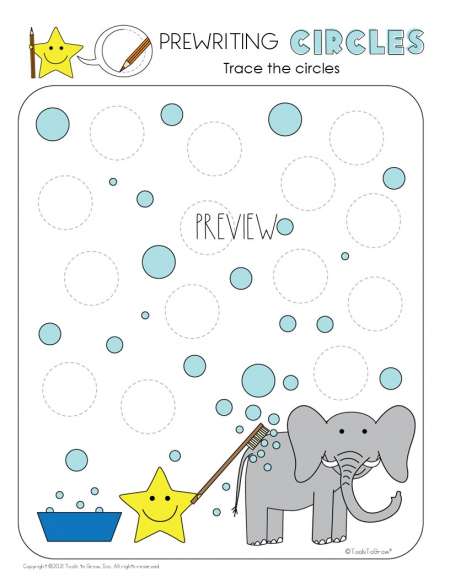
Circular tracing sheets target the fundamental rotational movements required to form letters like ‘o’, ‘c’, ‘a’, ‘g’, and ‘q’. Children must coordinate visual tracking with precise wrist and finger movements to keep the writing tool on the designated track. According to the National Association for the Education of Young Children, purposeful motor experiences during early childhood directly support cognitive and physical self-regulation. Here’s what makes this worksheet different: instead of jumping straight to rigid alphabet lines, the layout invites continuous fluid motion. This fluid movement trains the brain to understand closure, scaling, and directional flow. Learners transition from large, sweeping arm gestures down to refined finger movements naturally. Every printed circle reinforces fluid stroke production, reducing hand fatigue during longer writing tasks later in the school year. Exploring options within Fine Motor and Pre-Writing Skills expands these developmental opportunities even further.
Key Learning Outcomes
Targeted circular tracing exercises yield multiple distinct developmental outcomes that benefit early learners immensely. First, children build crucial finger dexterity and arch strength by maintaining a steady grasp while navigating curved paths. Second, learners develop enhanced visual-motor integration, which helps the brain translate visual cues into smooth physical hand movements. Third, repetitive circular motions foster clockwise and counterclockwise directional awareness, a prerequisite for proper letter formation. Finally, sustained engagement with these templates builds hand endurance, minimizing the physical frustration associated with early writing tasks. Discover related activities by browsing Shape and Line Tracing collections.
How to Use This Worksheet
Successful implementation relies on keeping the environment engaging and pressure-free. Print the circular templates on sturdy cardstock if reusable sheet protectors are unavailable, allowing for multiple practice rounds with dry-erase markers. Encourage children to start at the designated top point and trace continuously around without lifting the writing utensil. Pairing these exercises with multisensory variations, such as tracing circles in shaving cream or sensory trays, reinforces the physical memory of the movement. Educators and caregivers can also incorporate fun themed prompts, similar to options found in Seasonal and Fun Themes, to boost motivation. Keep practice sessions short, typically lasting five to ten minutes, to prevent hand strain and maintain enthusiasm.
Practical Tips for Parents and Teachers
Adults play a vital role in scaffolding the writing experience without taking over the pencil. Model the correct tripod grip beforehand, emphasizing a relaxed thumb and index finger working in harmony. Scaffold the activity by allowing younger children to use thicker crayons or markers, which offer better physical feedback and require less gripping pressure. When observing a tight or awkward fist grasp, gently guide the hand into a more functional position using short, thick writing tools that naturally promote finger isolation. Extend the challenge for advanced learners by asking them to draw concentric circles independently inside the provided outlines. Every positive reinforcement builds the child’s confidence and willingness to tackle more complex writing challenges over time.
Age-Appropriate Recommendations
Developmental expectations vary greatly across early childhood, requiring tailored approaches based on age. According to the CDC developmental milestones, toddlers ages 2 to 4 typically explore vertical and horizontal strokes before mastering circular scribbles around age three. During this stage, children benefit from large, oversized circles that encourage gross motor arm movements originating from the shoulder. For older children ages 5 to 8, aligned with the Handwriting Without Tears framework, expectations shift toward refined pencil control, proper line orientation, and proportional scaling of smaller shapes. First and second graders use circular paths to refine lowercase letter sizing, ensuring their writing stays properly aligned on standard baseline paper. Matching the complexity of the tracing sheet to the child’s current developmental stage ensures steady progress and prevents unnecessary frustration.
Foundational hand strength and pencil control must develop systematically before children can master legible, sustained handwriting. — American Occupational Therapy Association
Frequently Asked Questions
Common questions regarding preparation, developmental benefits, and sourcing reliable resources are answered below to help caregivers succeed.
Explore More Free Printable Tracing Worksheets
Supporting a young writer involves a diverse toolkit of engaging practice materials. Children thrive when exposed to a wide variety of engaging visual stimuli that keep practice fresh and exciting. Explore the full library of resources available at KidTraces.com to find supplemental tools. Dive into specialized practice areas such as Alphabet And Numbers Tracing or Dotted Letters For Tracing to support every step of the learning journey.
Developmental Milestone & Activity Table
| Development Stage | Recommended Daily Duration | Primary Learning Objective |
|---|---|---|
| Preschool & Pre-K | 10 – 15 Minutes | Pencil grip development & basic pre-stroke lines |
| Kindergarten | 15 – 20 Minutes | Letter/number formation & spatial line awareness |
| Early Elementary (Grade 1–2) | 20 – 30 Minutes | Fluency, sentence construction & neatness |
Images References