Introduction
Many children recognize letters, shapes, and patterns long before their fine motor skills can actually form them on paper. According to the American Occupational Therapy Association, foundational hand strength and dexterity are prerequisites for successful handwriting and tool use. This developmental gap often frustrates eager learners who want to write but lack the necessary muscle control. Free printable circle tracing lines bridge this gap by offering targeted pre-writing practice. Through repeated circular motions, young learners build essential visual-motor integration without the pressure of producing a finished letter. Every curved stroke prepares tiny hands for the complex demands of formal writing.
💡 Educational Key Takeaways:
- Core Skill: Structured Circle Tracing Lines focused on developing pencil grip, stroke control, and early literacy/math confidence.
- Target Scope: Suited for homeschoolers, preschool, kindergarten, and elementary learners.
- Best Recommendation: Practice 10–15 minutes daily with ergonomic writing tools to reinforce muscle memory without hand fatigue.
What This Worksheet Covers
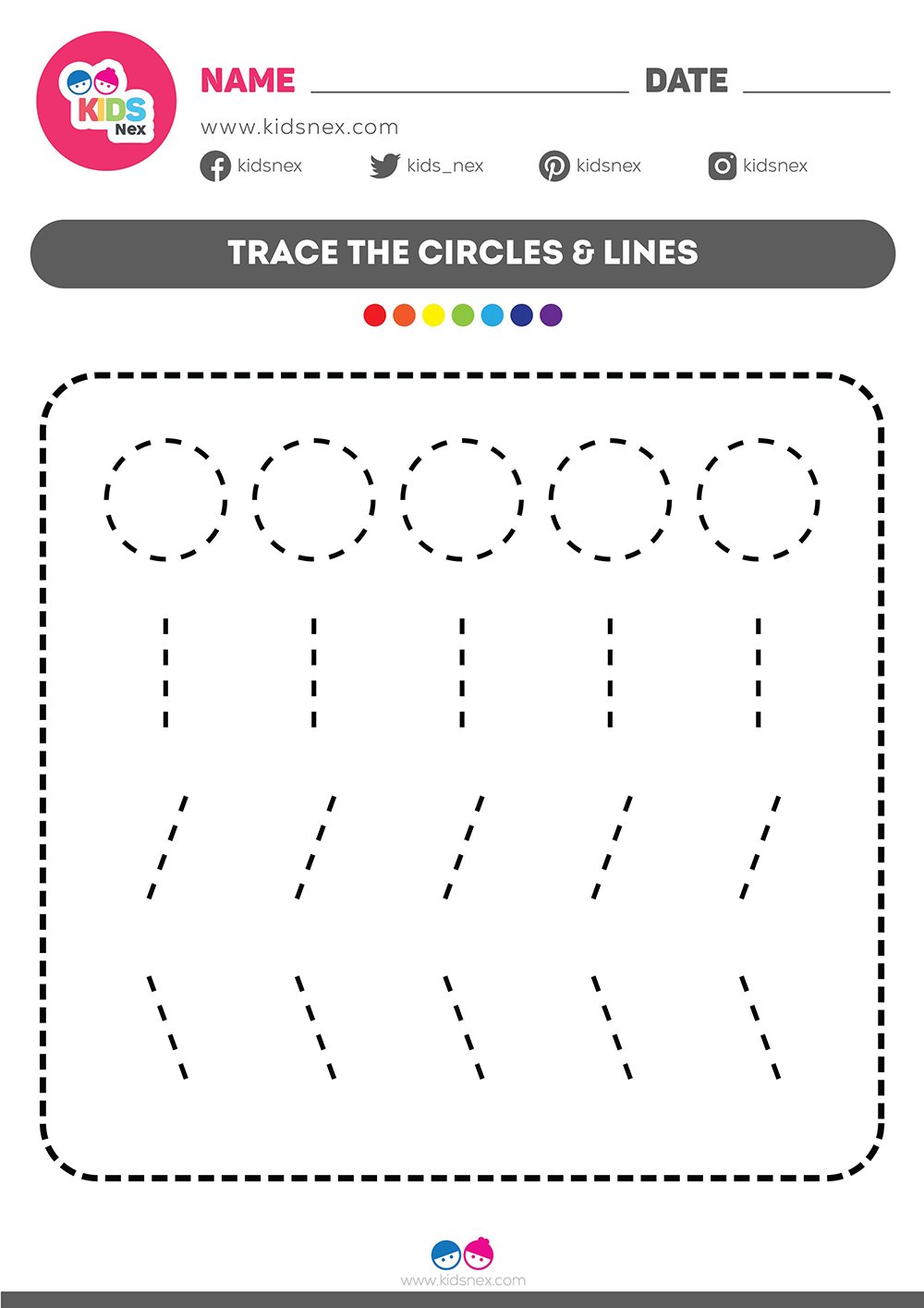
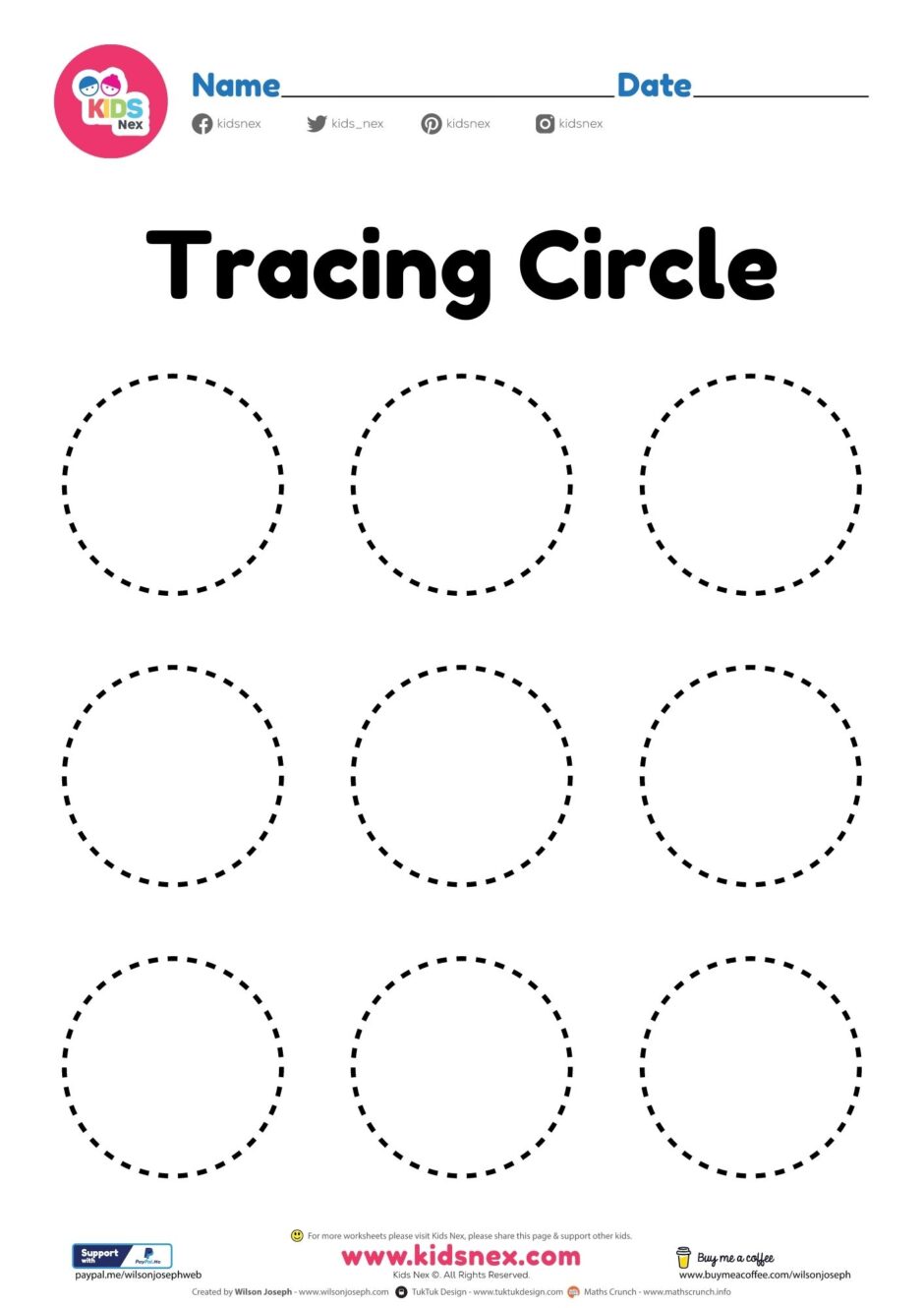
Circular motions represent one of the foundational pre-writing strokes required before children can master formal letters and numbers. These worksheets feature concentric circles, continuous loops, and guided tracks designed to challenge wrist flexibility and finger isolation. Many adults underestimate the complexity of a continuous curve, yet drawing a smooth circle requires synchronized bilateral coordination, sustained visual attention, and constant adjustment of pencil pressure. By focusing purely on shape and line control, children learn to navigate curves without stopping or lifting the writing utensil prematurely. Mastering these continuous motions transforms awkward, stiff finger movements into fluid, confident wrist and arm gestures.
Key Learning Outcomes
Engaging with these targeted sheets fosters several critical developmental milestones simultaneously. First, children refine their pencil grip and hand strength as they maintain consistent pressure along curved paths. Second, visual-motor integration improves significantly as the eyes guide the hand continuously across the page. Third, motor memory develops through repetition, teaching the hand the specific fluid motion required for counter-clockwise and clockwise loops. Finally, children build patience and focus, learning to slow down and follow a designated path rather than rushing haphazardly across the sheet. These accumulated skills form the bedrock of the comprehensive techniques explored within Shape and Line Tracing practice.
How to Use This Worksheet
Introducing circular strokes requires a step-by-step approach that prioritizes comfort and exploration over rigid perfection. Begin by having children trace the lines with their index fingers before picking up a writing tool, which activates tactile feedback and reinforces the movement pattern. It sounds simple, and that is the point; tactile tracing removes initial grip fatigue and lets the brain map the curve first. Encourage a relaxed, functional grip, ensuring fingers stay close to the tip of the pencil or crayon without white-knuckled tension. When children show signs of hand fatigue, take a break to shake out the fingers or squeeze a soft toy to restore flexibility.
Practical Tips for Parents and Teachers
Adults play a pivotal role in scaffolding these pre-writing experiences to keep frustration at bay. Start by demonstrating the motion slowly in the air or directly on the paper, narrating the starting point and direction clearly. According to the National Association for the Education of Young Children, active adult scaffolding during foundational motor tasks significantly boosts confidence and skill retention in early learners. For children who struggle with staying on the track, try placing the sheet inside a dry-erase pocket and using thick markers to make the boundaries more forgiving. Gradually transition to thinner pencils and standard paper as control improves, branching out into broader fine motor challenges found in Fine Motor and Pre-Writing Skills activities.
Age-Appropriate Recommendations
Tailoring expectations to a child’s developmental stage prevents burnout and ensures steady progress. For toddlers and preschoolers aged two to four, alignment with the National Association for the Education of Young Children (NAEYC) Developmentally Appropriate Practice suggests focusing on large, gross-motor circular motions using thick crayons or finger paints on oversized paper. Children in this bracket are still developing intrinsic hand muscles, so expecting tight, controlled miniature loops is counterproductive. As children reach ages five through eight, expectations shift toward refined pencil control, smooth continuous curves, and independent navigation of smaller concentric circles, aligning closely with foundational kindergarten readiness guidelines and targeted practice areas such as Tracing Worksheets.
Foundational hand strength and dexterity are prerequisites for successful handwriting and tool use. — American Occupational Therapy Association (AOTA)
Frequently Asked Questions
Navigating early childhood writing resources can raise practical questions for educators and families alike. The following answers address the most common inquiries regarding printing setup, fine motor development milestones, and trusted organizational guidelines for young learners.
Explore More Free Printable Tracing Worksheets
Supporting a young writer involves offering a diverse variety of engaging, developmentally appropriate practice materials over time. Expanding beyond simple circular patterns helps children generalize their newly acquired pencil control to letters, numbers, and creative writing tasks. The complete library available at KidTraces.com offers structured resources for every stage of early childhood development, ensuring learning remains fun, accessible, and grounded in occupational therapy principles.
Developmental Milestone & Activity Table
| Development Stage | Recommended Daily Duration | Primary Learning Objective |
|---|---|---|
| Preschool & Pre-K | 10 – 15 Minutes | Pencil grip development & basic pre-stroke lines |
| Kindergarten | 15 – 20 Minutes | Letter/number formation & spatial line awareness |
| Early Elementary (Grade 1–2) | 20 – 30 Minutes | Fluency, sentence construction & neatness |
Images References