Introduction
Many children recognize letters, shapes, and complex symbols long before their fine motor control and hand strength are developed enough to form them on paper. According to the American Occupational Therapy Association, foundational motor skills such as manual dexterity and core stability must mature before children can comfortably manage prolonged pencil control tasks. Young learners often possess a vivid conceptual understanding of writing while their physical hands lag behind. That developmental gap causes immense frustration at the writing table. Dedicated practice materials bridge that exact divide by isolating physical hand movements into manageable strokes. Utilizing curves for tracing allows children to build essential muscle memory, hand-eye coordination, and spatial awareness without the heavy cognitive load of spelling or letter formation. Scaffolded practice transforms scribbles into intentional, fluid motions that lay the groundwork for legible handwriting.
💡 Educational Key Takeaways:
- Core Skill: Structured Curves For Tracing focused on developing pencil grip, stroke control, and early literacy/math confidence.
- Target Scope: Suited for homeschoolers, preschool, kindergarten, and elementary learners.
- Best Recommendation: Practice 10–15 minutes daily with ergonomic writing tools to reinforce muscle memory without hand fatigue.
What This Worksheet Covers
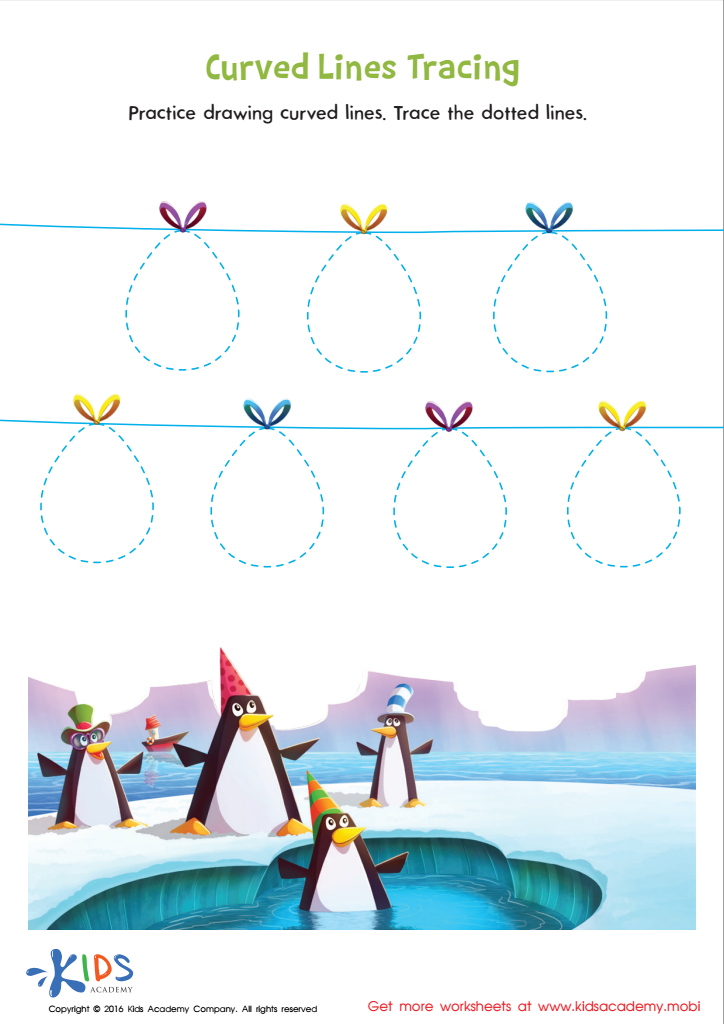
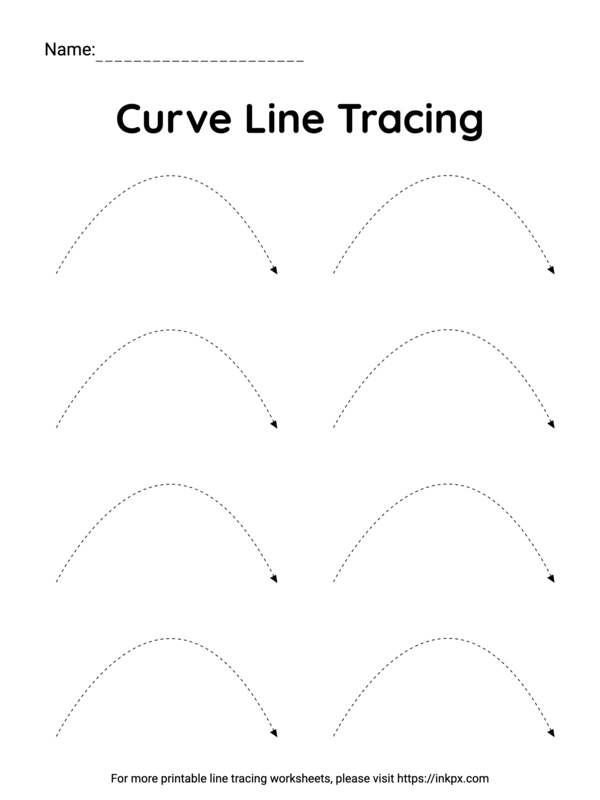
This specific printable resource focuses squarely on mastering directional curves, sweeping arcs, and rolling wave patterns. Children encounter sweeping loops, gentle hills, deep valleys, and continuous undulating tracks designed to train the tiny muscles in the hand and wrist. Navigating these fluid contours requires a delicate balance of downward pressure and forward motion. Unlike rigid straight lines, curves demand continuous adjustments in finger grip and arm posture. Exploring Shape and Line Tracing collections reveals how these foundational arcs evolve into complex geometric shapes and cursive lettering down the road. Every single stroke on the page serves as a physical exercise designed to refine visual-motor integration.
Key Learning Outcomes
Targeted curved stroke practice yields measurable growth across multiple developmental domains. Children cultivate dynamic tripod or quadrapod pencil grasps by sustaining smooth, uninterrupted movements across the page. Hand-eye coordination improves dramatically as developing eyes learn to anticipate the path of the pencil tip rather than merely reacting to it. Wrist stability strengthens, which directly enhances stamina during extended drawing or writing sessions. Cross-midline integration naturally occurs as hands travel smoothly from one side of the paper to the other without awkward shifts in posture. Mastery of these physical movements ultimately unlocks the foundational techniques found throughout the broader Fine Motor and Pre-Writing Skills category.
How to Use This Worksheet
Successful implementation depends entirely on keeping the experience engaging, pressure-free, and developmentally appropriate. Printing the sheet on heavy cardstock or slipping it into a dry-erase pocket creates a reusable surface that invites playful experimentation without the fear of making permanent mistakes. Adults should introduce the page through sensory exploration first, such as having fingers trace the large tactile curves in the air or in a shallow tray of sand. Pencils and crayons should match the developmental age of the child, favoring thicker, triangular writing utensils for younger learners who need help stabilizing their grip. Encouraging slow, deliberate movements rather than a hasty race to the finish line ensures that actual muscle conditioning takes place with every completed arc.
Practical Tips for Parents and Teachers
Observing hand mechanics closely helps adults identify when a child is fatiguing or compensating with an awkward grip. Adults can gently model correct hand positioning by sitting beside the learner and verbalizing the physical rhythm of the stroke, using descriptive words like swooping, rolling, and gliding. Scaffolding the activity involves physically guiding a hand through the first few tricky turns before stepping back to allow independent execution. Extending the challenge means inviting children to trace the identical curved paths using different mediums like paintbrushes, cotton swabs dipped in water, or colorful markers. Complementing these physical exercises with resources from the Alphabet And Numbers Tracing section helps tie curved pre-writing strokes directly into uppercase and lowercase letter formation like ‘c’, ‘s’, ‘o’, and ‘g’.
Age-Appropriate Expectations
Developmental progression follows a predictable sequence outlined in frameworks like the CDC milestones, where physical competencies emerge gradually over the early childhood years. Two- and three-year-olds typically interact with tracing pages through gross motor scribbling, full-arm movements, and grasping thick crayons with a fist. Four- and five-year-olds begin demonstrating finger isolation, more consistent crossing of the midline, and early attempts at controlled, directional curved lines. By ages six through eight, children refine their pencil pressure, exhibit consistent hand dominance, and execute intricate curves with speed and precision. Aligning expectations with these biological milestones prevents unnecessary frustration and keeps the writing table a positive space.
Pre-writing vertical and horizontal lines typically emerge around age two, while complex diagonal lines and curved strokes develop progressively between ages three and four. — Centers for Disease Control and Prevention
Frequently Asked Questions
Answers to common questions regarding printing, skill development, and motor progression appear below to support adults guiding young learners.
According to the National Association for the Education of Young Children, play-based fine motor activities like tracing and drawing are essential precursors to formal writing instruction in early childhood classrooms. — NAEYC
Explore More Free Printable Tracing Worksheets
Supporting a child’s journey toward fluent handwriting requires a diverse library of engaging, targeted practice materials. Exploring the full collection at KidTraces.com provides educators, parents, and therapists with endless options to keep little hands motivated. Whether transitioning from basic strokes into thematic challenges found in Seasonal and Fun Themes or reinforcing early literacy through Dotted Letters For Tracing, consistent and joyful practice builds lifelong writing confidence.
Developmental Milestone & Activity Table
| Development Stage | Recommended Daily Duration | Primary Learning Objective |
|---|---|---|
| Preschool & Pre-K | 10 – 15 Minutes | Pencil grip development & basic pre-stroke lines |
| Kindergarten | 15 – 20 Minutes | Letter/number formation & spatial line awareness |
| Early Elementary (Grade 1–2) | 20 – 30 Minutes | Fluency, sentence construction & neatness |
Images References