Introduction
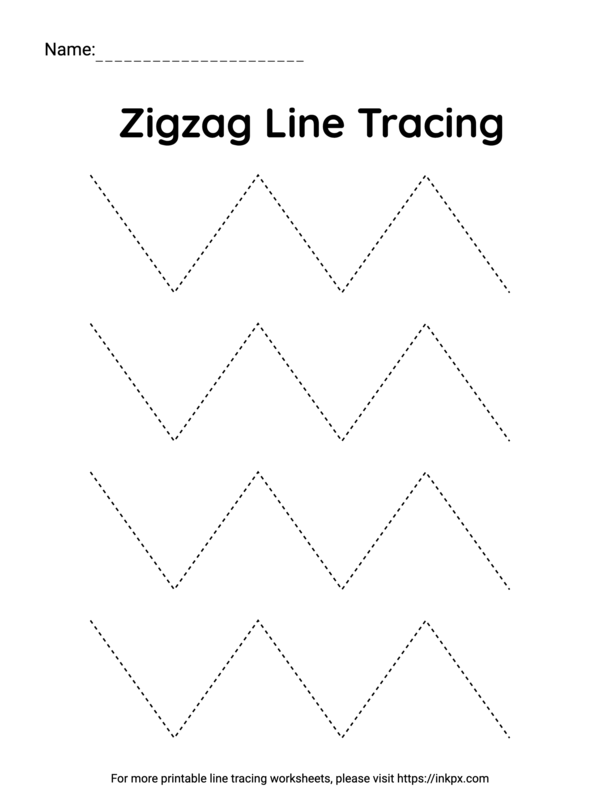
Many children recognize letters, shapes, and patterns long before their fine motor skills can consistently form them on paper. According to the American Occupational Therapy Association, foundational fine motor control and visual-motor integration are essential precursors to functional handwriting success. Translating visual understanding into physical pen control requires deliberate, structured practice targeting small hand muscles and finger dexterity. This is where specialized printables step in to bridge the gap between observation and physical execution. The free printable zig zag tracing lines worksheet provides targeted practice for mastering angular directional shifts, building hand strength, and refining pencil control for early learners.
💡 Educational Key Takeaways:
- Core Skill: Structured Zig Zag Tracing Lines focused on developing pencil grip, stroke control, and early literacy/math confidence.
- Target Scope: Suited for homeschoolers, preschool, kindergarten, and elementary learners.
- Best Recommendation: Practice 10–15 minutes daily with ergonomic writing tools to reinforce muscle memory without hand fatigue.
What This Worksheet Covers
Zig zag lines present a unique biomechanical challenge for young learners because they require continuous directional changes rather than smooth, flowing curves. Unlike horizontal or vertical strokes, sharp corners demand sudden stops, pivots, and intentional redirections of the writing instrument. Tracing these angular paths strengthens the intrinsic muscles of the hand while training the eyes to track ahead of the pencil tip. Developing this visual-motor coordination helps prepare children for the complex strokes required in the Shape and Line Tracing collection. It sounds simple, and that is the point: breaking down writing mechanics into manageable strokes lays a solid foundation for future academic tasks.
Key Learning Outcomes
Working through angular tracing pages directly enhances visual tracking, pencil pressure regulation, and bilateral coordination. Learners build spatial awareness as they navigate the peaks and valleys of each directional shift. Wrist stability improves organically as hands learn to anchor and pivot smoothly at each sharp corner. Furthermore, children develop sustained focus and task persistence, learning to slow down at critical junction points instead of rushing through the strokes. These gains naturally translate into the foundational motor patterns required for Fine Motor and Pre-Writing Skills development.
How to Use This Worksheet
Success with pre-writing sheets depends heavily on posture, paper placement, and writing tools. Positioning the paper at a slight angle matching the child’s forearm promotes a natural wrist posture and prevents hand fatigue. It helps to begin with thick writing instruments like short crayons or chunky markers, which naturally encourage an efficient grasp before transitioning to standard pencils. Adults can demonstrate the motion first, tracing an imaginary line in the air while using verbal cues like “up, down, pivot” to anchor the physical movement in sensory memory. When children struggle with corners, gentle hand-over-hand guidance helps them feel the precise pivot point before they attempt the stroke independently.
Practical Tips for Parents and Teachers
Scaffolding practice ensures frustration stays low and skill growth remains steady. If standard paper sheets feel too challenging, slip the printable inside a dry-erase pocket and let children trace the paths with a dry-erase marker first. The tactile feedback and forgiving nature of erasable markers build early confidence before permanent pencil marks enter the picture. To extend the learning for advanced children, encourage them to trace the paths using colored cotton swabs dipped in paint or by placing tiny manipulative stickers along the angular tracks. Always praise effort and steady control over speed, reinforcing that neat, thoughtful lines matter far more than finishing quickly.
Age-Appropriate Recommendations
According to the National Association for the Education of Young Children Developmentally Appropriate Practice, toddlers and young preschoolers benefit most from large-scale, gross-motor pre-writing experiences before moving to fine motor paper tasks. For children ages two to four, printables should feature wide, spaced-out zig zag lines that accommodate developing wrist and finger control. Children ages five through eight can handle tighter angles and finer line widths, aligning with educational benchmarks that emphasize precise pencil grip and controlled letter formation. Integrating these engaging paths prepares young writers to transition smoothly toward early letter and numeral formation found within the Alphabet And Numbers Tracing resources.
Foundational fine motor control and visual-motor integration are essential precursors to functional handwriting success. — American Occupational Therapy Association
Frequently Asked Questions
Navigating early childhood writing practice often brings up practical questions regarding materials, timing, and skill progression. Below are answers to common inquiries from educators and families supporting young learners.
Explore More Free Printable Tracing Worksheets
Supporting a young writer involves offering a rich variety of engaging, developmentally appropriate practice materials that keep motivation high. Exploring different line weights, shapes, and thematic templates ensures children maintain enthusiasm while steadily strengthening their hand muscles and pencil control. Discover a wide selection of teacher-approved printables designed to build lifelong writing confidence by visiting the full library at KidTraces.com.
Developmental Milestone & Activity Table
| Development Stage | Recommended Daily Duration | Primary Learning Objective |
|---|---|---|
| Preschool & Pre-K | 10 – 15 Minutes | Pencil grip development & basic pre-stroke lines |
| Kindergarten | 15 – 20 Minutes | Letter/number formation & spatial line awareness |
| Early Elementary (Grade 1–2) | 20 – 30 Minutes | Fluency, sentence construction & neatness |
Images References