Introduction
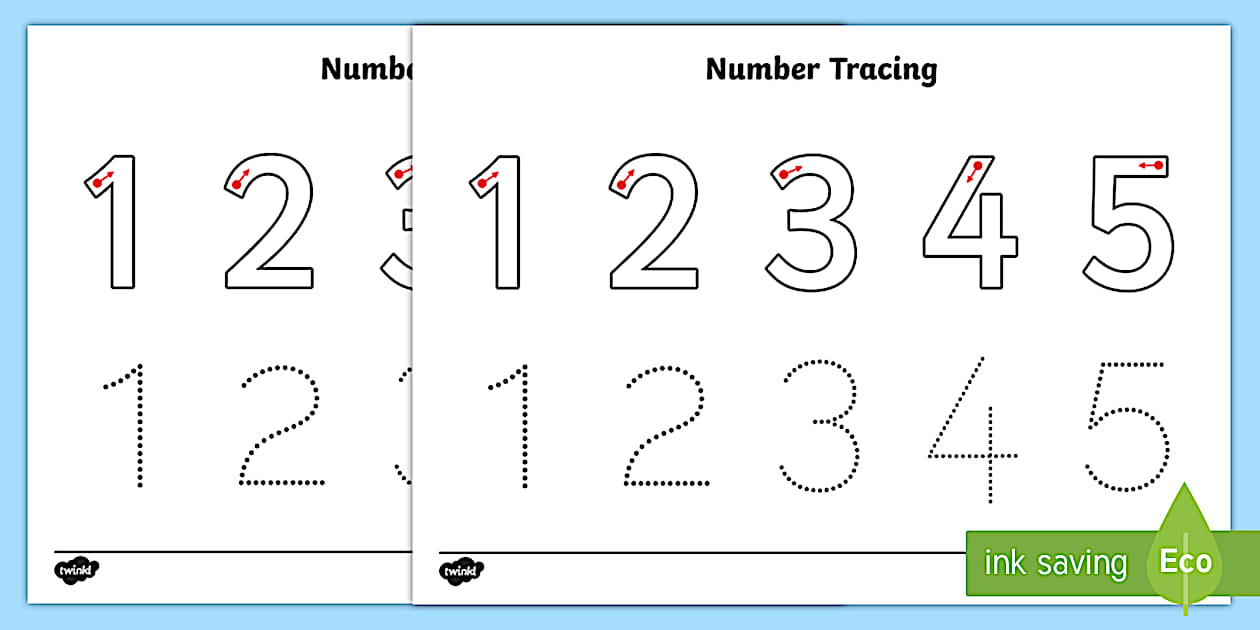
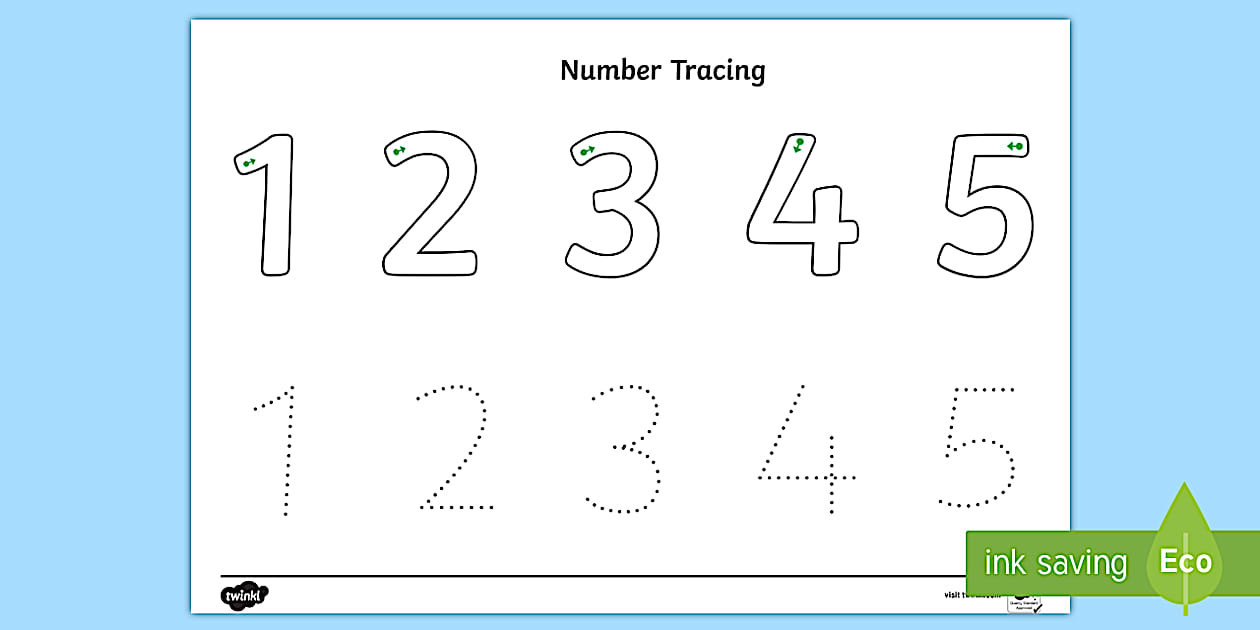
Young children frequently recognize numbers long before developing the hand strength and coordination required to form them manually. According to the National Association for the Education of Young Children (NAEYC), early writing experiences should focus on purposeful communication and physical readiness rather than rigid drill-and-kill mechanics. Many classrooms and therapy clinics observe this exact developmental gap, where cognitive understanding outpaces fine motor execution. Bridging that gap requires gentle, structured practice that builds muscle memory without causing hand fatigue. Entering this foundational stage, the free printable number trace 1 – 5 provides an accessible starting point for young learners mastering early numeracy and pencil control simultaneously. Through targeted dotted lines and clear visual cues, children transition from simply identifying digits to physically rendering them on the page. It sounds simple, and that is the exact point of early childhood pedagogy. Explore more in our Tracing Number category.
💡 Technical Key Takeaways:
- Core Focus: Diagnostic schematic and terminal connection layout for Number Trace 1 – 5.
- Target Scope: Field technicians, automotive DIYers, and residential/commercial electricians.
- Safety Rule: Always disconnect the primary power source/battery terminal and verify zero voltage with a multimeter before touching wires.
What This Worksheet Covers
The number trace 1 – 5 worksheet focuses on foundational numeral formation, stroke order, and spatial awareness within a controlled workspace. Each digit is presented with visual starting dots and directional arrows that guide the hand through the correct sequence of strokes, preventing the formation of awkward habits that are difficult to correct later. Many children attempt to draw the number three from the bottom up or create the number five in a single, disconnected series of erratic lines. This worksheet gently corrects those tendencies by breaking each numeral down into manageable, sequential movements. Alongside basic formation, the resource reinforces number recognition and counting cardinality, connecting the physical act of tracing with genuine mathematical comprehension. Children learn not only how to draw the shape, but also what the quantity represents in the real world, reinforcing neural pathways across both motor and cognitive domains.
Key Learning Outcomes
Working through these early tracing exercises cultivates critical fine motor control, including bilateral hand coordination, sustained pencil pressure, and visual-motor integration. Learners build essential finger dexterity and intrinsic hand muscle strength by gripping writing utensils and maintaining consistent contact with the paper along curved and straight paths. Furthermore, completing the sequences instills a strong sense of directionality, teaching young eyes and hands to move consistently from top to bottom and left to right. This directional fluency serves as a direct precursor to legible handwriting and reading tracking. As children repeat the strokes for digits one through five, their muscle memory solidifies, eventually allowing them to form the numerals automatically without conscious visual oversight. Such automaticity frees up cognitive bandwidth for higher-level math and writing tasks later in the academic journey.
How to Use This Worksheet
Successful implementation begins by presenting the activity in a low-pressure environment where mistakes are treated as normal parts of the learning process. Adults should ensure the workspace features child-sized seating with feet flat on the floor, supporting core stability that directly influences hand control. Before touching a pencil to the paper, children benefit from air-writing the numbers using big arm movements to internalize the shape and direction of each stroke. According to the American Occupational Therapy Association (AOTA), addressing postural stability and proximal control significantly improves distal fine motor performance during table-top tasks. Tracing can also be made multi-sensory by placing the printable inside a dry-erase sleeve or tracing over the lines with a finger dipped in paint, salt, or shaving cream before picking up a traditional writing tool.
Practical Tips for Parents and Teachers
Adults should actively model the correct pencil grip, encouraging a tripod or modified quadrupod grasp rather than a tightly clenched fist or fisted grasp. Scaffolding the activity means starting with hand-over-hand assistance for the youngest learners, gradually fading support until the child can complete the strokes independently with only verbal or visual prompts. If a child demonstrates hand fatigue, shaking out the hands or taking a tactile break helps prevent frustration and negative associations with writing. When extending the lesson, educators and caregivers can ask the child to find and point to physical objects around the room that match the traced number, such as locating three books or five crayons. This intentional variety keeps engagement high while reinforcing the bridge between abstract numerals and concrete quantities in the immediate environment.
Age-Appropriate Recommendations
For children ages two to four, the focus aligns closely with the NAEYC Developmentally Appropriate Practice guidelines, prioritizing gross motor exploration, pre-writing strokes, and sensory engagement over rigid perfection. At this stage, adults should accept approximations and focus primarily on enjoyment and positive exposure to pencil tools. For children ages five to eight, the expectations shift toward precision, correct stroke sequence, and neatness, often aligning with foundational mathematics and handwriting curricula. During these kindergarten and early elementary years, tracing acts as a warm-up exercise or a targeted intervention for learners who need extra support with spatial boundaries on lined paper. Exploring resources within the broader Tracing Worksheets collection allows adults to find materials tailored precisely to each child’s current developmental window, whether they require basic line control or complex letter formation.
Early intervention in fine motor control and directional stroke formation significantly reduces future handwriting difficulties in primary school. — American Occupational Therapy Association (AOTA)
Frequently Asked Questions
Clear answers regarding the download process, fine motor benefits, and developmental milestones help caregivers maximize the educational value of these printable tracing resources.
Explore More Free Printable Tracing Worksheets
Supporting a young learner through the foundational stages of pencil control and early literacy is an exciting journey filled with small victories. Expanding beyond simple numbers opens up new avenues for growth, allowing children to practice essential pre-writing skills through specialized formats like Shape and Line Tracing and targeted Alphabet And Numbers Tracing exercises. Every child develops at an individualized pace, requiring flexible resources that adapt to their unique readiness levels and interests. To discover a comprehensive library of supportive materials designed for home and classroom environments, visitors are warmly invited to explore the complete collection available at KidTraces.com.
Quick Wiring Specifications & Terminal Guide
| Component / Circuit | Standard Wire Gauge | Recommended Protection |
|---|---|---|
| Control & Trigger Signals | 18 – 20 AWG | 5A – 7.5A Inline Fuse |
| Standard Auxiliary Load | 14 – 16 AWG | 15A – 20A Circuit Breaker |
| Main Power Feed / Supply | 10 – 12 AWG | 30A – 40A Heavy-Duty Relay |
Images References