Introduction
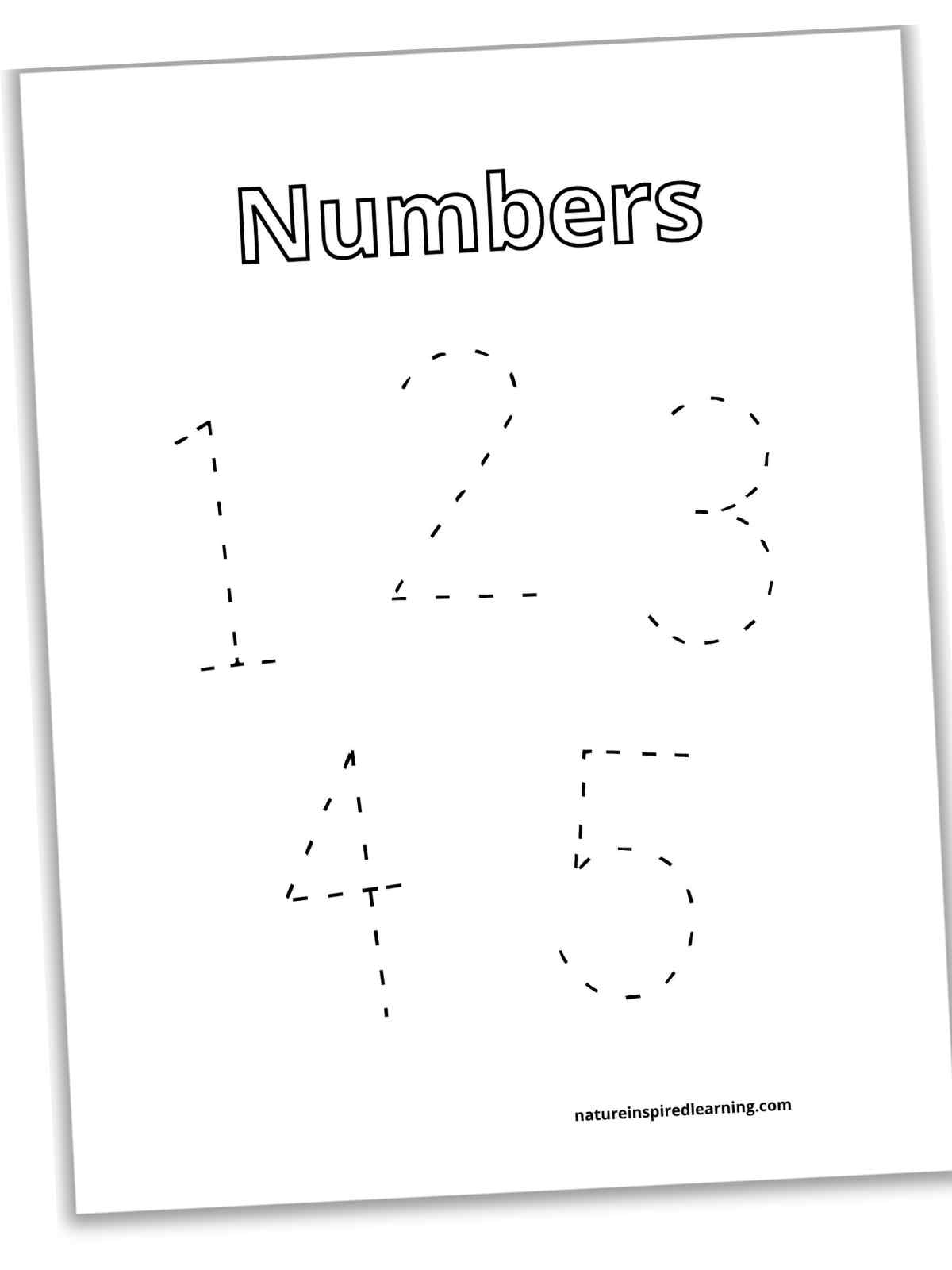
Many children recognize symbols, shapes, and numbers long before their fine motor coordination and hand strength allow them to cleanly form those same marks on paper. According to the National Association for the Education of Young Children (NAEYC), developmentally appropriate practice requires balancing young children’s eagerness to learn academic concepts with physical readiness for pencil manipulation. Watching a preschooler point enthusiastically to a numeral on a page while struggling to grip a writing utensil highlights a classic developmental gap. This is where targeted pre-writing practice bridges the divide. The free printable tracing of numbers 1 too 5 provides an accessible, structured pathway for young learners transitioning from visual recognition to physical execution, laying the foundational muscle memory required for lifelong writing fluency.
💡 Educational Key Takeaways:
- Core Skill: Structured Tracing Of Numbers 1 Too 5 focused on developing pencil grip, stroke control, and early literacy/math confidence.
- Target Scope: Suited for homeschoolers, preschool, kindergarten, and elementary learners.
- Best Recommendation: Practice 10–15 minutes daily with ergonomic writing tools to reinforce muscle memory without hand fatigue.
What This Worksheet Covers
Mastering early numerals involves much more than simply memorizing the sequence of digits. The layout of these foundational numerical templates guides young hands through precise stroke order, directional awareness, and spatial control. Starting points are clearly established to teach children where a movement begins, which prevents the development of inefficient writing habits that are difficult to correct later. Furthermore, practicing the sequence from one to five reinforces early mathematical understanding alongside pencil control. Exploring these digits establishes a rhythm of vertical lines, diagonal slopes, and continuous curves. For broader coordination practice, integrating resources from the Fine Motor and Pre-Writing Skills collection helps build the underlying hand strength necessary for sustained writing stamina.
Key Learning Outcomes
Children engaging with these numerical templates develop precise directional control by moving from top to bottom and left to right. Visual-motor integration improves as tiny hands learn to visually track a dotted path while simultaneously translating that input into hand movements. Muscle memory forms naturally through repeated, correct stroke sequencing for each individual numeral. Spatial awareness is reinforced as learners practice sizing their digits within defined boundaries on the page. Finally, cognitive association between the numerical symbol, its spoken name, and its physical formation solidifies permanently during this repeated practice.
How to Use This Worksheet
Success with early tracing materials depends heavily on preparation and posture. Adults often rush straight to paper, but seating children with their feet flat on the floor and hips at a ninety-degree angle creates the stable core support needed for hand control. It sounds simple, and that is the point: proximal stability yields distal mobility. Setting up a distraction-free space with a short-barreled crayon or a broken piece of chalk encourages a natural tripod grasp by physically preventing over-wrapping of the fingers. Here is what makes this worksheet different: it emphasizes quality of movement over quantity of completed pages, honoring the fatigue levels of developing hand muscles.
Practical Tips for Parents and Teachers
Adults should always model correct stroke formation in the air or on a vertical surface before asking a child to put pencil to paper. Scaffolding the activity by physically guiding a hand through the first couple of strokes builds confidence and demonstrates the expected motion. Extending the learning comes naturally by counting physical objects like blocks or buttons that match the number being traced on the page. For added variety and multisensory engagement, pairing these sheets with options from the Shape and Line Tracing category prepares hands for more complex directional shifts.
Age-Appropriate Recommendations
According to the Centers for Disease Control and Prevention (CDC) developmental milestones, toddlers around age two or three typically begin imitating vertical and horizontal lines. For children ages two to four, these tracing pages work best when enlarged, laminated, and used with thick dry-erase markers or fingers dipped in paint. As children progress into the five-to-eight age range, guided by frameworks such as Handwriting Without Tears, the focus shifts toward standard writing instruments, correct proportional sizing, and independent line control. During these early elementary years, mastering the curves and straight lines of digits one through five cements the automaticity required for higher-level math and writing tasks.
Early fine motor control and consistent pencil manipulation strongly predict later academic success and writing legibility. — National Association for the Education of Young Children (NAEYC)
Frequently Asked Questions
Navigating early childhood writing development often brings up practical questions about materials, readiness, and pacing. The answers below address the most common inquiries from parents and educators seeking to support young learners effectively.
Explore More Free Printable Tracing Worksheets
Supporting a young child’s journey toward writing fluency requires a rich variety of accessible, engaging materials. Beyond numerical practice, expanding into diverse subjects keeps motivation high and challenges different muscle groups. Exploring the full library of resources available at KidTraces.com provides endless opportunities for growth. Whether looking for letter formation found in Alphabet And Numbers Tracing or engaging holiday layouts from Seasonal and Fun Themes, every educator and parent can find tools tailored to specific developmental stages. Consistent, joyful practice paves the way for a lifetime of confident writing and learning.
Developmental Milestone & Activity Table
| Development Stage | Recommended Daily Duration | Primary Learning Objective |
|---|---|---|
| Preschool & Pre-K | 10 – 15 Minutes | Pencil grip development & basic pre-stroke lines |
| Kindergarten | 15 – 20 Minutes | Letter/number formation & spatial line awareness |
| Early Elementary (Grade 1–2) | 20 – 30 Minutes | Fluency, sentence construction & neatness |
Images References