Introduction
Watch any group of young learners in a classroom, and a familiar pattern emerges very quickly: children recognize complex numbers and symbols long before their developing hands possess the intrinsic muscle strength required to form them on paper. According to the National Association for the Education of Young Children (NAEYC), developmentally appropriate practice requires balancing academic expectations with the physical readiness of the child. Bridging this gap between cognitive awareness and physical capability takes intentional practice, particularly when young minds transition from single digits to the double-digit territory of the fifties and sixties. The free printable tracing numbers 51 60 serves as a targeted bridge during this exact developmental window, offering structured numeral formation practice that respects both physical stamina and cognitive growth. Many adults underestimate the physical toll that sustained pencil control takes on small hands, making purposeful materials essential for early numeracy and literacy foundations.
💡 Educational Key Takeaways:
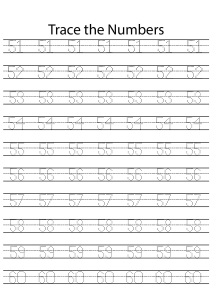
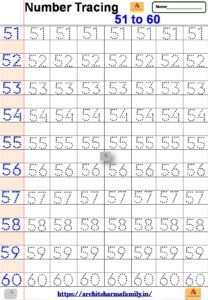
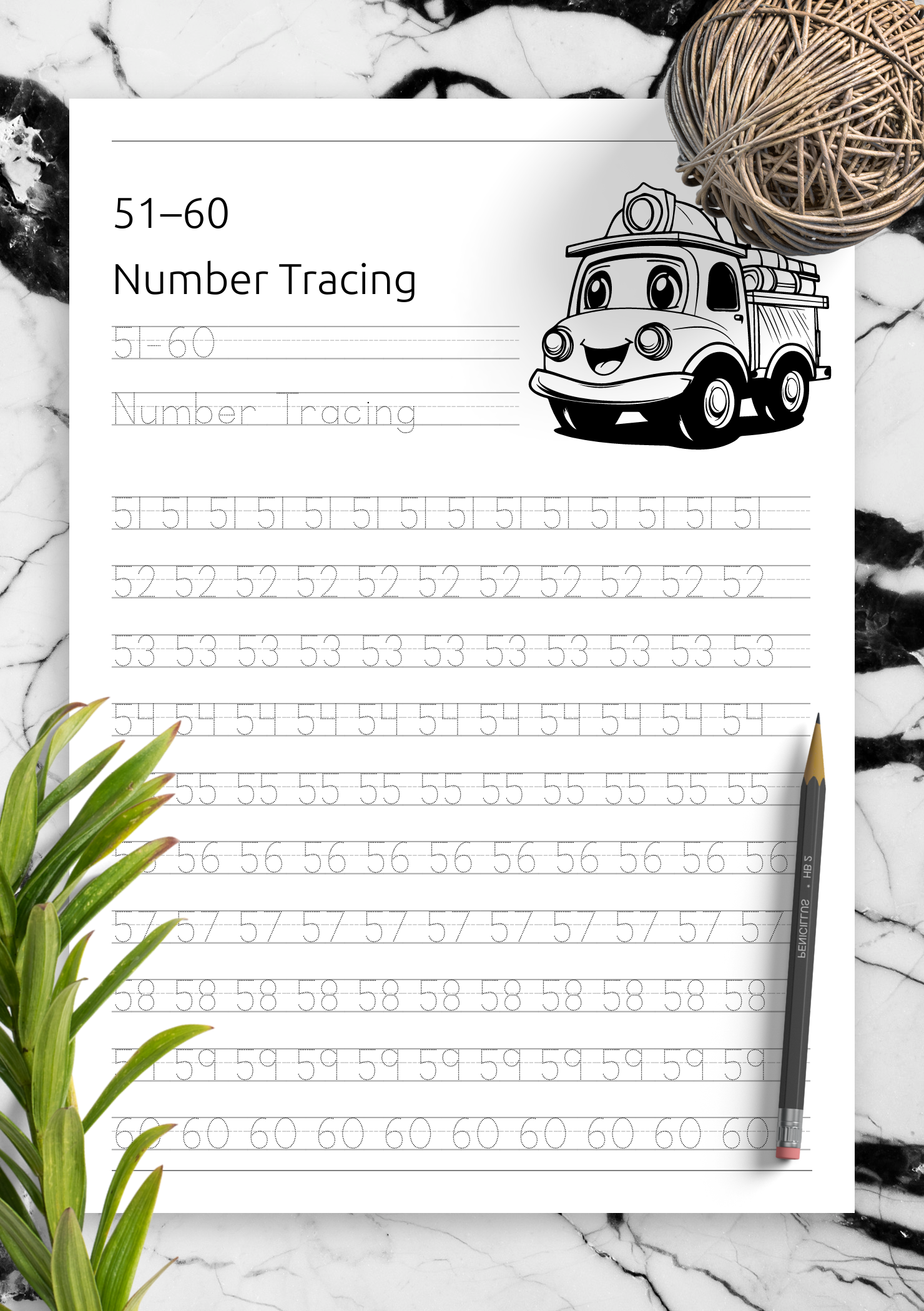
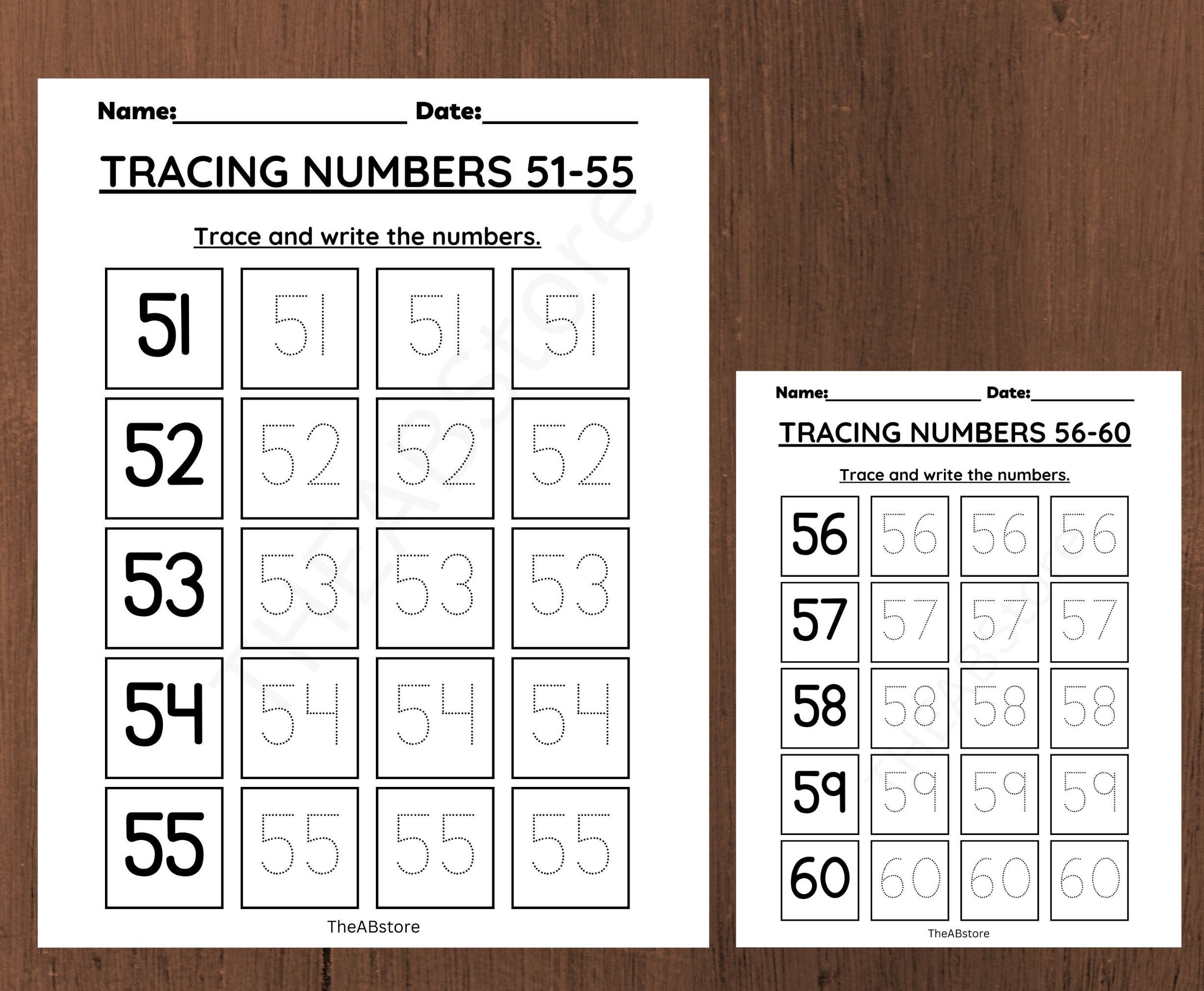
- Core Skill: Structured Tracing Numbers 51 60 focused on developing pencil grip, stroke control, and early literacy/math confidence.
- Target Scope: Suited for homeschoolers, preschool, kindergarten, and elementary learners.
- Best Recommendation: Practice 10–15 minutes daily with ergonomic writing tools to reinforce muscle memory without hand fatigue.
What This Worksheet Covers
This specific printable focuses exclusively on numeral formation, stroke order, and visual tracking within the fifty-one to sixty numerical sequence. Moving past the initial twenty numbers introduces multi-digit combinations that require children to maintain consistent sizing, spacing, and directional flow across the page. Every line and curve is purposefully engineered to reinforce proper starting points, ensuring that learners do not develop inefficient habits like bottom-up drawing. Directionality remains a cornerstone of early writing instruction, helping children distinguish between similar-looking digits while building spatial awareness. Furthermore, as children anchor these numbers into memory, resources found within Tracing Number collections help solidify the foundational mechanics required for lifelong writing fluency and mathematical confidence.
Key Learning Outcomes
Targeted engagement with these specific numerals yields several vital developmental milestones that support broader academic success. Learners master precise pencil control by navigating the precise starting points and directional arrows embedded within each dotted outline. Hand-eye coordination improves significantly as little fingers guide writing tools along continuous strokes, reducing erratic lines and jerky movements. Number recognition deepens concurrently with motor memory, creating a strong neural pathway between the visual symbol, its verbal name, and the physical act of creation. Spatial organization naturally emerges as children learn to fit two-digit numbers within designated writing boundaries, setting the stage for clean math alignment in later elementary grades.
How to Use This Worksheet
Introducing a multi-digit number sheet requires a slow, deliberate pace rather than a rushed race to finish the page. Adults should first demonstrate the correct stroke sequence in the air or on a larger surface, verbalizing the motion while the child watches closely. Allowing children to trace the numbers with a finger before introducing a pencil helps internalize the physical trajectory without the added friction of a writing instrument. Encouraging brief movement breaks prevents hand fatigue, which frequently manifests as a tight, white-knuckled grasp or slumped posture. Integrating these sheets alongside physical manipulatives like counting blocks transforms abstract digits into tangible quantities that make mathematical sense to young learners.
Practical Tips for Parents and Teachers
Observing pencil grip closely during tracing sessions ensures that habits remain functional and pain-free over extended periods. Teachers and caregivers can scaffold the experience by fading physical hand-over-hand assistance into verbal prompts, eventually letting the child work independently. Shorter, frequent practice sessions yield far better motor retention than long, exhausting blocks of writing time that trigger frustration. Extending the activity by having children write the numbers independently on blank paper provides a valuable check for understanding. When learners need a break from numerical sequences, shifting focus toward Fine Motor and Pre-Writing Skills helps maintain enthusiasm without losing developmental momentum.
Age-Appropriate Recommendations
Children around age five typically begin exploring two-digit numbers as part of standard kindergarten readiness milestones, aligning with developmental expectations outlined by the Centers for Disease Control and Prevention (CDC) for early cognitive and motor progression. For younger preschoolers aged three to four, the emphasis remains on gross motor lines and foundational shapes found in Shape and Line Tracing, preparing small hand muscles for eventual numeral work. By ages six to eight, children utilize these specific numerical tracing sheets to refine sizing consistency, speed, and automaticity. Tailoring expectations to the specific developmental stage prevents undue stress and fosters a genuine, lasting love for learning.
Young children frequently develop strong cognitive recognition of numbers long before their fine motor stamina and intrinsic hand muscles are fully equipped to form multi-digit sequences smoothly on paper. — Early Childhood Occupational Therapy Observations
Frequently Asked Questions
Clear answers to common questions help caregivers maximize the educational value of early writing practice.
Explore More Free Printable Tracing Worksheets
Supporting a child’s early educational journey involves nurturing curiosity across a wide variety of subjects, from letters and numbers to seasonal concepts and creative writing. Exploring the comprehensive collection available across KidTraces.com offers educators and families endless opportunities to keep practice fresh, engaging, and developmentally appropriate. Every printable is designed with care to ensure that small hands build the confidence and strength they need for academic success, whether through targeted numeral practice or broader explorations found in Tracing Worksheets.
Developmental Milestone & Activity Table
| Development Stage | Recommended Daily Duration | Primary Learning Objective |
|---|---|---|
| Preschool & Pre-K | 10 – 15 Minutes | Pencil grip development & basic pre-stroke lines |
| Kindergarten | 15 – 20 Minutes | Letter/number formation & spatial line awareness |
| Early Elementary (Grade 1–2) | 20 – 30 Minutes | Fluency, sentence construction & neatness |
Images References