Introduction
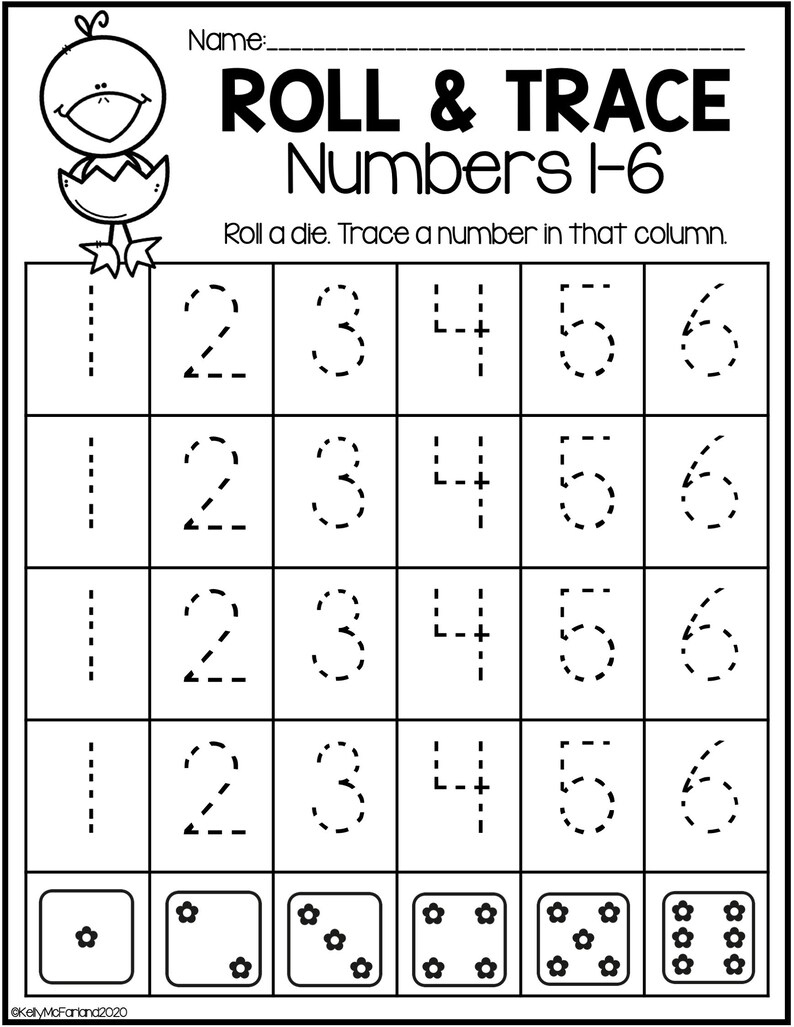
Many children recognize numerals long before their developing fine motor muscles possess the strength and endurance to form those digits on paper. According to the American Occupational Therapy Association, foundational fine motor control and bilateral coordination are essential prerequisites for functional handwriting and numeral formation. Bridging this gap requires engaging, low-stress activities that transform repetitive writing drills into playful, interactive experiences. The free printable roll and trace the number activity bridges this exact developmental divide, blending the excitement of a game with targeted pencil control practice. It sounds simple, and that’s the point: by introducing dice into the writing routine, young learners forget they are working on pencil grip and focus entirely on the joy of the roll. Exploring resources within Tracing Number collections often reveals how much faster children progress when tactile elements join visual tracing tasks.
💡 Technical Key Takeaways:
- Core Focus: Diagnostic schematic and terminal connection layout for Roll And Trace The Number.
- Target Scope: Field technicians, automotive DIYers, and residential/commercial electricians.
- Safety Rule: Always disconnect the primary power source/battery terminal and verify zero voltage with a multimeter before touching wires.
What This Worksheet Covers
Numeral tracing worksheets demand a unique combination of visual-spatial awareness, directional precision, and sustained hand muscle control. Children must navigate curves, straight lines, and diagonal strokes while maintaining consistent pressure on the writing utensil. This specific printable turns numeral practice into a dynamic challenge where a rolling die dictates which number gets traced next. Here is what makes this worksheet different: it eliminates the monotony of standard rows by randomizing the writing sequence, keeping the nervous system alert and engaged. As children scan the page for the corresponding numeral, they practice vital visual scanning and matching skills that directly support early math fluency alongside fine motor agility. Additional practice sheets can be discovered in the broader Tracing Worksheets archive for continuous skill-building.
Key Learning Outcomes
Learners engaging with this printable build critical competencies that extend far beyond simple pencil marks. Proper stroke order and directional habits develop naturally as children repeatedly trace guided paths, reducing the likelihood of later reversal habits. Hand-eye coordination sharpens significantly with every transition from the dice roll to the specific grid square on the paper. Furthermore, intrinsic motivation skyrockets because the game format gives learners autonomy over their practice sequence. Fine motor endurance builds incrementally as little hands grip crayons or pencils long enough to complete multiple rounds of rolling and tracing.
How to Use This Worksheet
Setting up this activity requires nothing more than a printed sheet, a standard die, and a favorite writing tool. Children roll the die, identify the resulting number, locate that digit on the page, and trace along the dotted lines using proper formation rules. Teachers and caregivers often laminate these sheets or slide them into clear dry-erase pockets to encourage repeated play without running out of fresh paper. When children make a mistake or want another turn, a quick wipe clears the slate entirely. This low-stakes environment builds resilience and encourages kids to experiment with pencil control without the fear of permanent errors on a page.
Practical Tips for Parents and Teachers
Adults play a powerful scaffolding role during early handwriting practice by monitoring grip posture and posture at the table. Modeling an efficient tripod grasp before starting the game helps prevent early hand fatigue and cramping during longer writing sessions. When a child struggles with a specific numeral like a three or a five, temporarily guiding their hand through the correct starting point provides the necessary neuromuscular feedback. Caregivers can easily extend the challenge by asking children to count aloud or tally how many times a specific number appears. For further tactile engagement and pre-writing skill reinforcement, educators frequently turn to Fine Motor and Pre-Writing Skills materials.
Age-Appropriate Recommendations
According to the National Association for the Education of Young Children guidelines for developmentally appropriate practice, children aged two to four benefit most from sensory-rich pre-writing experiences and larger writing tools that accommodate palmar and digital grasps. For toddlers and preschoolers, larger dice and thicker writing implements ensure success and prevent frustration. By ages five through eight, as outlined in Common Core standard K.CC.A.3, children transition toward writing numbers from zero to twenty with correct formation and spacing. At this older stage, the roll and trace format serves as an effective independent center activity that reinforces automaticity and fluency in numeral writing.
Foundational fine motor control and bilateral coordination are essential prerequisites for functional handwriting and numeral formation. — American Occupational Therapy Association
Frequently Asked Questions
Clear answers to common questions help parents and educators maximize the developmental benefits of daily tracing practice in home and classroom environments alike.
Explore More Free Printable Tracing Worksheets
Supporting a young writer’s journey involves offering a wide variety of engaging, developmentally appropriate challenges that grow alongside the child. Exploring the full library of resources available at KidTraces.com provides endless opportunities to nurture early literacy, pencil control, and cognitive confidence. Every child deserves access to playful learning tools that make skill acquisition feel like an adventure rather than a chore. Dive into the complete collection today to find fresh inspiration for your learning environment.
Quick Wiring Specifications & Terminal Guide
| Component / Circuit | Standard Wire Gauge | Recommended Protection |
|---|---|---|
| Control & Trigger Signals | 18 – 20 AWG | 5A – 7.5A Inline Fuse |
| Standard Auxiliary Load | 14 – 16 AWG | 15A – 20A Circuit Breaker |
| Main Power Feed / Supply | 10 – 12 AWG | 30A – 40A Heavy-Duty Relay |
Images References