Introduction
Many children recognize numerals long before their developing hands possess the intrinsic muscle strength required to form them on paper. According to the American Occupational Therapy Association, foundational fine motor control and bilateral coordination are essential prerequisites for functional classroom writing tasks. Bridging this gap requires targeted, developmentally sound practice tools that transform abstract mathematical concepts into manageable physical movements. The free printable number worksheets 21 to 30 printable offer a structured approach to early numeracy and pencil control. Every stroke matters when establishing proper directional habits during the early childhood years.
💡 Educational Key Takeaways:
- Core Skill: Structured Free Printable Number Worksheets 21 To 30 Printable focused on developing pencil grip, stroke control, and early literacy/math confidence.
- Target Scope: Suited for homeschoolers, preschool, kindergarten, and elementary learners.
- Best Recommendation: Practice 10–15 minutes daily with ergonomic writing tools to reinforce muscle memory without hand fatigue.
What This Worksheet Covers
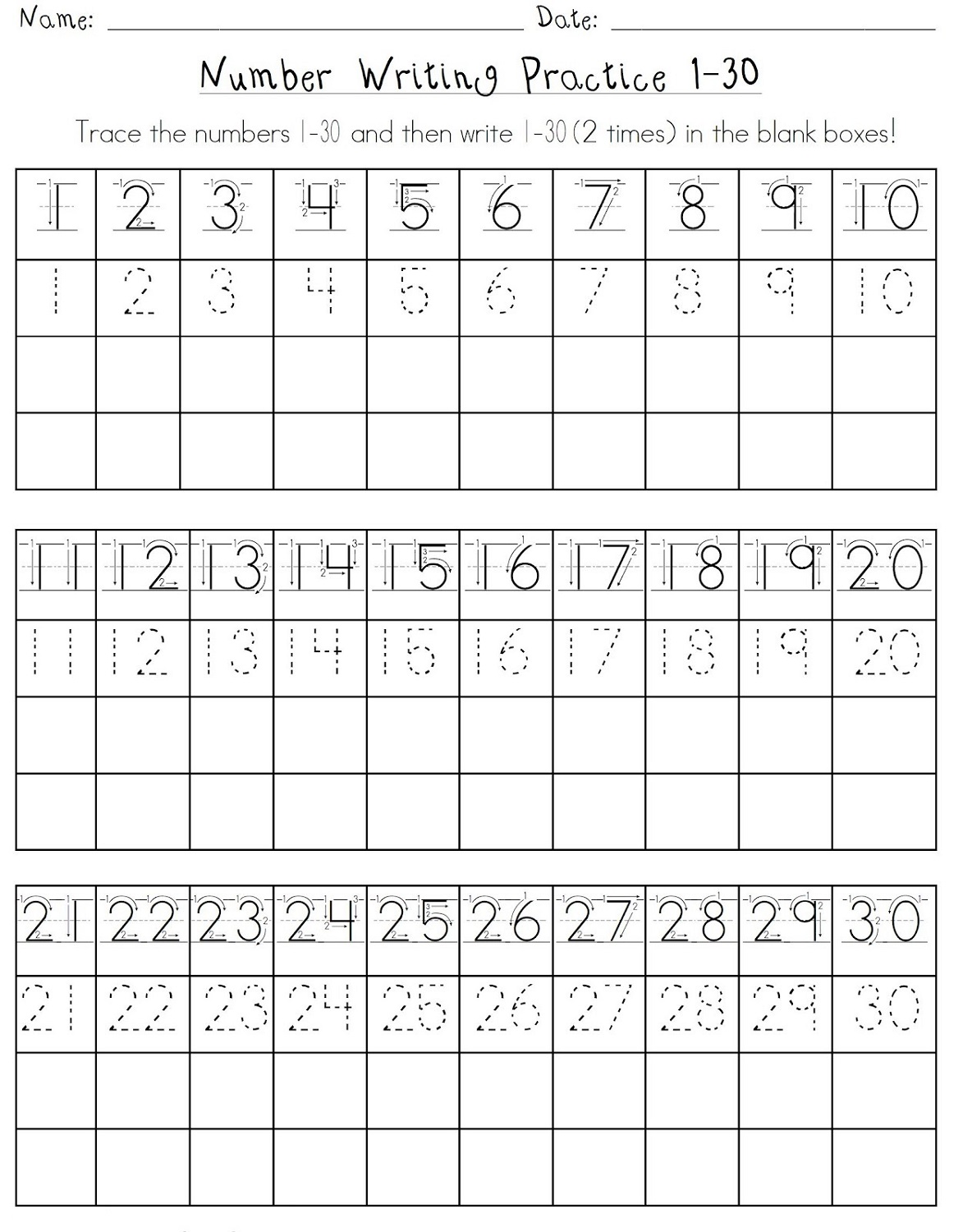
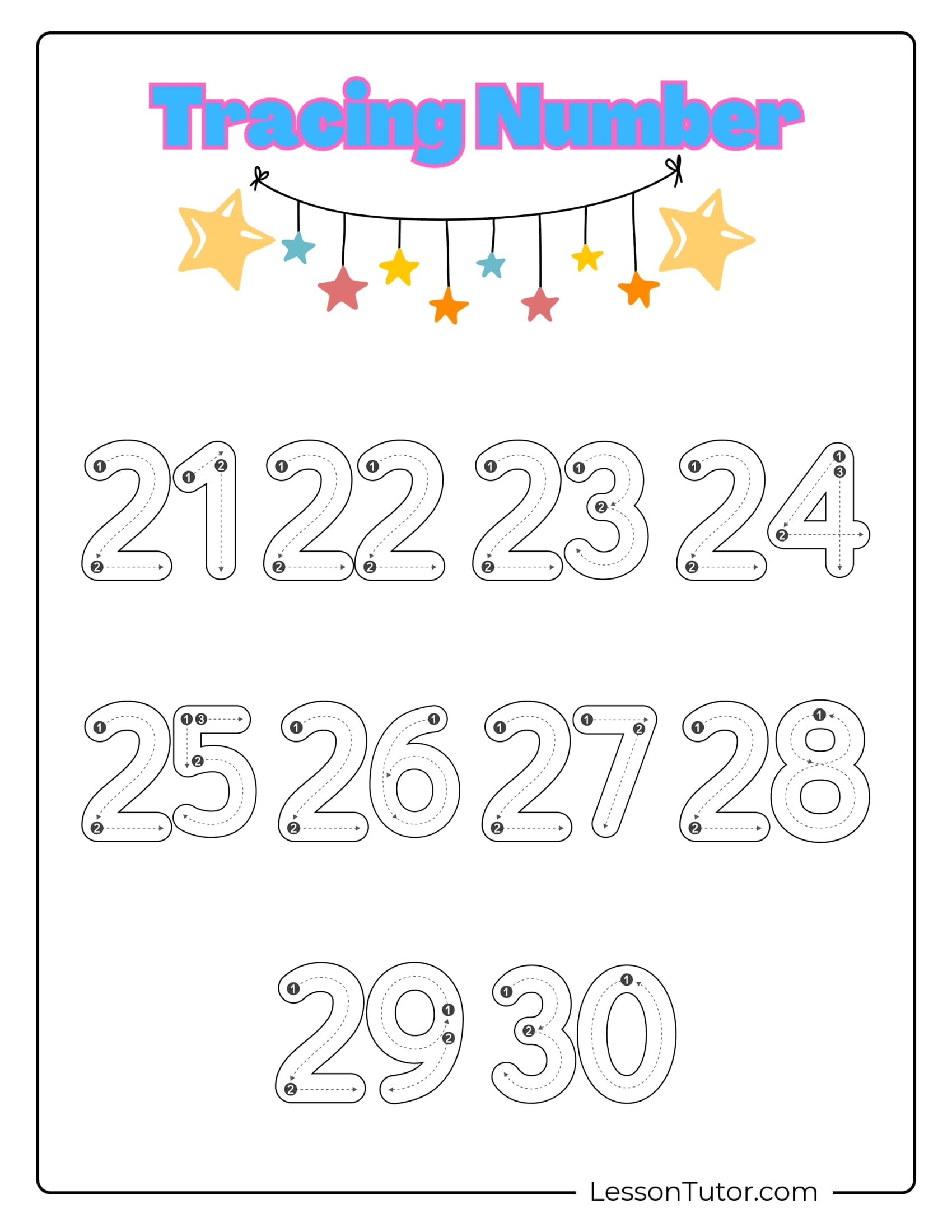
Mastering numbers beyond twenty introduces multi-digit formation, requiring children to understand spatial sequencing, proportional sizing, and correct directional flow. This resource focuses explicitly on numerals twenty-one through thirty, providing ample guided practice for each specific digit combination. Learners encounter large, clear models that demonstrate starting points and stroke sequences, reducing the frustration often associated with blank pages. It sounds simple, and that is the point: removing visual clutter allows developing brains to focus entirely on the physical act of formation.
Key Learning Outcomes
Targeted numeral tracing builds essential competencies that extend far beyond simple math recitation. Children strengthen hand-eye coordination by keeping writing utensils accurately within boundary lines. Spatial awareness improves significantly as learners manage the spacing required for two-digit numbers, distinguishing between tens and ones columns. Furthermore, repeated exposure to these specific formations enhances motor memory, allowing numeral creation to eventually become automatic. This foundational fluency supports broader mathematical concepts explored across various Tracing Number resources available for daily practice.
How to Use This Worksheet
Introducing multi-digit worksheets effectively requires patience, observation, and a supportive learning environment. Educators and caregivers should begin by demonstrating the correct stroke order in the air or on a small chalkboard before putting a pencil to paper. According to Reading Rockets, multi-sensory approaches significantly improve a child’s ability to retain letter and number formations. Allowing children to trace numerals with a finger first helps activate the proprioceptive feedback loops necessary for motor planning. Once the physical motion feels familiar, transition smoothly to crayons, short pencils, or markers.
Practical Tips for Parents and Teachers
Pencil grip heavily influences handwriting endurance, making early intervention crucial if an awkward grasp appears. Adults can gently encourage an efficient tripod or quadripod grasp by utilizing shorter writing utensils, which naturally prevent fist-grasping habits. Scaffolding the activity is another powerful strategy; rather than demanding completion of all ten numbers in one sitting, focus on two or three digits per session. Extending the activity outdoors by having children trace large numbers in the dirt or sand provides valuable tactile reinforcement. For children refining their foundational hand movements, pairing these numerical exercises with activities from Fine Motor and Pre-Writing Skills yields noticeable improvements.
Age-Appropriate Recommendations
According to the National Association for the Education of Young Children guidelines on developmentally appropriate practice, children aged four to six are actively refining their fine motor control and visual-motor integration. Younger children within this bracket benefit greatly from larger tracing models and thicker writing instruments to accommodate developing palmar arches. Older children ages six to eight utilize these exact sheets to refine precision, reduce sizing inconsistency, and build writing speed. Educators can easily integrate these pages into broader math centers alongside materials found within the Tracing Worksheets collection.
Foundational fine motor control and bilateral coordination are essential prerequisites for functional classroom writing tasks. — American Occupational Therapy Association
Frequently Asked Questions
Caregivers often wonder about the best printing practices and educational strategies when implementing structured handwriting pages at home or in the classroom.
Explore More Free Printable Tracing Worksheets
Supporting a child’s early education journey involves providing a wide variety of engaging, skill-building materials tailored to every developmental stage. Exploring different thematic approaches and fundamental strokes helps maintain enthusiasm during daily practice sessions. Caregivers and educators are always welcome to browse the full library of resources at KidTraces.com to discover supplementary tools for handwriting success.
Developmental Milestone & Activity Table
| Development Stage | Recommended Daily Duration | Primary Learning Objective |
|---|---|---|
| Preschool & Pre-K | 10 – 15 Minutes | Pencil grip development & basic pre-stroke lines |
| Kindergarten | 15 – 20 Minutes | Letter/number formation & spatial line awareness |
| Early Elementary (Grade 1–2) | 20 – 30 Minutes | Fluency, sentence construction & neatness |
Images References