Introduction
Many young children recognize letters and numbers long before their hands possess the strength and dexterity required to form them on paper. According to the National Association for the Education of Young Children, early writing development emerges through active, playful experimentation with marks on a page rather than rigid drill. Alphabet and number tracing bridges this exact gap by offering visual pathways that guide developing hands. It sounds simple, and that is the point. When children trace well-designed strokes, the cognitive load of thinking what to write shifts to how to control the pencil. This foundational practice supports early literacy by building muscle memory for letter and numeral formation. Exploring options within Alphabet And Numbers Tracing provides structured visual cues that turn abstract symbols into physical actions.
💡 Educational Key Takeaways:
- Core Skill: Structured Alphabet And Number Tracing focused on developing pencil grip, stroke control, and early literacy/math confidence.
- Target Scope: Suited for homeschoolers, preschool, kindergarten, and elementary learners.
- Best Recommendation: Practice 10–15 minutes daily with ergonomic writing tools to reinforce muscle memory without hand fatigue.
What This Worksheet Covers
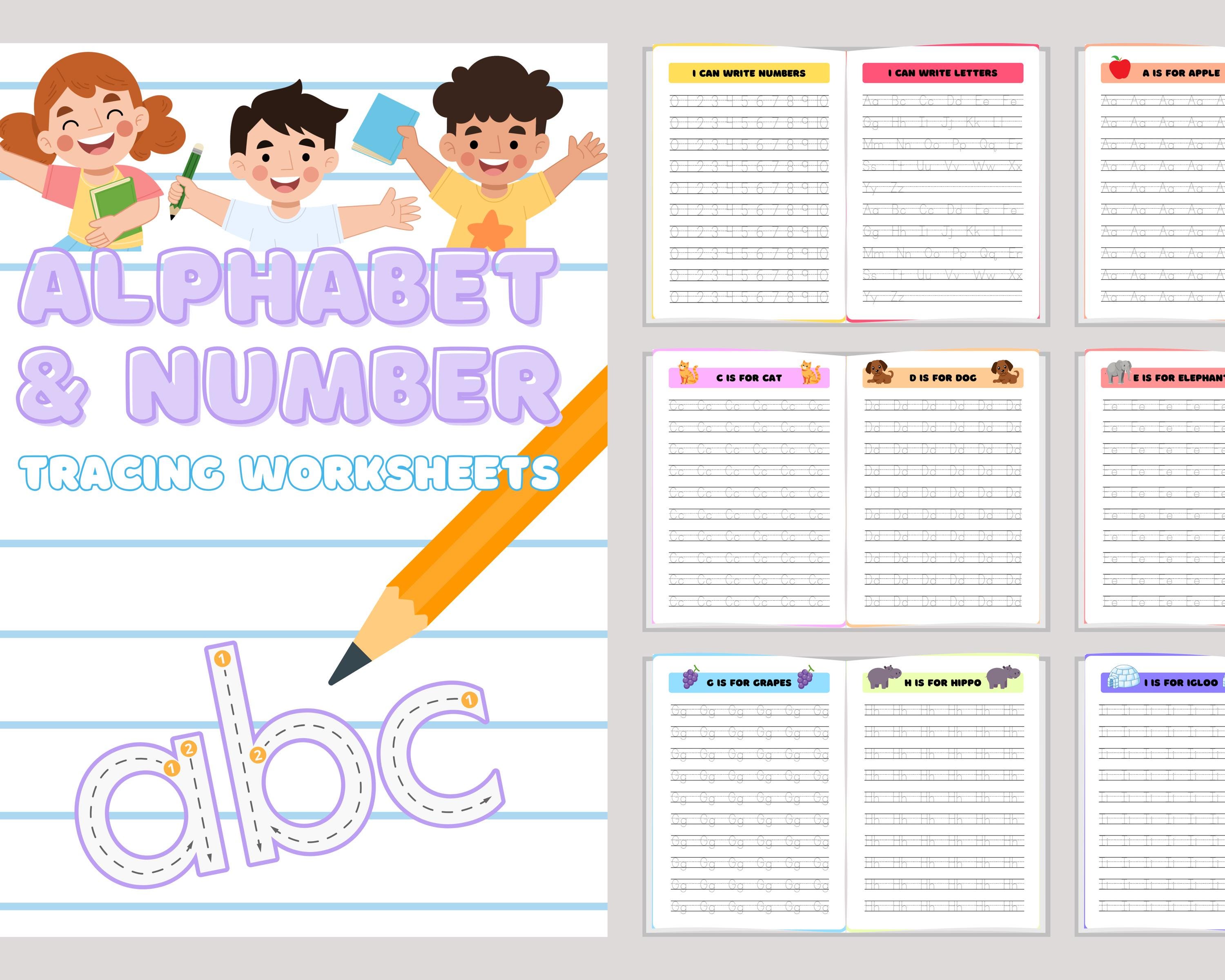
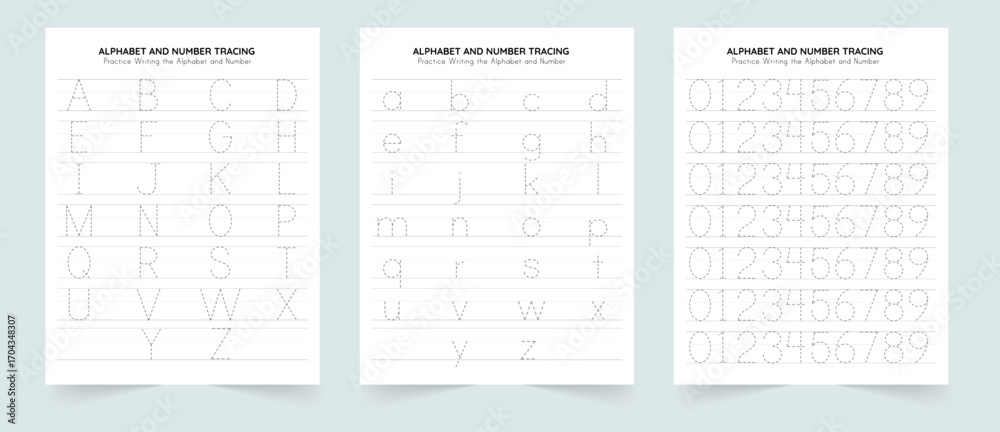
Mastering the strokes of the alphabet and the unique contours of numerals requires repeated, guided exposure to formation rules. This resource addresses both uppercase and lowercase letter sets alongside digits zero through nine, emphasizing consistent stroke order and directional habits. Every page introduces clear starting points, directional arrows, and dotted pathways designed to minimize letter reversals. It incorporates vertical lines, horizontal lines, loops, and diagonal slashes that underpin all legible handwriting. Integrating targeted Dotted Letters For Tracing helps learners transition smoothly from basic pre-writing shapes to standard letter symbols. Children gain confidence as visual clutter is kept to a minimum, allowing focused attention on pencil control and hand-eye coordination.
Key Learning Outcomes
Learners engaging with these pages build essential mechanical and cognitive skills for academic readiness. First, proper stroke sequence becomes second nature, reducing the likelihood of drawing letters from the bottom up. Second, fine motor precision improves significantly as tiny hand muscles stabilize to trace narrow paths. Third, spatial awareness develops as children learn to orient letters relative to baselines and midlines. Fourth, letter and number recognition deepens through multisensory reinforcement, connecting the visual look of a character with its physical production. Finally, stamina increases, allowing young writers to complete writing tasks without experiencing premature hand fatigue or frustration.
How to Use This Worksheet
Success with tracing depends heavily on the physical environment and the immediate support provided during the activity. Worksheets should be secured to a flat surface at a comfortable height where feet rest flat on the floor. Writing utensils matter deeply; short, thick crayons, triangular pencils, or broken golf pencils naturally encourage a functional tripod grasp by limiting finger crowding. Adults should encourage children to start each letter at the designated dot, reinforcing top-to-bottom and left-to-right habits from the very beginning. According to Reading Rockets, explicit instruction in letter formation habits prevents ingrained motor habits that are difficult to correct later in elementary school.
Practical Tips for Parents and Teachers
Scaffolding the experience ensures that frustration stays low and engagement remains high. Adults can model the stroke in the air or on a sensory tray filled with sand before letting the pencil touch the paper. It helps to keep sessions brief, lasting only five to ten minutes, because fine motor work demands intense concentration from young nervous systems. Extending the activity might involve tracing textured letters cut from sandpaper or forming numbers out of playdough to reinforce the tactile memory. Pairing these efforts with resources found in Fine Motor and Pre-Writing Skills ensures the hand is thoroughly prepared for formal handwriting demands.
Age-Appropriate Recommendations
Developmental expectations must guide how adults implement tracing practice across different childhood stages. Guided by the Handwriting Without Tears framework, two-year-olds and three-year-olds benefit most from large vertical surfaces like easels, which promote shoulder and wrist stability before fine finger movements are expected. Four-year-olds and five-year-olds are typically ready for standard paper-based tracing that emphasizes directional control, starting points, and basic letter proportions. By ages six through eight, children transition from guided dotted lines to independent handwriting on lined paper, using these foundational sheets primarily for tricky letter formations, neatness refinement, and building writing fluency.
Explicit instruction in letter formation habits prevents ingrained motor difficulties and supports long-term writing fluency. — Reading Rockets
Frequently Asked Questions
Explore More Free Printable Tracing Worksheets
Expanding a child’s writing toolkit goes beyond standard alphabet sheets. A well-rounded approach incorporates diverse visual patterns, shapes, and thematic exercises that maintain high motivation levels. Exploring the comprehensive collection available at KidTraces.com offers endless opportunities to target specific developmental milestones without added preparation stress. Adults and educators can easily find specialized practice materials by browsing the broader selection of Tracing Worksheets designed to support every unique learning style.
Developmental Milestone & Activity Table
| Development Stage | Recommended Daily Duration | Primary Learning Objective |
|---|---|---|
| Preschool & Pre-K | 10 – 15 Minutes | Pencil grip development & basic pre-stroke lines |
| Kindergarten | 15 – 20 Minutes | Letter/number formation & spatial line awareness |
| Early Elementary (Grade 1–2) | 20 – 30 Minutes | Fluency, sentence construction & neatness |
Images References